All Souls
2 November · Commemoration · Violet or black
A small angel takes a man by the hand and draws him up out of the fire, while the others below still burn and look up. Christ stands barefoot at the centre and looks down at Saint Teresa of Ávila, who kneels with one hand at her breast and the other held open; she had prayed for this soul, and Rubens paints the prayer answered. The Commemoration of All the Faithful Departed rests on the doctrine the Council of Trent set out: that there is a purgatory, and that the souls therein are helped by the suffrages of the faithful, but principally by the acceptable Sacrifice of the Altar. From the first centuries the names of the dead were written in the diptychs and read at Mass. Saint Odilo, abbot of Cluny, ordered the commemoration of all the faithful departed to be kept every year in his monasteries, probably not in 998, as is often said, but after 1030; from Cluny it spread to the other Benedictines and to the Carthusians. In 1915 Benedict XV allowed every priest in the world to offer three Masses on this day, as priests in Spain, Portugal and Latin America already did. One hand holds another; the day asks us to hold out ours, for our own dead by name.
Francis Mershman, “All Souls' Day”, The Catholic Encyclopedia, vol. 1 (1907): newadvent.org
Klemens Löffler, “St. Odilo”, The Catholic Encyclopedia, vol. 11 (1911): newadvent.org; Edward Hanna, “Purgatory”, vol. 12 (1911), for the words of Trent: newadvent.org; Benedict XV, Incruentum Altaris (10 August 1915)
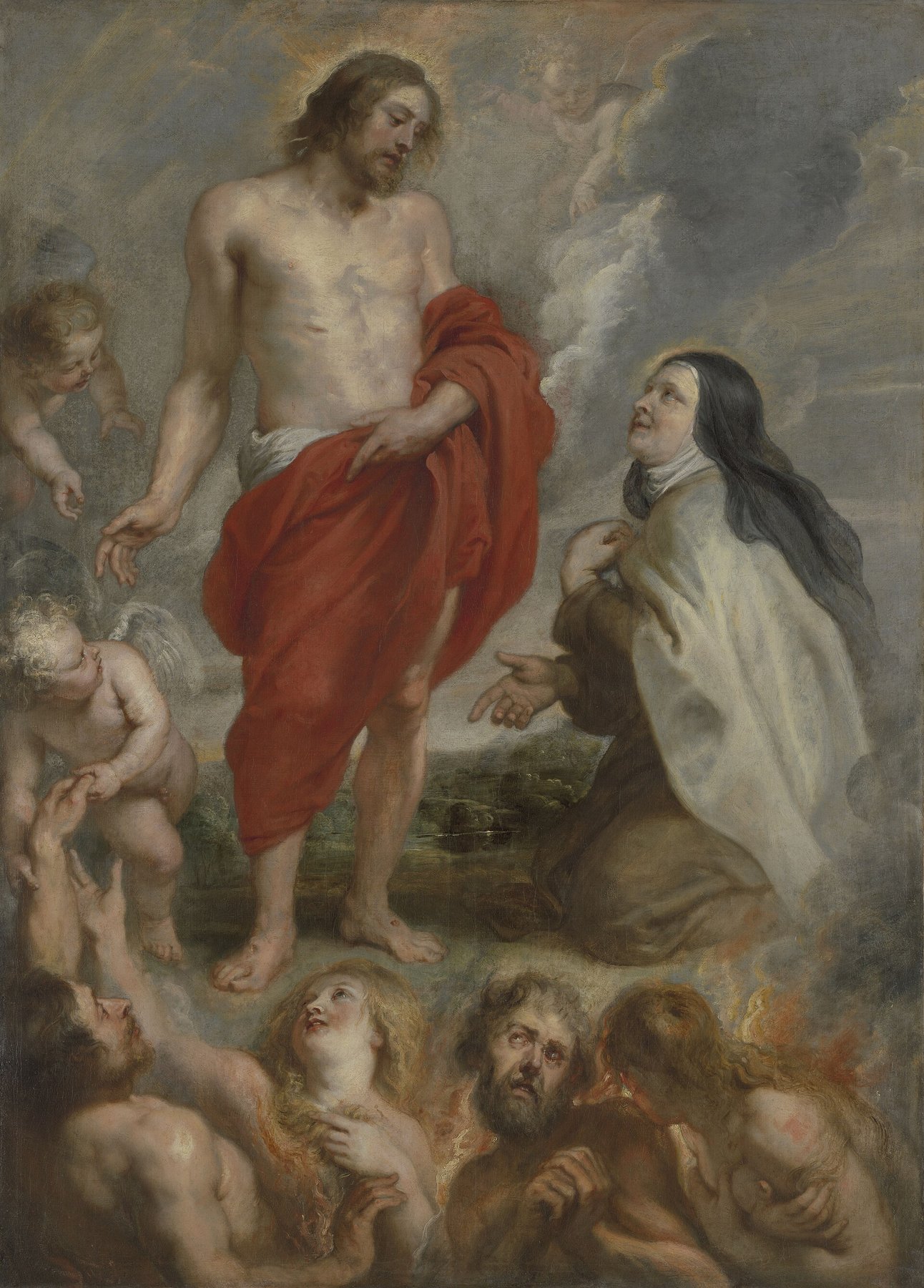
Peter Paul Rubens
c. 1630–1635, KMSKA, Antwerp
About this painting
“This only I ask, that you will remember me at the Lord's altar, wherever you be.”
Saint Monica, dying at Ostia, to her sons: Saint Augustine, Confessions IX.11.27, trans. J. G. Pilkington, Nicene and Post-Nicene Fathers, 1st series, vol. 1 (1886): newadvent.org
The Scripture of the feast
43And making a gathering, he sent twelve thousand drachms of silver to Jerusalem for sacrifice to be offered for the sins of the dead, thinking well and religiously concerning the resurrection. 44(For if he had not hoped that they that were slain should rise again, it would have seemed superfluous and vain to pray for the dead,) 45And because he considered that they who had fallen asleep with godliness, had great grace laid up for them. 46It is therefore a holy and wholesome thought to pray for the dead, that they may be loosed from sins.
37All that the Father giveth to me shall come to me: and him that cometh to me, I will not cast out. 38Because I came down from heaven, not to do my own will but the will of him that sent me. 39Now this is the will of the Father who sent me: that of all that he hath given me, I should lose nothing; but should raise it up again in the last day. 40And this is the will of my Father that sent me: that every one who seeth the Son and believeth in him may have life everlasting. And I will raise him up in the last day.
2 Machabees 12:43–46 · John 6:37–40, Douay-Rheims (Challoner)
In painting
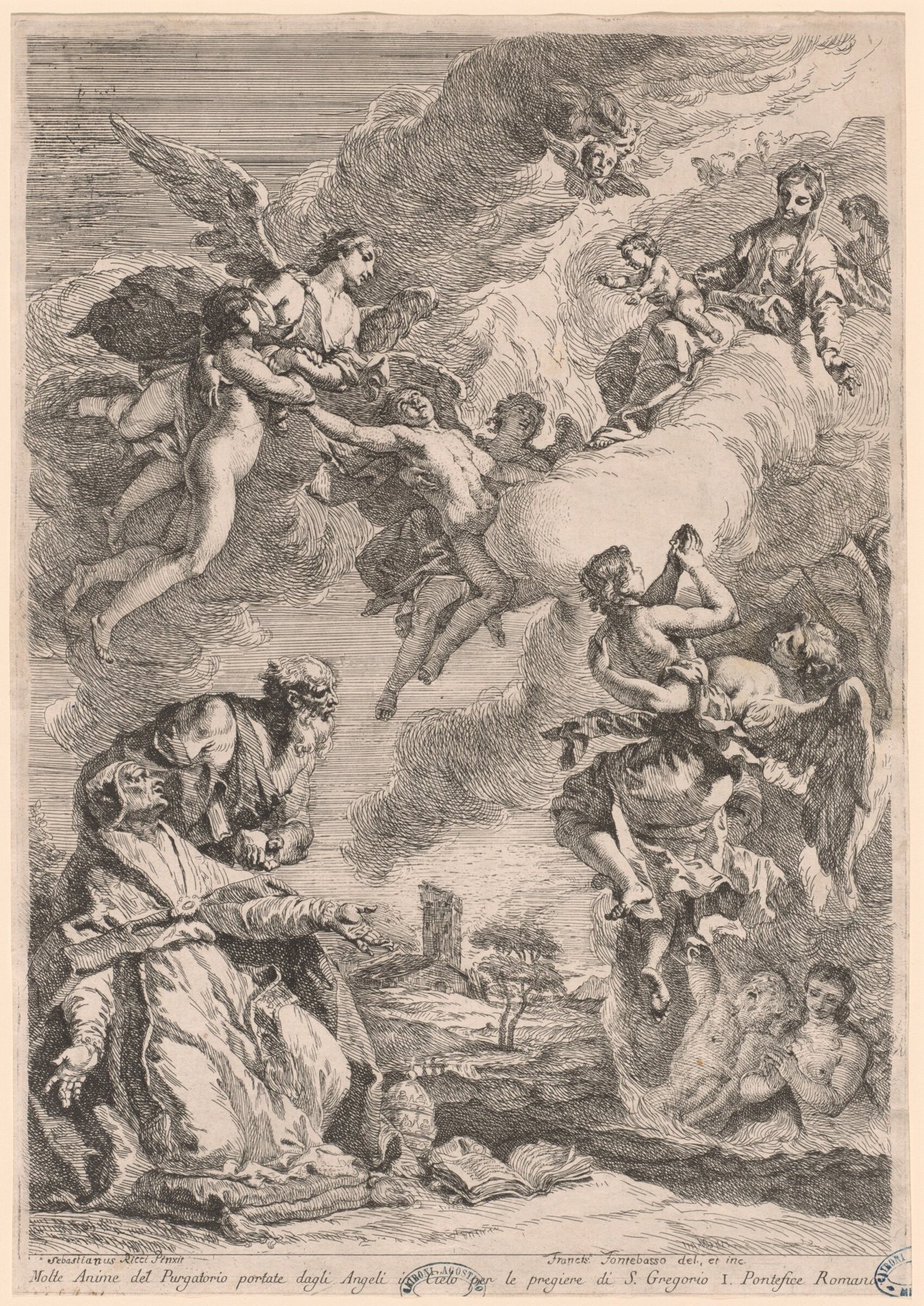
Francesco Fontebasso, after Sebastiano Ricci
c. 1731, etching, National Gallery of Art, Washington, 2014.117.1
The holding institution's record
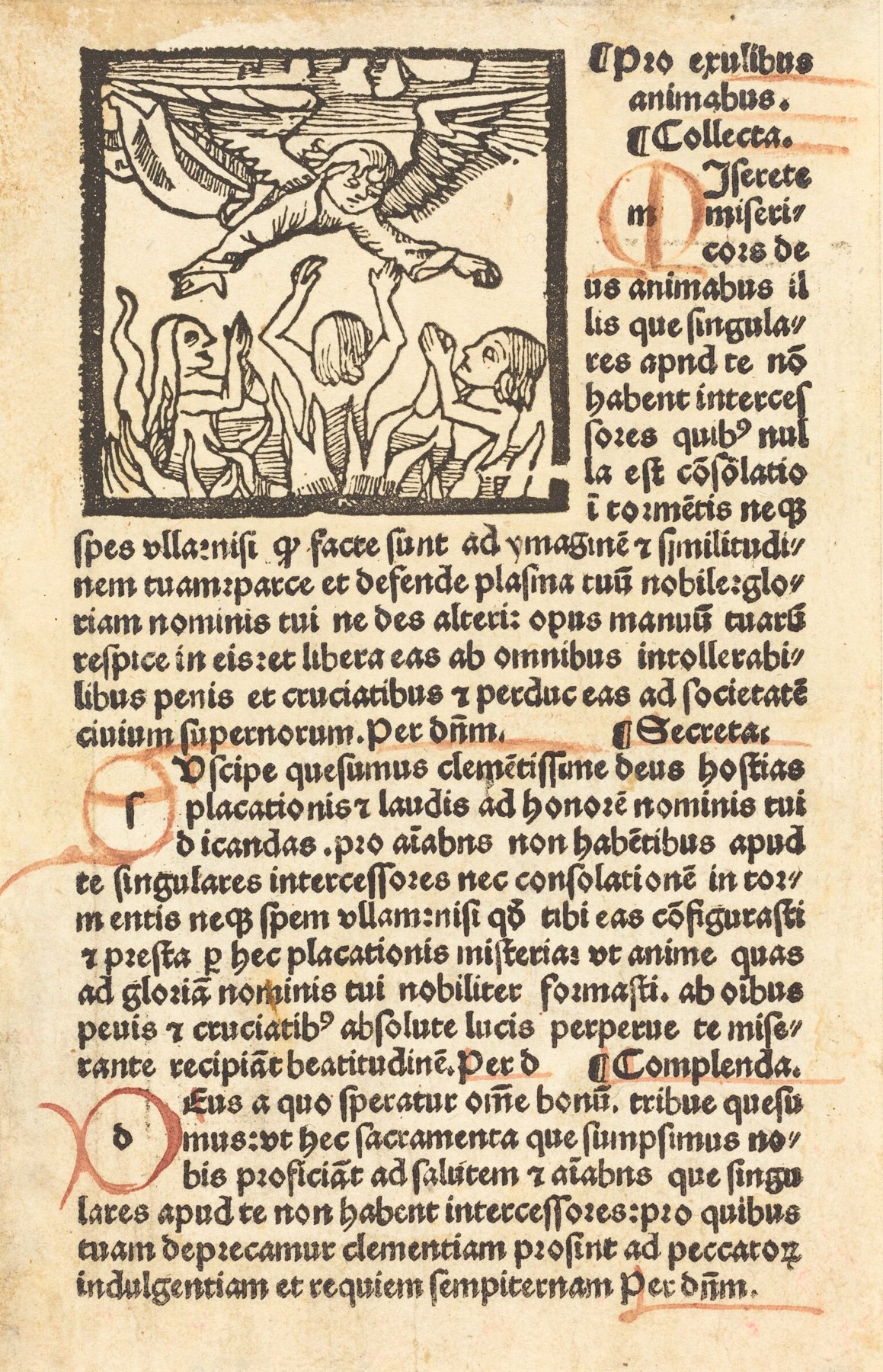
German 15th Century
c. 1500, woodcut, National Gallery of Art, Washington, 1943.3.760
A leaf of the Mass for the souls who have no one to pray for them.
The holding institution's record
The day in the next three years
| 2026 | Monday 2 November |
|---|---|
| 2027 | Tuesday 2 November |
| 2028 | Thursday 2 November |
Not a holy day of obligation.
The feasts of the year · The saints · The Rosary
Written and checked by the Monstrance editors; sources cited. Scripture in the Douay-Rheims (Challoner). Every painting is in the public domain, and each caption follows the record of the institution that holds it.
Today's masterwork, each morning
One sacred painting a day, chosen by the liturgical calendar and captioned only from the museum's record: the feast, the colour of the day, and the Scripture the scene depicts.
One confirmation email first; nothing is sent until you click it. Every email has a one-click unsubscribe, and you can switch to Sundays and feasts only at any time.