The Angelus
A traditional Catholic prayer
V. The Angel of the Lord declared unto Mary.
R. And she conceived of the Holy Spirit.
Hail Mary…
V. Behold the handmaid of the Lord.
R. Be it done unto me according to Thy word.
Hail Mary…
V. And the Word was made flesh.
R. And dwelt among us.
Hail Mary…
V. Pray for us, O holy Mother of God.
R. That we may be made worthy of the promises of Christ.
Let us pray. Pour forth, we beseech Thee, O Lord, Thy grace into our hearts; that we, to whom the Incarnation of Christ, Thy Son, was made known by the message of an angel, may by His Passion and Cross be brought to the glory of His Resurrection. Through the same Christ our Lord. Amen.
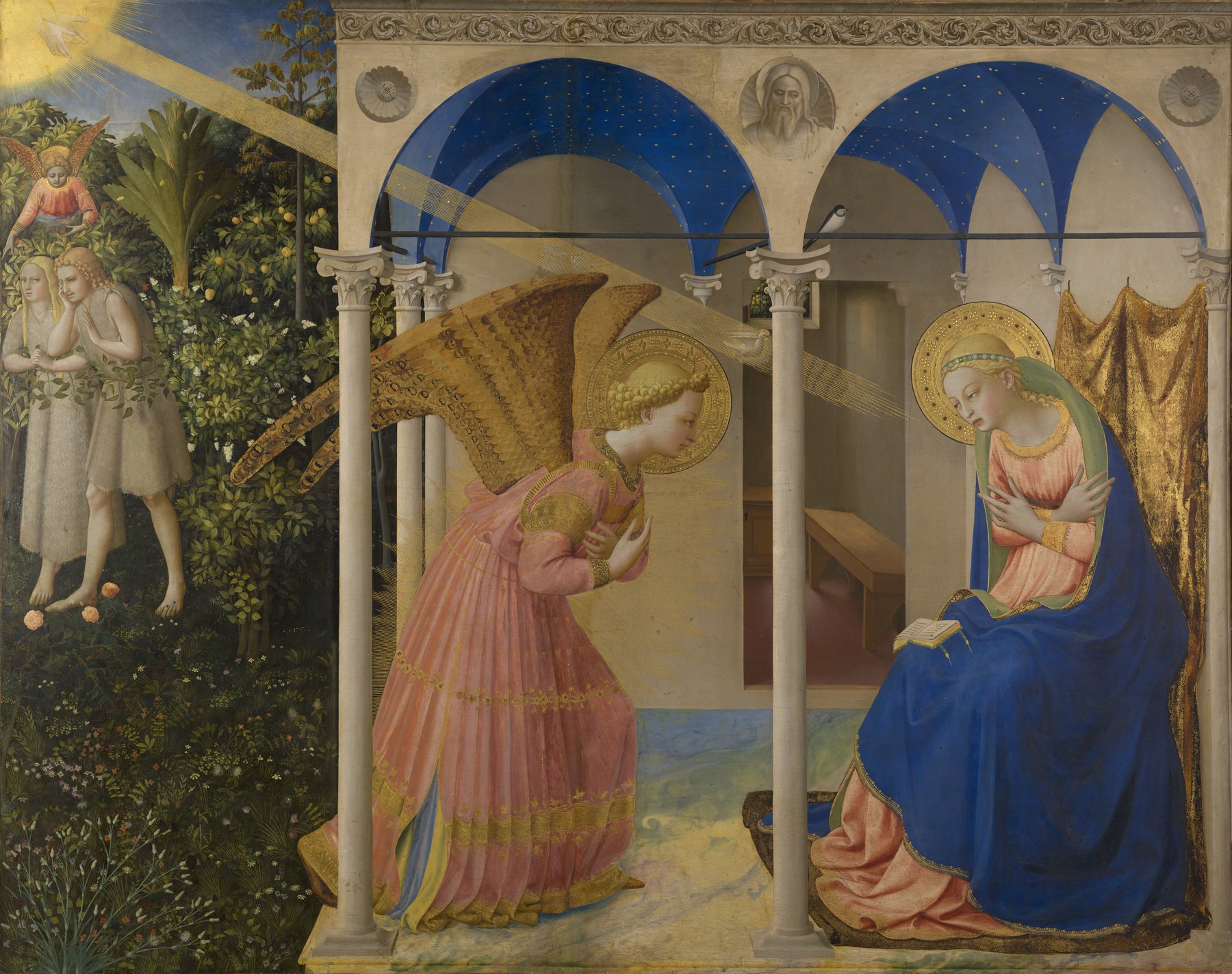
Fra Angelico
c. 1425–1426, Museo Nacional del Prado, Madrid
About this painting
In Latin
V. Angelus Domini nuntiavit Mariae.
R. Et concepit de Spiritu Sancto.
Ave Maria…
V. Ecce ancilla Domini.
R. Fiat mihi secundum verbum tuum.
Ave Maria…
V. Et Verbum caro factum est.
R. Et habitavit in nobis.
Ave Maria…
V. Ora pro nobis, sancta Dei Genetrix.
R. Ut digni efficiamur promissionibus Christi.
Oremus. Gratiam tuam, quaesumus, Domine, mentibus nostris infunde: ut qui, angelo nuntiante, Christi Filii tui Incarnationem cognovimus, per passionem eius et crucem ad resurrectionis gloriam perducamur. Per eundem Christum Dominum nostrum. Amen.
Where it comes from
Gabriel bows in the loggia with his hands crossed on his breast, and Our Lady bows back with hers crossed the same way, a book open on her knee, as if each had learned the gesture from the other; a beam of gold comes down from the corner of the sky with the Dove riding on it, and in the garden at the left an angel leads Adam and Eve out. Fra Angelico set the fall and its remedy side by side, a column's width apart, and the Angelus prays the second half. It is a short devotion in honour of the Incarnation, said three times each day, morning, noon and evening, at the sound of the bell, and it consists essentially in the triple repetition of the Hail Mary, so that the whole day hangs on the angel's greeting. Herbert Thurston held that in its origin it imitated the monks’ night prayers, and a Franciscan General Chapter in the time of Saint Bonaventure directed preachers to encourage the people to say Hail Marys when the Compline bell rang, and the cloister's night was lent to the town. Pope John XXII recommended and indulgenced the evening practice in 1318 and 1327, and Benedict XIII granted the indulgence for the present form on 14 September 1724. The Angel of the Lord declared unto Mary, and here, under the blue vault, she has already answered, before any bell of ours has rung.
Herbert Thurston, “Angelus”, The Catholic Encyclopedia, vol. 1 (1907): newadvent.org
38And Mary said: Behold the handmaid of the Lord: be it done to me according to thy word. And the angel departed from her.
14And the Word was made flesh and dwelt among us (and we saw his glory, the glory as it were of the only begotten of the Father), full of grace and truth.
Luke 1:38 · John 1:14, Douay-Rheims (Challoner)
More in painting
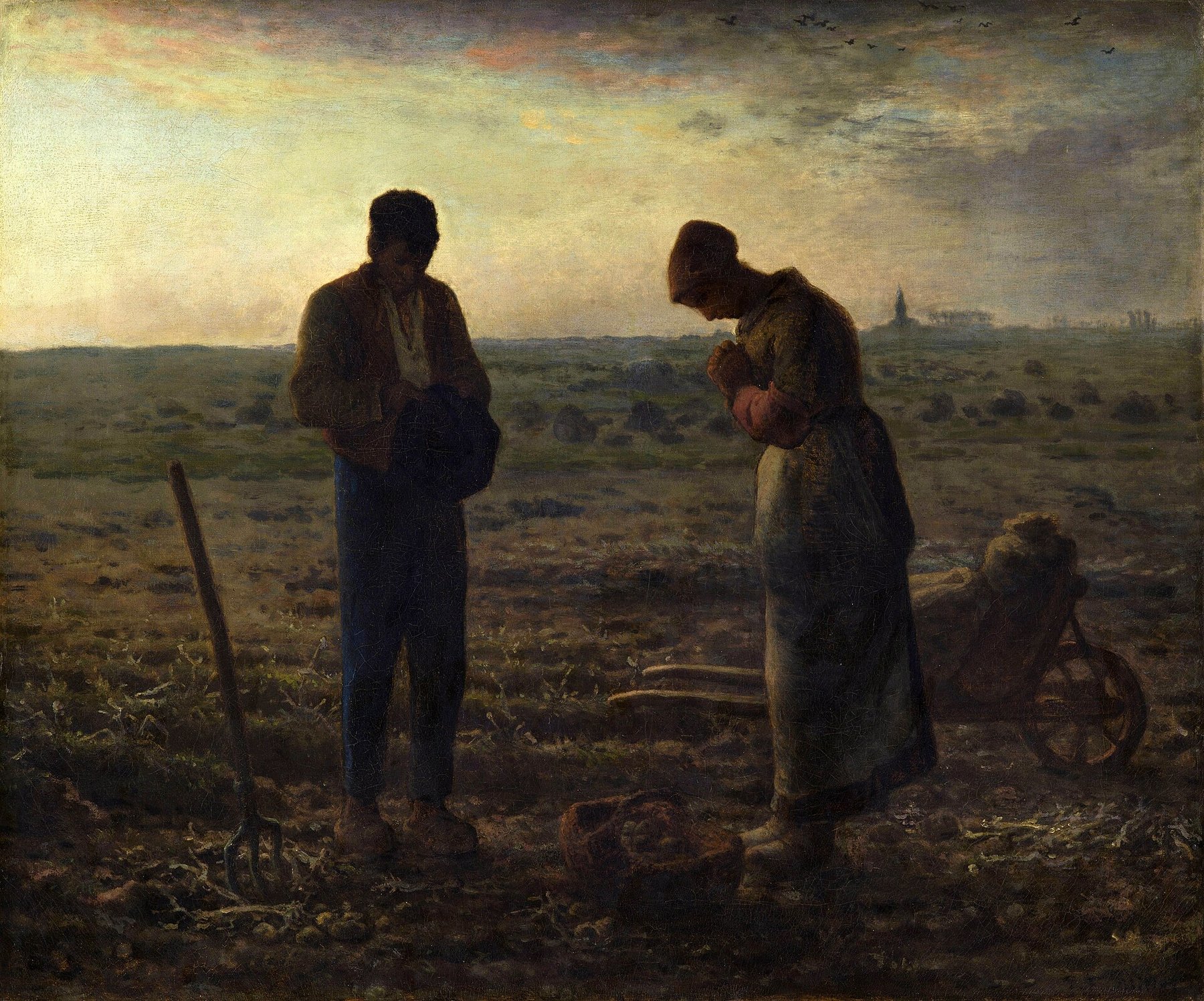
Jean-François Millet
1857–1859, Musée d’Orsay, Paris
About this painting
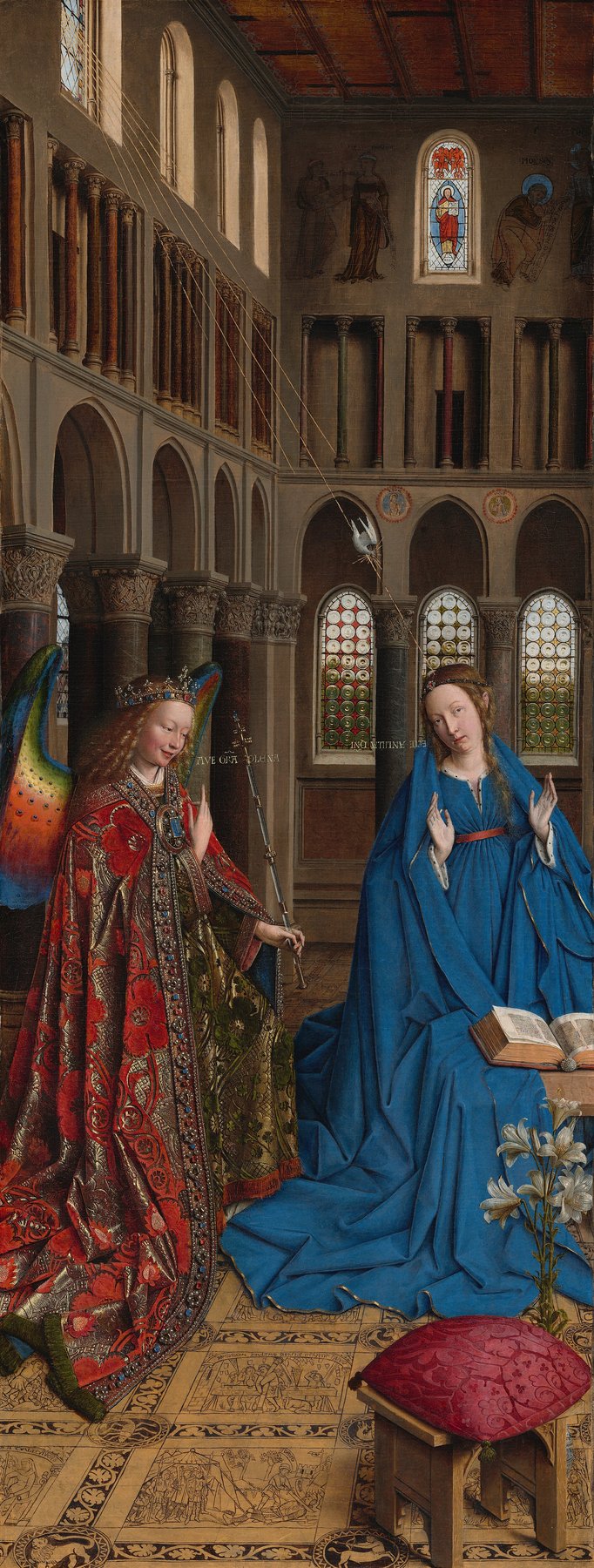
Jan van Eyck
c. 1434–1436, National Gallery of Art, Washington
About this painting
The traditional prayers · The Rosary
Today's masterwork, each morning
One sacred painting a day, chosen by the liturgical calendar and captioned only from the museum's record: the feast, the colour of the day, and the Scripture the scene depicts.
One confirmation email first; nothing is sent until you click it. Every email has a one-click unsubscribe, and you can switch to Sundays and feasts only at any time.