The Presentation of the Blessed Virgin Mary
21 November · Memorial · White
Our Lady is a small child at the top of the white steps, and the high priest in gold bends down to take her. Saint Anne and Saint Joachim stand back at the foot of the stair, and in the gallery at the right a row of young women look down from their books, the girls of the Temple waiting for the new one. Scripture does not tell this story. It comes from apocryphal writings, the Protoevangelium of James, the Gospel of Pseudo-Matthew and the Gospel of the Nativity of Mary, which say that Mary was brought to the Temple at the age of three by her parents, in fulfilment of a vow. The feast began in the East, probably in Syria; the emperor Manuel Comnenos lists it as a festival in 1166, and the Greeks keep it for five days. A French nobleman, Philippe de Mazières, brought it West, and it was kept before the cardinals at Avignon in 1372. Sixtus IV received it into the Roman Breviary, Pius V took it out, and Sixtus V restored it on 1 September 1585. The Church keeps it for what it shows, a child given wholly to God, and sets beside it Christ's own word on who His mother is.
Frederick Holweck, “Feast of the Presentation of the Blessed Virgin Mary”, The Catholic Encyclopedia, vol. 12 (1911): newadvent.org
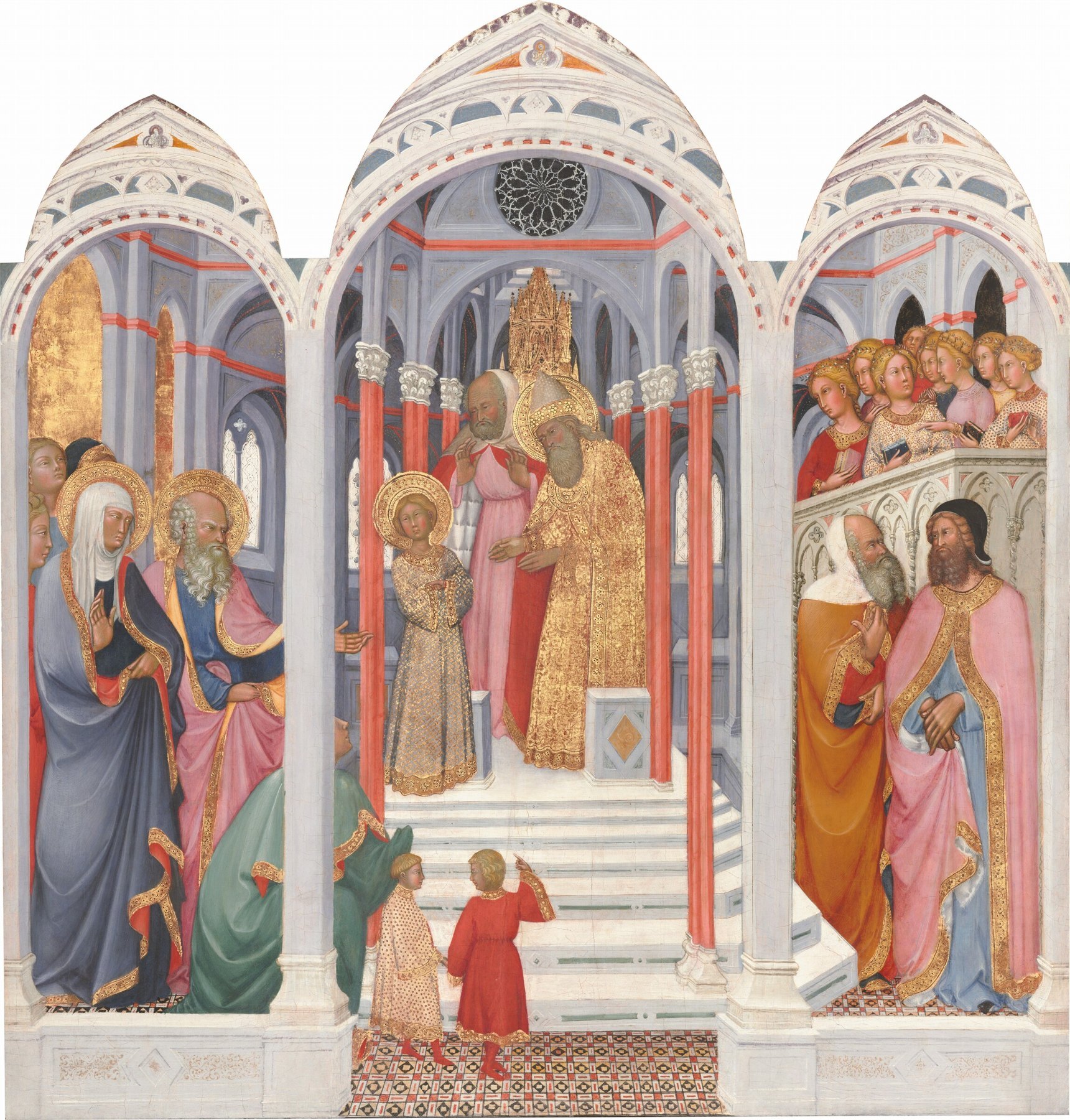
Paolo di Giovanni Fei
1398–1399, tempera on wood transferred to hardboard, National Gallery of Art, Washington, 1961.9.4
The holding institution's record
“And the priest received her, and kissed her, and blessed her, saying: The Lord has magnified your name in all generations.”
The Protoevangelium of James 7, an apocryphal writing of the second century, not Scripture; trans. Alexander Walker, Ante-Nicene Fathers, vol. 8 (1886): newadvent.org
The Gospel of the feast
46As he was yet speaking to the multitudes, behold his mother and his brethren stood without, seeking to speak to him. 47And one said unto him: Behold thy mother and thy brethren stand without, seeking thee. 48But he answering him that told him, said: Who is my mother, and who are my brethren? 49And stretching forth his hand towards his disciples, he said: Behold my mother and my brethren. 50For whosoever shall do the will of my Father, that is in heaven, he is my brother, and sister, and mother.
Matthew 12:46–50, Douay-Rheims (Challoner)
In painting
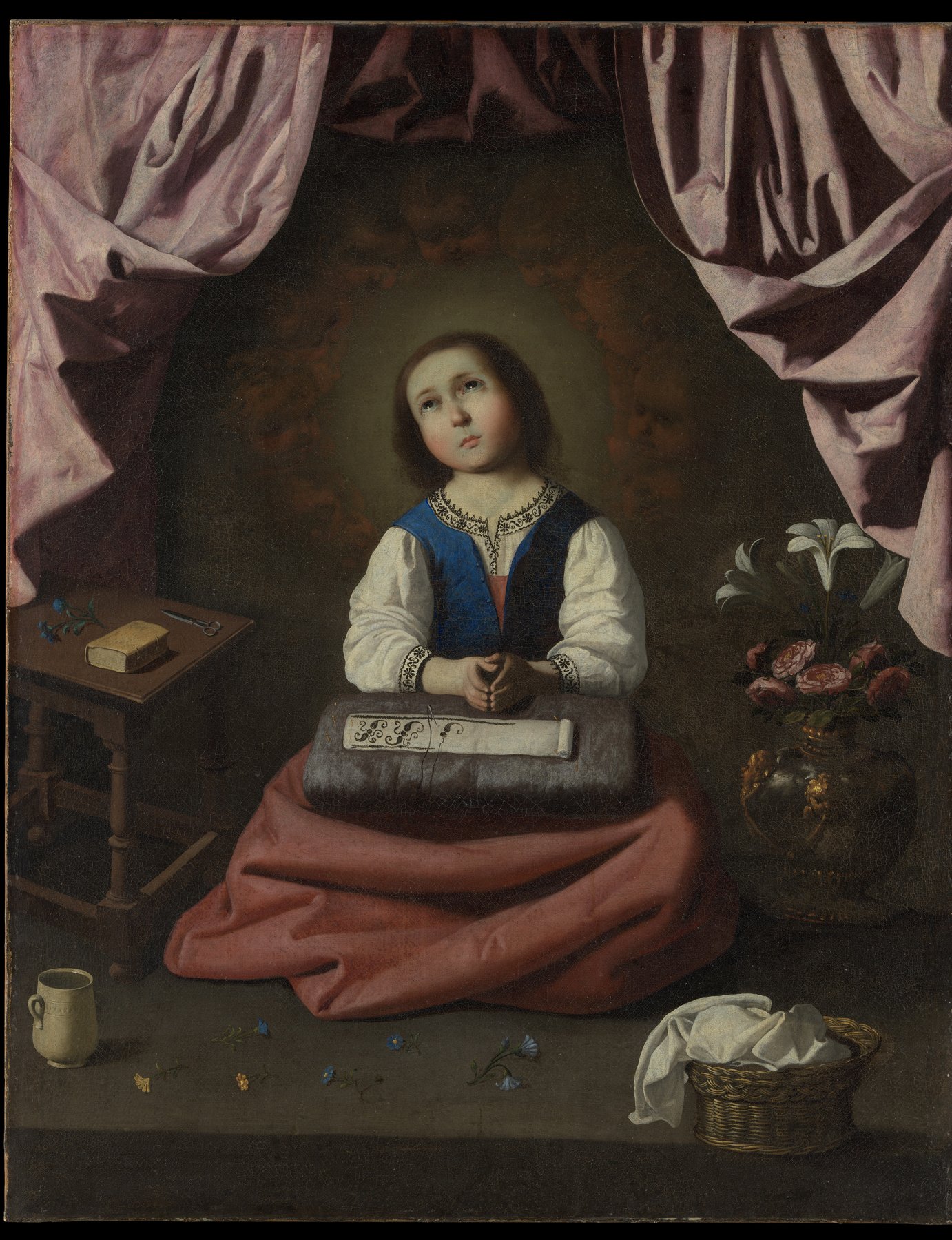
Francisco de Zurbarán
ca. 1632–33, The Metropolitan Museum of Art, New York
About this painting
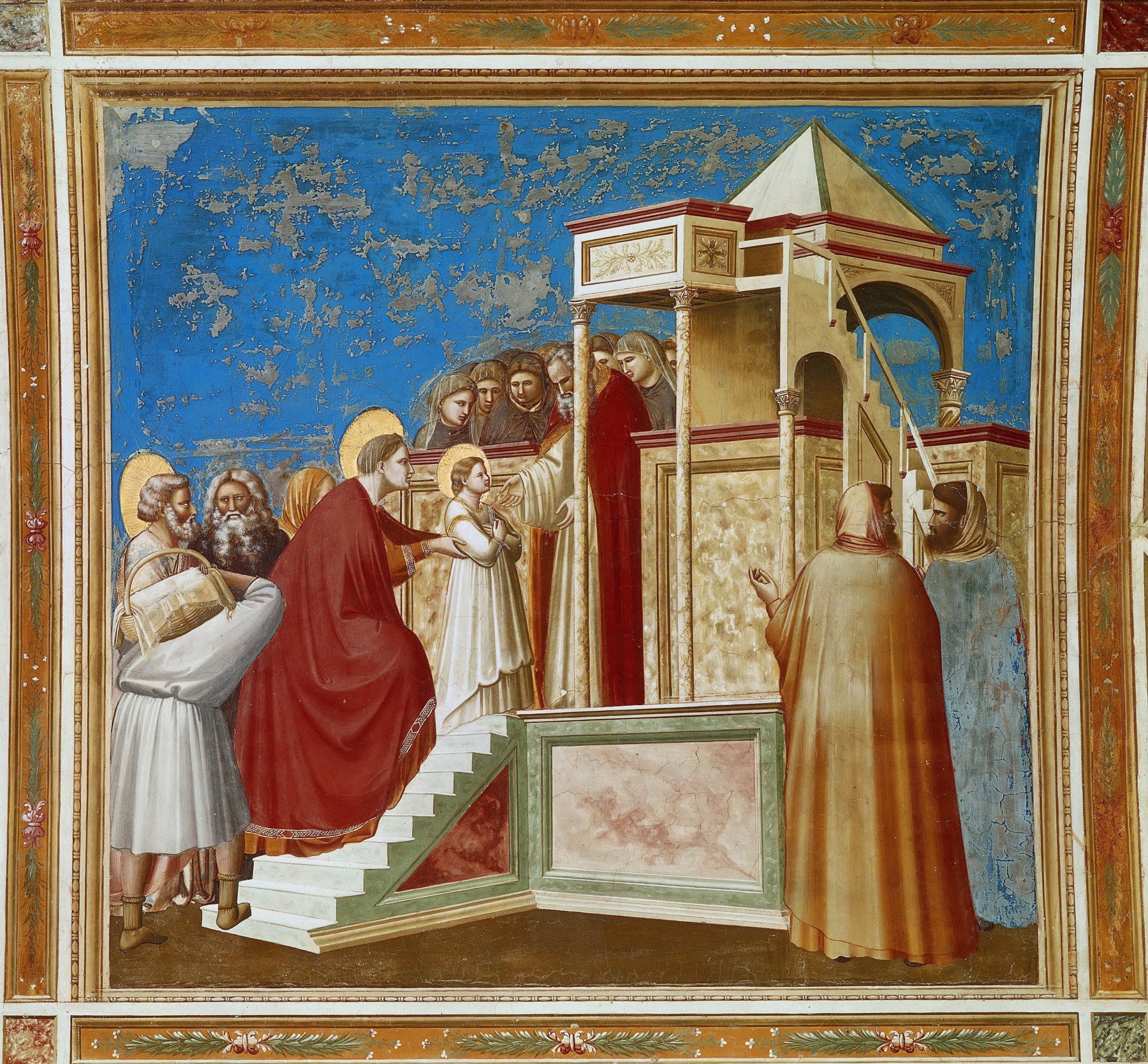
Giotto
c. 1305, fresco, Scrovegni Chapel, Padua
The photograph's record

The day in the next three years
| 2026 | Saturday 21 November |
|---|---|
| 2027 | Sunday 21 November: not kept this year; it is the Solemnity of Christ the King. |
| 2028 | Tuesday 21 November |
The feasts of the year · The saints · The Rosary
Written and checked by the Monstrance editors; sources cited. Scripture in the Douay-Rheims (Challoner). Every painting is in the public domain, and each caption follows the record of the institution that holds it.
Today's masterwork, each morning
One sacred painting a day, chosen by the liturgical calendar and captioned only from the museum's record: the feast, the colour of the day, and the Scripture the scene depicts.
One confirmation email first; nothing is sent until you click it. Every email has a one-click unsubscribe, and you can switch to Sundays and feasts only at any time.