Saint Lucy
13 December · Memorial · Red
The gravediggers bend to their work in the foreground and the small body lies between them, the mourners standing back against a wall that takes up half the sky. Lucy of Syracuse had consecrated her virginity to God and wished to give her wealth to the poor; the suitor to whom she had been betrothed against her will, angry at the loss of the fortune, denounced her to Paschasius, the governor of Sicily, in the persecution of Diocletian. Condemned to a house of shame, she could not be moved from where she stood; wood was heaped about her and lit, and did not harm her; she died by the sword, in the year 303. Her name is in the Canon of the Mass, and both the Latin and the Greek Churches keep 13 December. Her name means light, and her day once fell on the shortest of the year.
James Bridge, “St. Lucy”, The Catholic Encyclopedia, vol. 9 (1910): newadvent.org
The Gospel of the feast
1Then shall the kingdom of heaven be like to ten virgins, who taking their lamps went out to meet the bridegroom and the bride. 2And five of them were foolish and five wise. 3But the five foolish, having taken their lamps, did not take oil with them. 4But the wise took oil in their vessels with the lamps. 5And the bridegroom tarrying, they all slumbered and slept. 6And at midnight there was a cry made: Behold the bridegroom cometh. Go ye forth to meet him. 7Then all those virgins arose and trimmed their lamps. 8And the foolish said to the wise: Give us of your oil, for our lamps are gone out. 9The wise answered, saying: Lest perhaps there be not enough for us and for you, go ye rather to them that sell and buy for yourselves. 10Now whilst they went to buy the bridegroom came: and they that were ready went in with him to the marriage. And the door was shut. 11But at last came also the other virgins, saying: Lord, Lord, open to us. 12But he answering said: Amen I say to you, I know you not. 13Watch ye therefore, because you know not the day nor the hour.
Matthew 25:1–13, Douay-Rheims (Challoner)
In painting
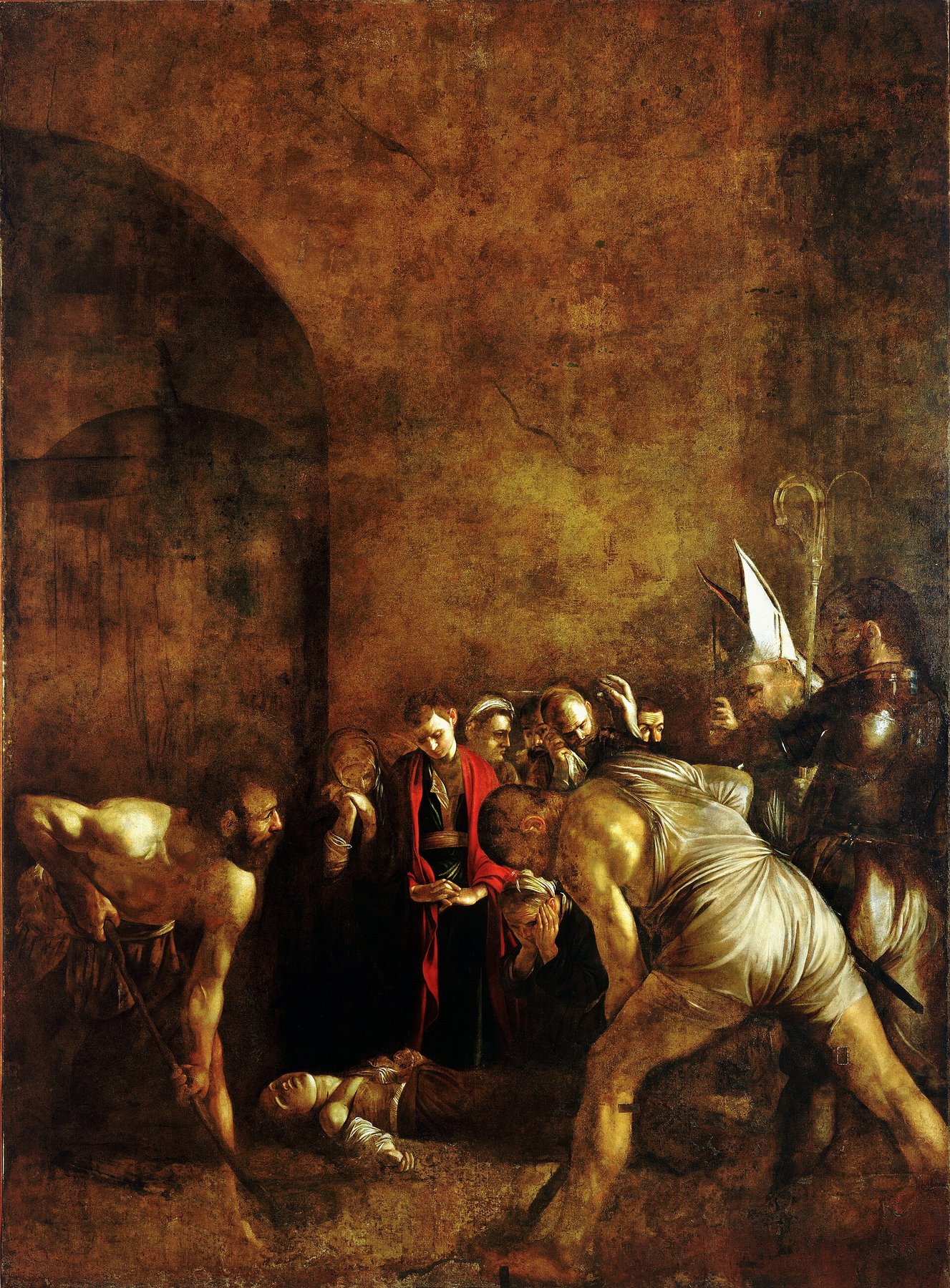
Caravaggio
1608, Basilica Santuario di Santa Lucia al Sepolcro, Siracusa
About this painting
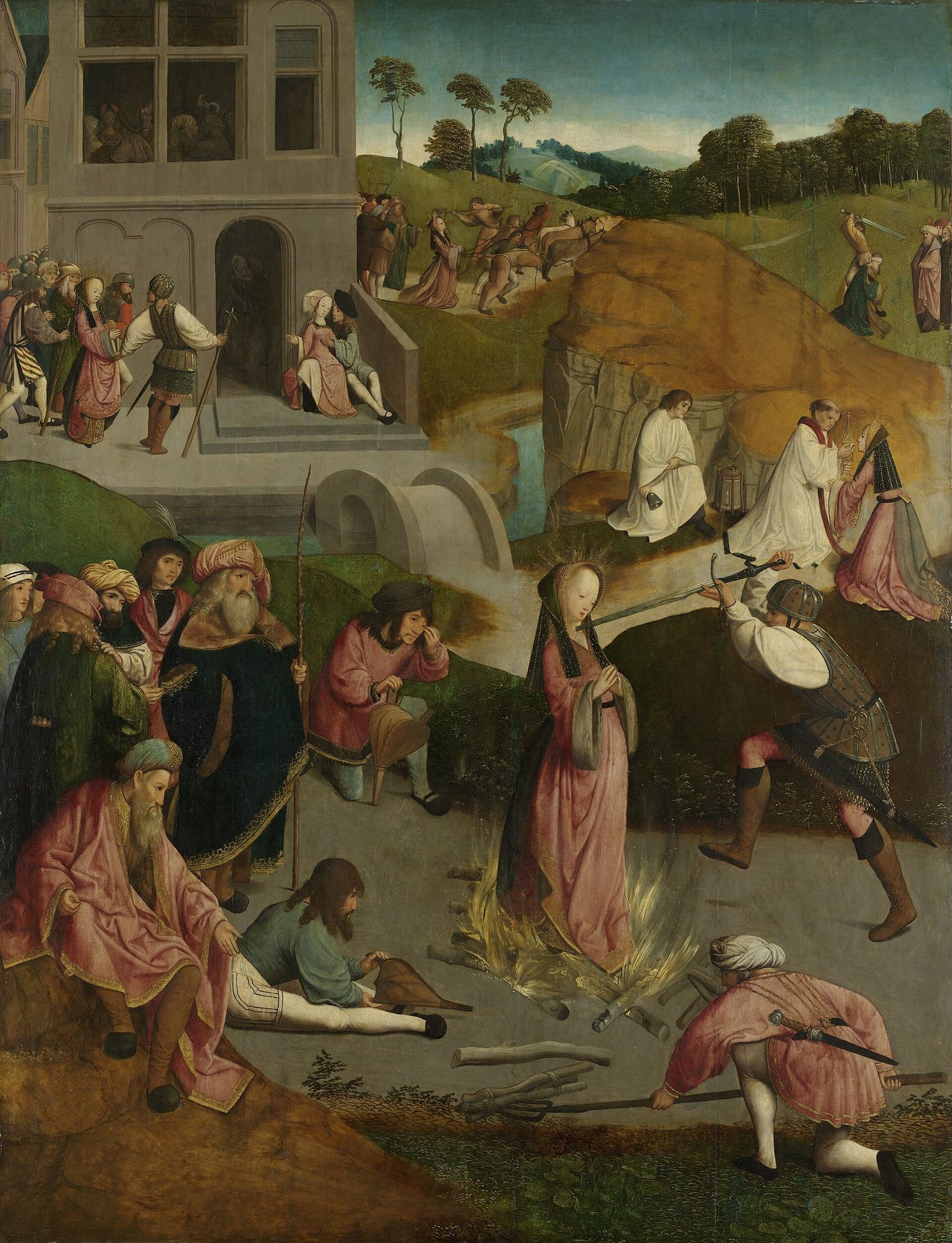
Master of the Figdor Deposition
c. 1505–c. 1510, Rijksmuseum, Amsterdam
About this painting
The feasts of the year · The Rosary
Today's masterwork, each morning
One sacred painting a day, chosen by the liturgical calendar and captioned only from the museum's record: the feast, the colour of the day, and the Scripture the scene depicts.
One confirmation email first; nothing is sent until you click it. Every email has a one-click unsubscribe, and you can switch to Sundays and feasts only at any time.