The Anima Christi
A traditional Catholic prayer
Soul of Christ, sanctify me.
Body of Christ, save me.
Blood of Christ, inebriate me.
Water from the side of Christ, wash me.
Passion of Christ, strengthen me.
O good Jesus, hear me.
Within Thy wounds hide me.
Suffer me not to be separated from Thee.
From the malicious enemy defend me.
In the hour of my death call me,
and bid me come unto Thee,
that with Thy saints I may praise Thee
for ever and ever. Amen.
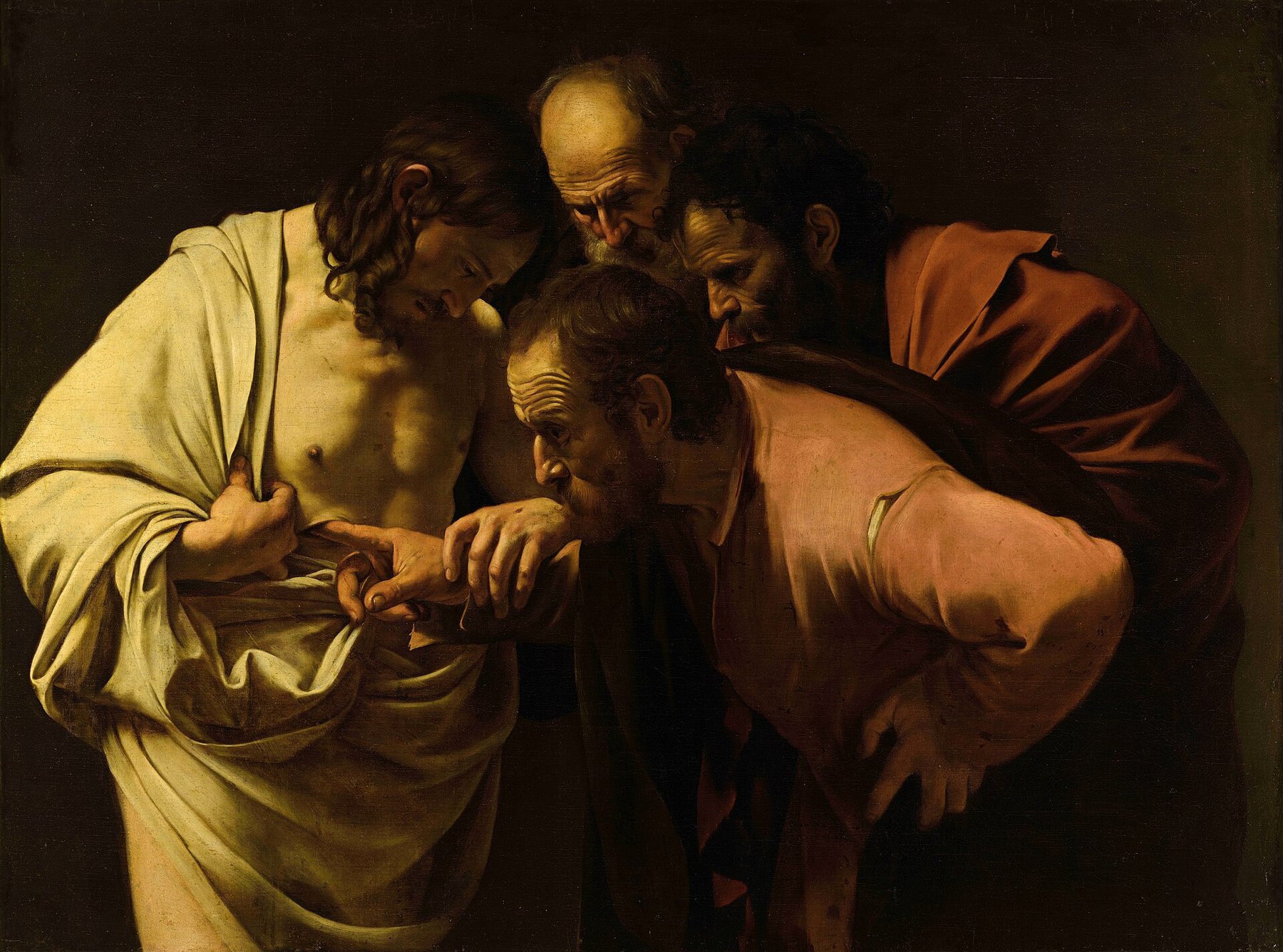
Caravaggio
c. 1601–02, Bildergalerie, Sanssouci, Potsdam
About this painting
In Latin
Anima Christi, sanctifica me.
Corpus Christi, salva me.
Sanguis Christi, inebria me.
Aqua lateris Christi, lava me.
Passio Christi, conforta me.
O bone Iesu, exaudi me.
Intra tua vulnera absconde me.
Ne permittas me separari a te.
Ab hoste maligno defende me.
In hora mortis meae voca me,
et iube me venire ad te,
ut cum Sanctis tuis laudem te
in saecula saeculorum. Amen.
Where it comes from
Christ draws back His robe with one hand, and with the other takes Thomas by the wrist and guides the apostle's finger into the wound in His side, while two others lean in over Thomas's shoulder, three furrowed foreheads bent into one line of looking. Every line of the prayer is said to this body, and said close: Soul of Christ, Body of Christ, Blood of Christ, water from the side of Christ, within Thy wounds hide me. The wound that was proof for Thomas is shelter for us. The prayer dates from the first half of the fourteenth century; Pope John XXII enriched it with indulgences in 1330 and was perhaps its author, and it has been found in a British Museum manuscript of about 1370 and in a prayer book of Cardinal Peter de Luxembourg, who died in 1387. It is often taken for Saint Ignatius Loyola’s, because he puts it at the beginning of his Spiritual Exercises, but it is older than he, and he only set it at the door. Thomas asked to touch the wound; we ask to be hidden in it.
Samuel Frisbee, “Anima Christi”, The Catholic Encyclopedia, vol. 1 (1907): newadvent.org
55He that eateth my flesh and drinketh my blood hath everlasting life: and I will raise him up in the last day. 56For my flesh is meat indeed: and my blood is drink indeed. 57He that eateth my flesh and drinketh my blood abideth in me: and I in him.
34But one of the soldiers with a spear opened his side: and immediately there came out blood and water.
John 6:55–57 · John 19:34, Douay-Rheims (Challoner)
More in painting
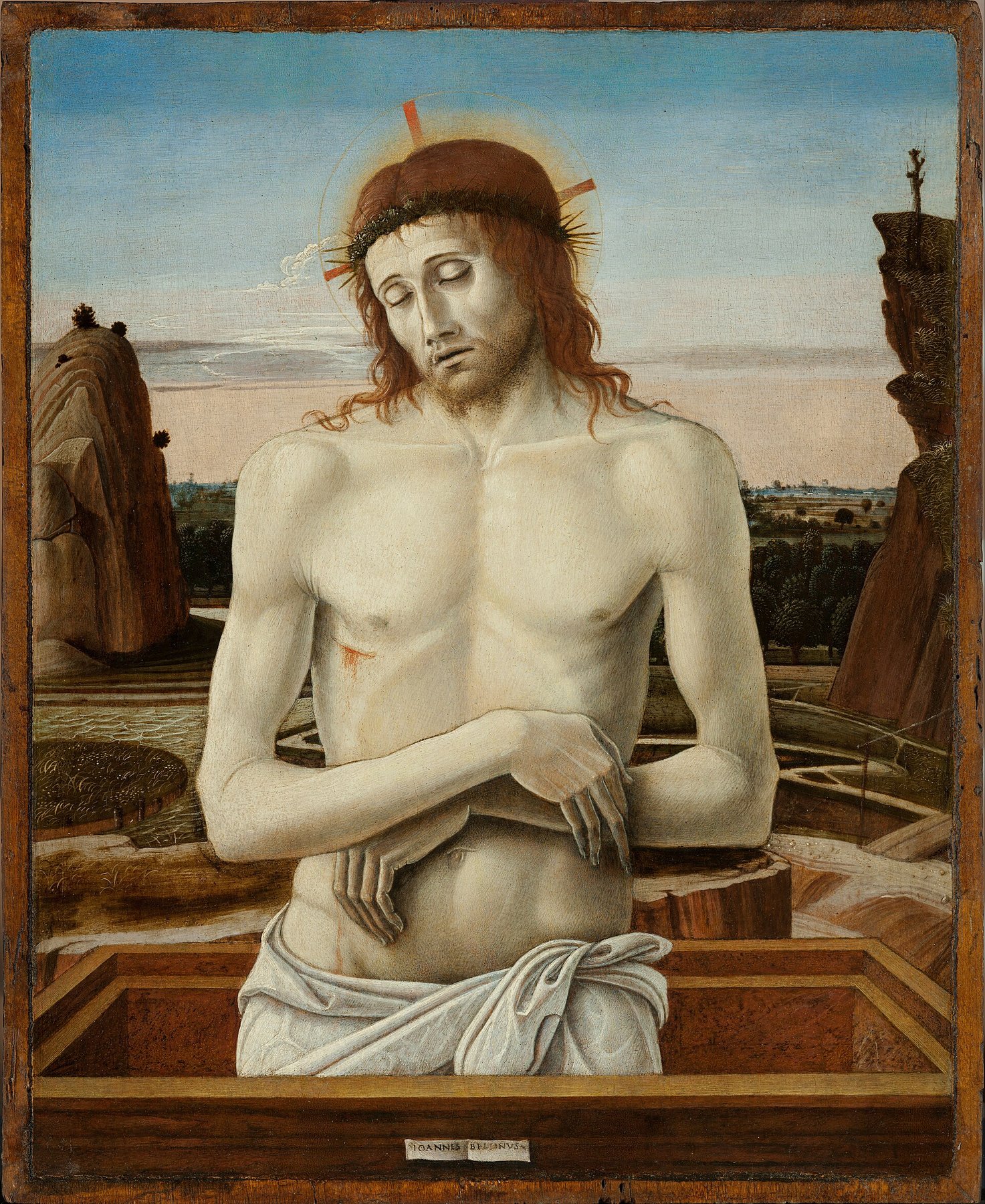
Giovanni Bellini
c. 1457, Museo Poldi Pezzoli, Milan
About this painting
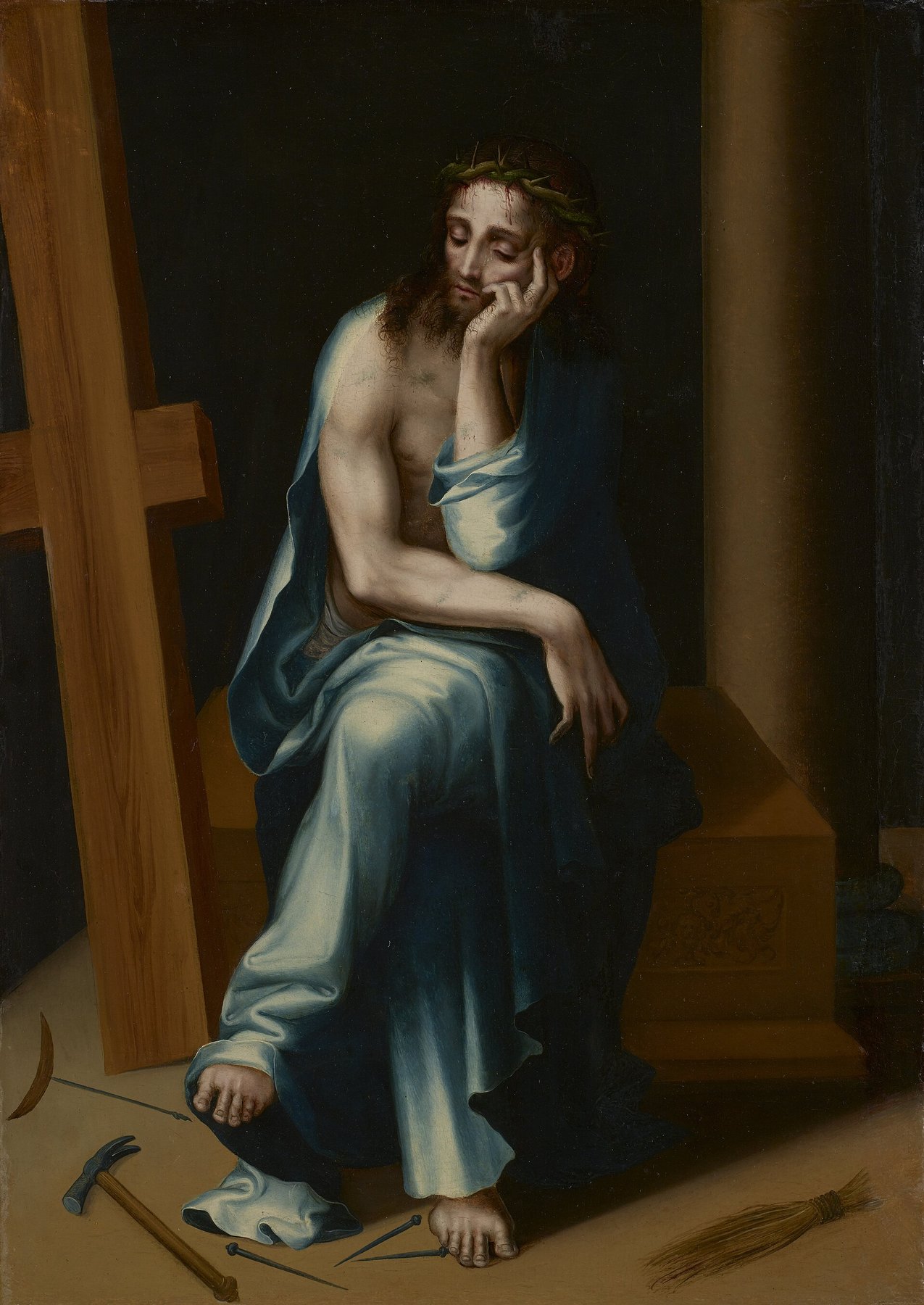
Luis de Morales (called El Divino)
c. 1560, Minneapolis Institute of Art
About this painting
The traditional prayers · The Rosary
Today's masterwork, each morning
One sacred painting a day, chosen by the liturgical calendar and captioned only from the museum's record: the feast, the colour of the day, and the Scripture the scene depicts.
One confirmation email first; nothing is sent until you click it. Every email has a one-click unsubscribe, and you can switch to Sundays and feasts only at any time.