The Hail Mary
A traditional Catholic prayer
Hail Mary, full of grace, the Lord is with thee. Blessed art thou among women, and blessed is the fruit of thy womb, Jesus. Holy Mary, Mother of God, pray for us sinners, now and at the hour of our death. Amen.
In Latin
Ave Maria, gratia plena, Dominus tecum. Benedicta tu in mulieribus, et benedictus fructus ventris tui, Iesus. Sancta Maria, Mater Dei, ora pro nobis peccatoribus, nunc et in hora mortis nostrae. Amen.
Where it comes from
Gabriel kneels barefoot with a lily in one hand and the other raised; Our Lady lifts one palm and lays the other on her breast, her eyes lowered, while the Dove comes in at the window. The first words of the prayer are his greeting to her, and the next are Saint Elizabeth's, both below. The closing petition, the Catechism of the Council of Trent says, was framed by the Church itself. There is little trace of the Hail Mary as an accepted prayer before about 1050, and the Roman Breviary of 1568 gave its complete form official recognition. The angel said it once; the Church has said it since, and the hour of our death is in it.
Herbert Thurston, “Hail Mary”, The Catholic Encyclopedia, vol. 7 (1910): newadvent.org
28And the angel being come in, said unto her: Hail, full of grace, the Lord is with thee: blessed art thou among women.
42And she cried out with a loud voice and said: Blessed art thou among women and blessed is the fruit of thy womb.
Luke 1:28 · Luke 1:42, Douay-Rheims (Challoner)
In painting
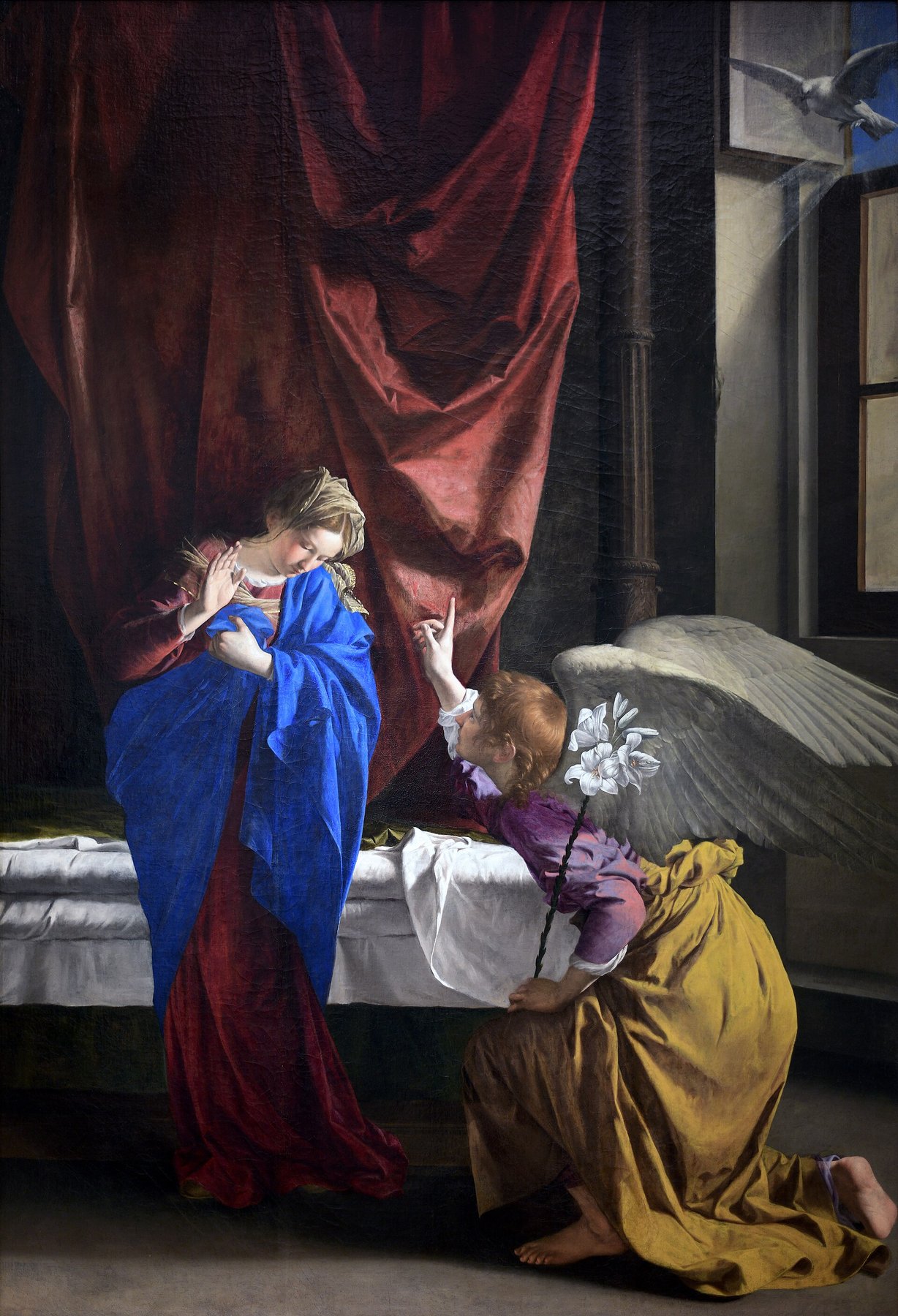
Orazio Gentileschi
1623, Galleria Sabauda (Musei Reali)
Photograph: Paris Orlando, CC BY-SA 4.0
About this painting
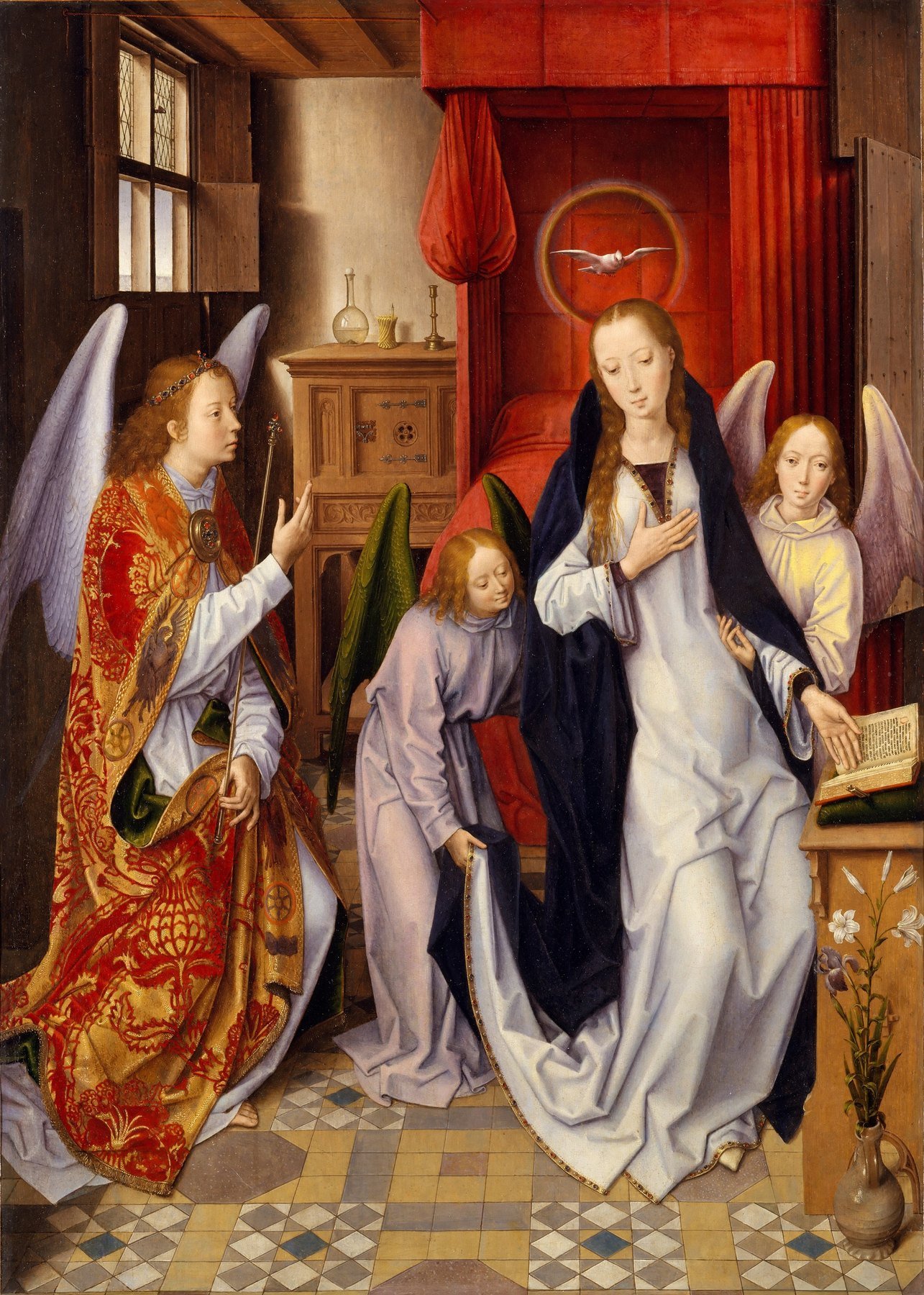
Hans Memling
1480–1489, The Metropolitan Museum of Art, New York
About this painting
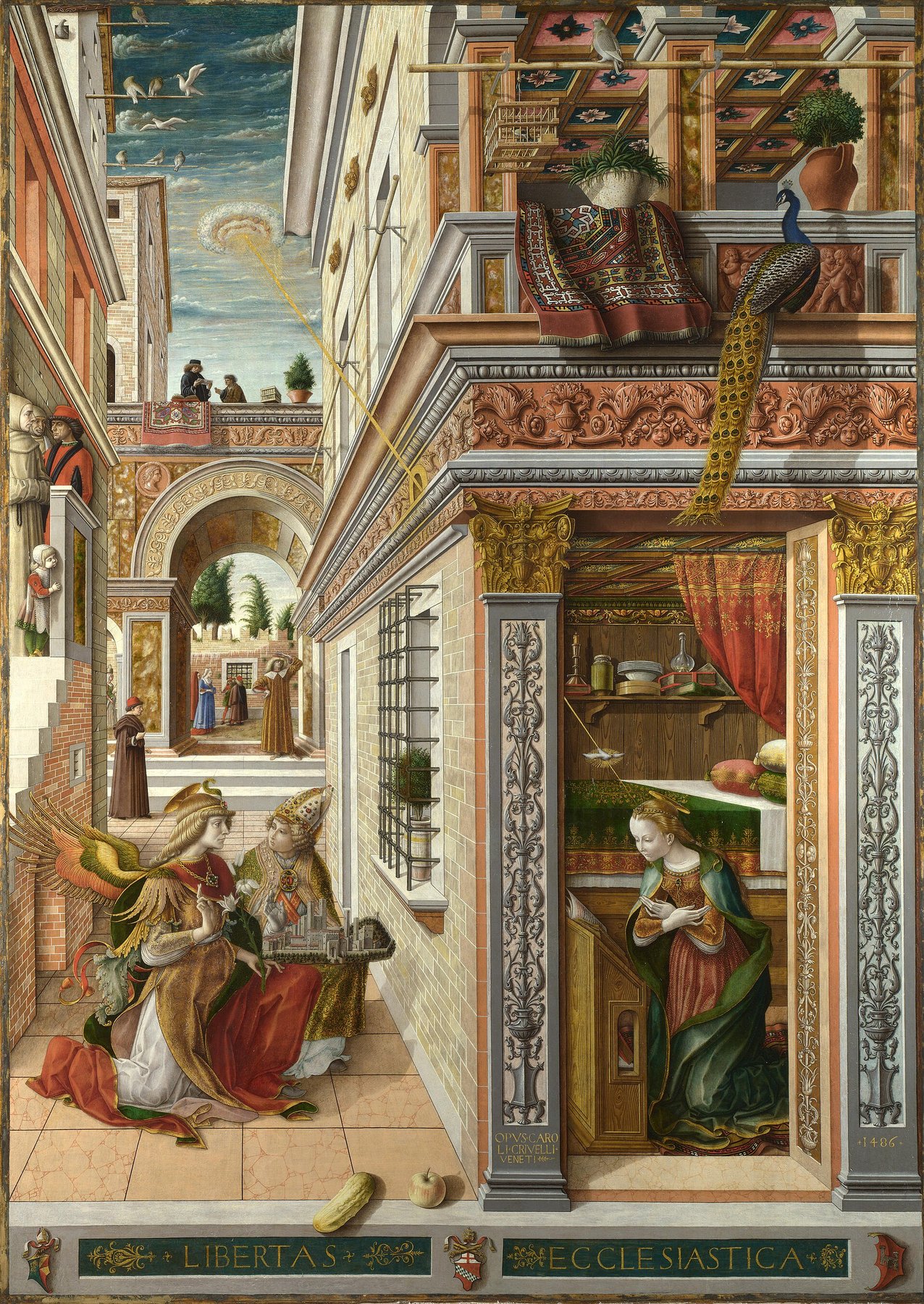
Carlo Crivelli
1486, The National Gallery, London
About this painting