The Regina Caeli
A traditional Catholic prayer
Queen of Heaven, rejoice. Alleluia.
For He whom thou wast made worthy to bear, alleluia,
Hath risen, as He said. Alleluia.
Pray for us to God. Alleluia.
V. Rejoice and be glad, O Virgin Mary. Alleluia.
R. For the Lord hath risen indeed. Alleluia.
Let us pray. O God, who through the resurrection of Thy Son our Lord Jesus Christ hast vouchsafed to give joy to the whole world; grant us, we beseech Thee, that, through the intercession of the Virgin Mary His Mother, we may obtain the joys of eternal life. Through the same Christ our Lord. Amen.
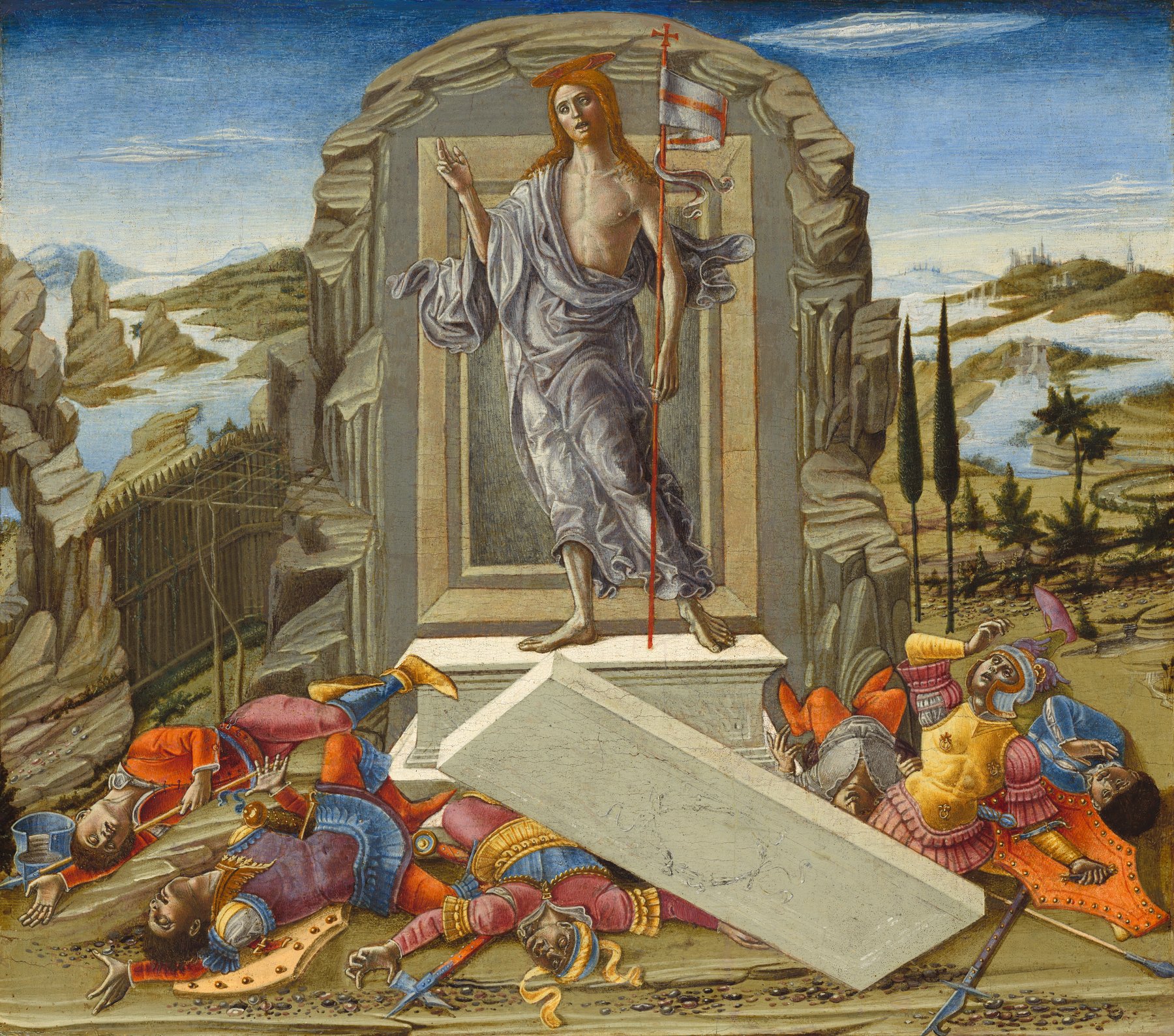
Benvenuto di Giovanni
probably 1491, National Gallery of Art, Washington
About this painting
In Latin
Regina caeli, laetare, alleluia.
Quia quem meruisti portare, alleluia,
Resurrexit, sicut dixit, alleluia.
Ora pro nobis Deum, alleluia.
V. Gaude et laetare, Virgo Maria, alleluia.
R. Quia surrexit Dominus vere, alleluia.
Oremus. Deus, qui per resurrectionem Filii tui Domini nostri Iesu Christi mundum laetificare dignatus es: praesta, quaesumus, ut per eius Genetricem Virginem Mariam perpetuae capiamus gaudia vitae. Per eundem Christum Dominum nostrum. Amen.
Where it comes from
Christ stands barefoot in the open tomb with the banner of the Resurrection in one hand and the other raised, the lid thrown down across the ground and the guards tumbled over one another asleep at His feet. The anthem tells Our Lady what they missed: He whom thou wast made worthy to bear hath risen, as He said. It is of unknown authorship; it has been traced back to the twelfth century, and the Franciscans sang it after Compline in the first half of the thirteenth. A legend says that Saint Gregory the Great heard its first three lines chanted by angels on an Easter morning in Rome, and added the fourth himself, a pope finishing the angels' sentence. The Roman Breviary prescribes it from Compline of Holy Saturday through Paschal Time, when it takes the place of the Angelus, and the angel's greeting gives way for a season to the news of the empty tomb. The soldiers sleep through the morning, and for fifty days the Church sings over their heads, and over ours.
H. Henry, “Regina Coeli”, The Catholic Encyclopedia, vol. 12 (1911): newadvent.org
6He is not here. For he is risen, as he said. Come, and see the place where the Lord was laid.
Matthew 28:6, Douay-Rheims (Challoner)
More in painting
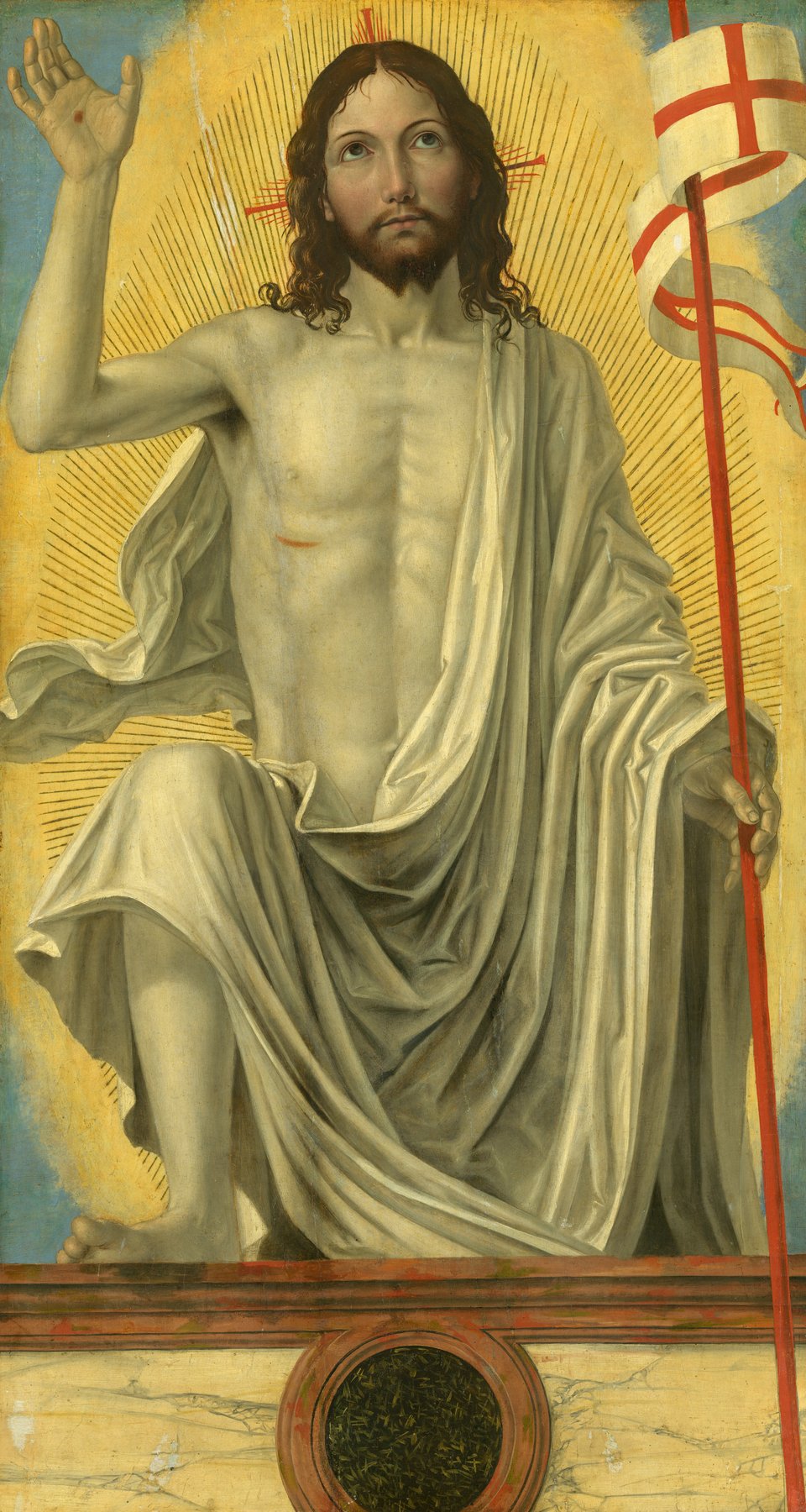
Bergognone
c. 1490, National Gallery of Art, Washington
About this painting
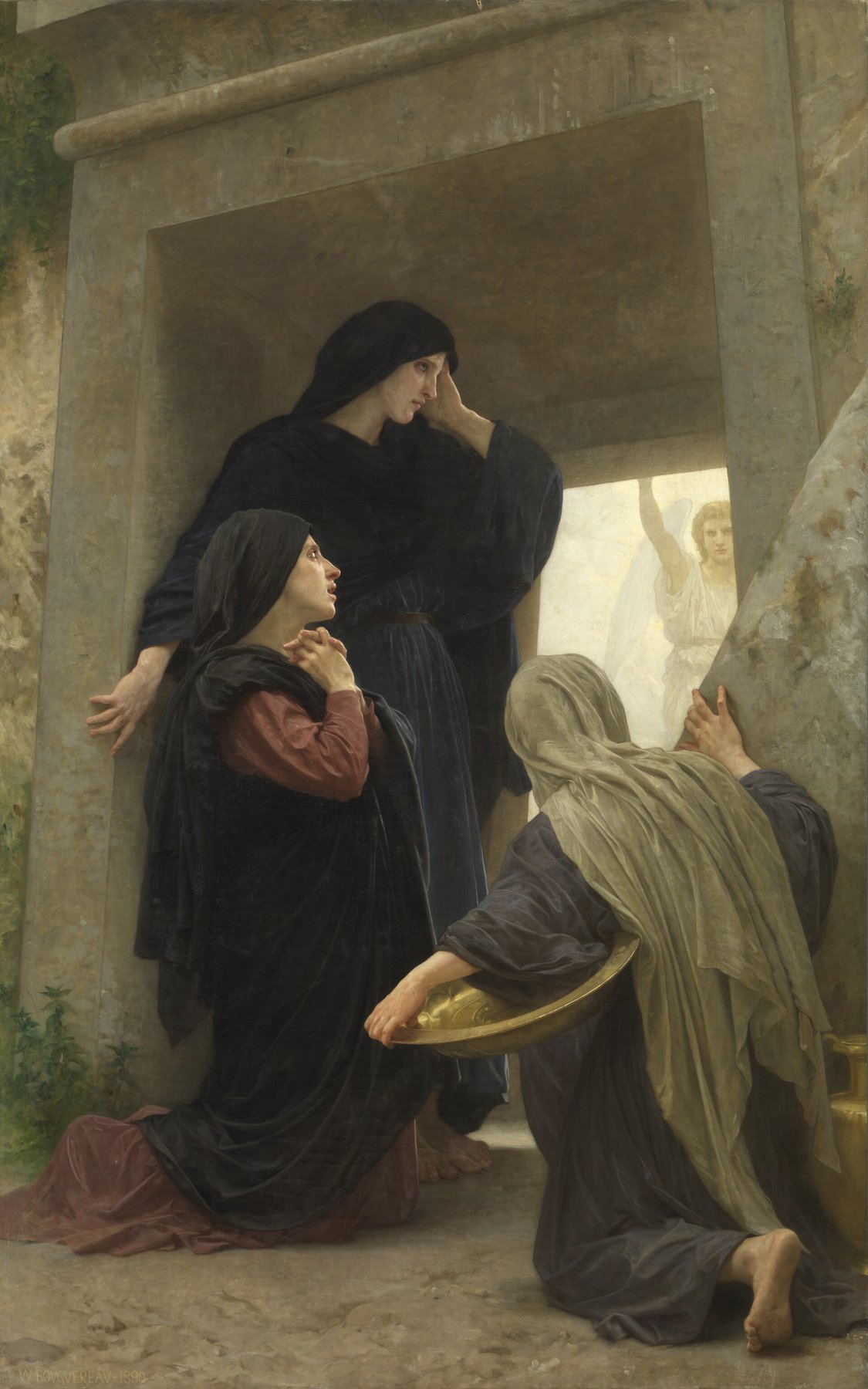
William-Adolphe Bouguereau
1890, Koninklijk Museum voor Schone Kunsten Antwerpen (KMSKA)
About this painting
The traditional prayers · The Rosary
Today's masterwork, each morning
One sacred painting a day, chosen by the liturgical calendar and captioned only from the museum's record: the feast, the colour of the day, and the Scripture the scene depicts.
One confirmation email first; nothing is sent until you click it. Every email has a one-click unsubscribe, and you can switch to Sundays and feasts only at any time.