The Tantum Ergo
A traditional Catholic prayer
Down in adoration falling,
Lo! the sacred Host we hail;
Lo! o’er ancient forms departing,
Newer rites of grace prevail;
Faith for all defects supplying,
Where the feeble senses fail.
To the everlasting Father,
And the Son who reigns on high,
With the Holy Spirit proceeding
Forth from Each eternally,
Be salvation, honour, blessing,
Might and endless majesty. Amen.
V. Thou hast given them bread from heaven.
R. Having within it all sweetness.
Let us pray. O God, who under a wonderful Sacrament hast left us a memorial of Thy Passion: grant us, we beseech Thee, so to venerate the sacred mysteries of Thy Body and Blood, that we may ever feel within us the fruit of Thy redemption. Who livest and reignest for ever and ever. Amen.
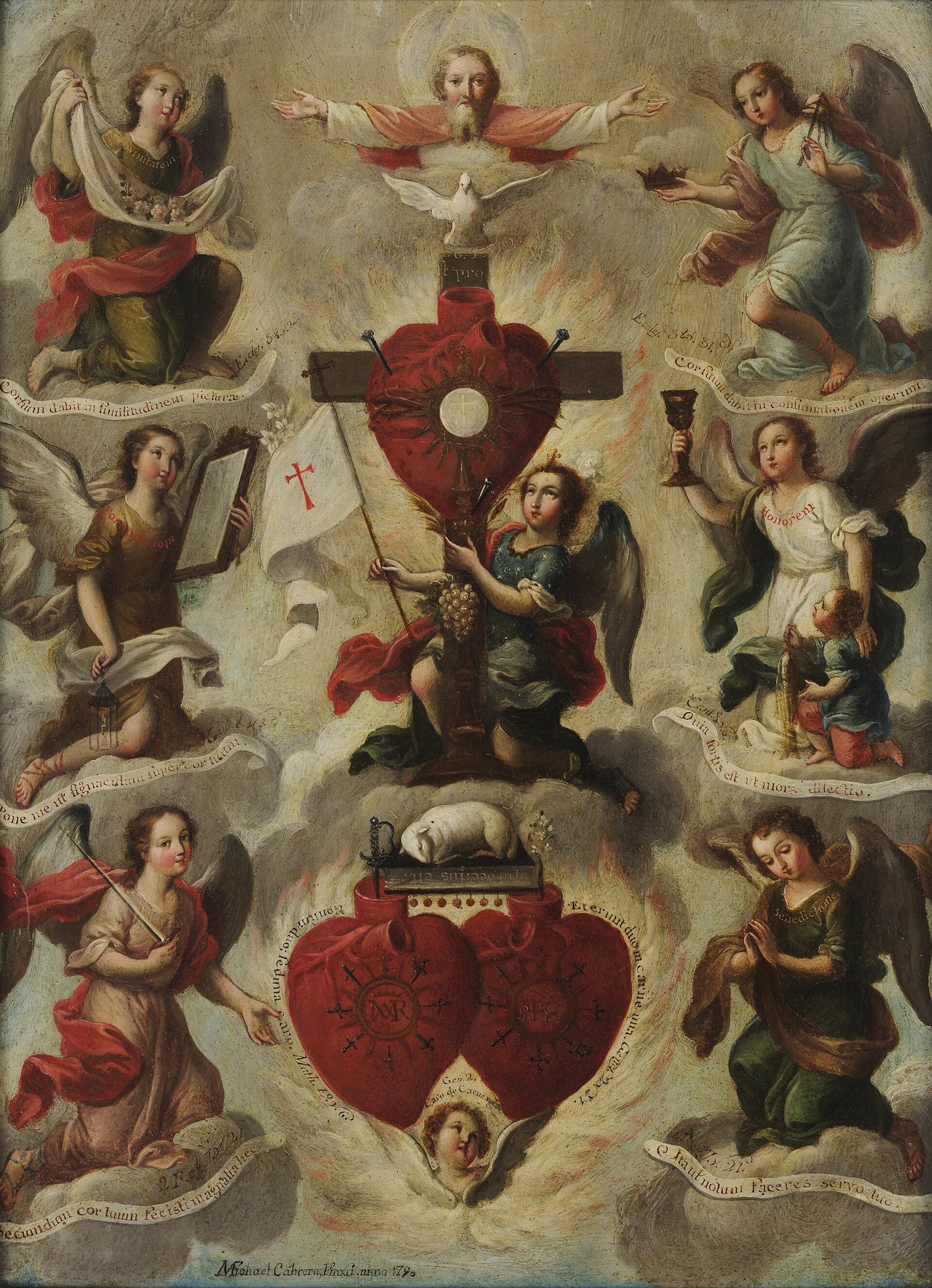
Miguel Cabrera
1750, Museo Blaisten - Colección Andres Blaisten
About this painting
In Latin
Tantum ergo Sacramentum
veneremur cernui:
et antiquum documentum
novo cedat ritui:
praestet fides supplementum
sensuum defectui.
Genitori, Genitoque
laus et iubilatio,
salus, honor, virtus quoque
sit et benedictio:
procedenti ab utroque
compar sit laudatio. Amen.
V. Panem de caelo praestitisti eis.
R. Omne delectamentum in se habentem.
Oremus. Deus, qui nobis sub Sacramento mirabili passionis tuae memoriam reliquisti: tribue, quaesumus, ita nos Corporis et Sanguinis tui sacra mysteria venerari, ut redemptionis tuae fructum in nobis iugiter sentiamus. Qui vivis et regnas in saecula saeculorum. Amen.
Where it comes from
In the middle of Miguel Cabrera’s painting a monstrance stands on a cross, the white Host in its golden rays set into a burning heart, and a kneeling angel holds it up with a banner and a bunch of grapes; above, the Father opens His arms and the Dove comes down, and around them angels carry a chalice, a crown, a lantern and a cloth, as servants carry things into a room where a king is about to be seen. Benediction is that moment made public: the Host lifted in the monstrance, and the people on their knees before Him, hidden in what a hand could close over. The hymn Pange lingua was composed by Saint Thomas Aquinas for the Office of Corpus Christi, and the Roman Breviary sets it at both Vespers of the feast; it is sung in the procession to the repository on Holy Thursday and in the processions of Corpus Christi and the Forty Hours. Its last stanza and doxology form a hymn of their own, the Tantum Ergo, prescribed for Benediction of the Most Blessed Sacrament, and the doxology borrows the words Genitori Genitoque … Procedenti ab utroque, Compar from a sequence of Adam of Saint Victor, one poet lending his lines to another. The English here is Edward Caswall’s, of 1849. Down in adoration falling, the hymn says, and the angels around that small white circle already are, waiting for us to join them.
H. Henry, “Pange Lingua Gloriosi”, The Catholic Encyclopedia, vol. 11 (1911): newadvent.org
20Instead of which things, thou didst feed thy people with the food of angels, and gavest them bread from heaven, prepared without labour; having in it all that is delicious, and the sweetness of every taste.
51I am the living bread which came down from heaven.
Wisdom 16:20 · John 6:51, Douay-Rheims (Challoner)
More in painting
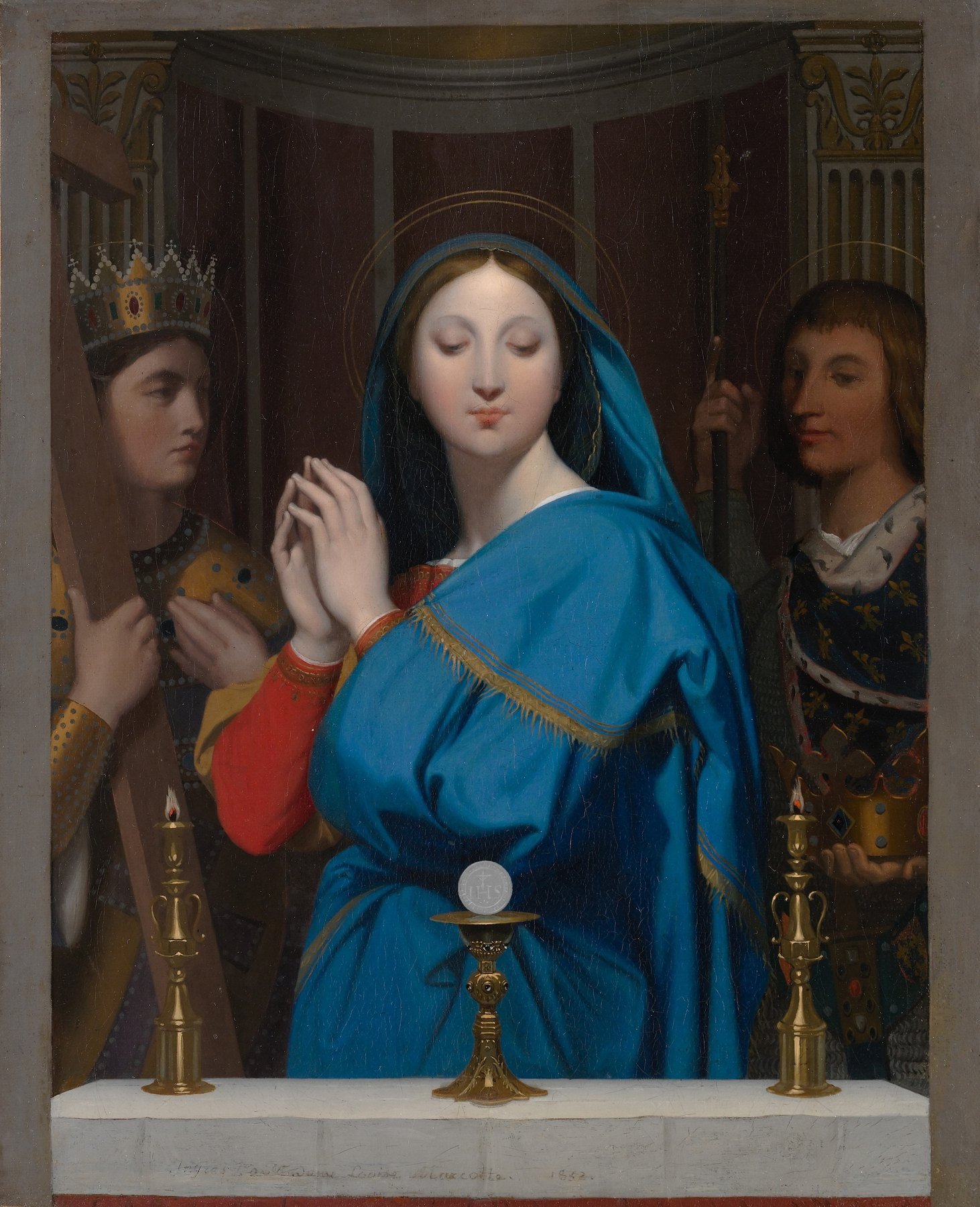
Jean-Auguste-Dominique Ingres
1852, The Metropolitan Museum of Art, New York
About this painting
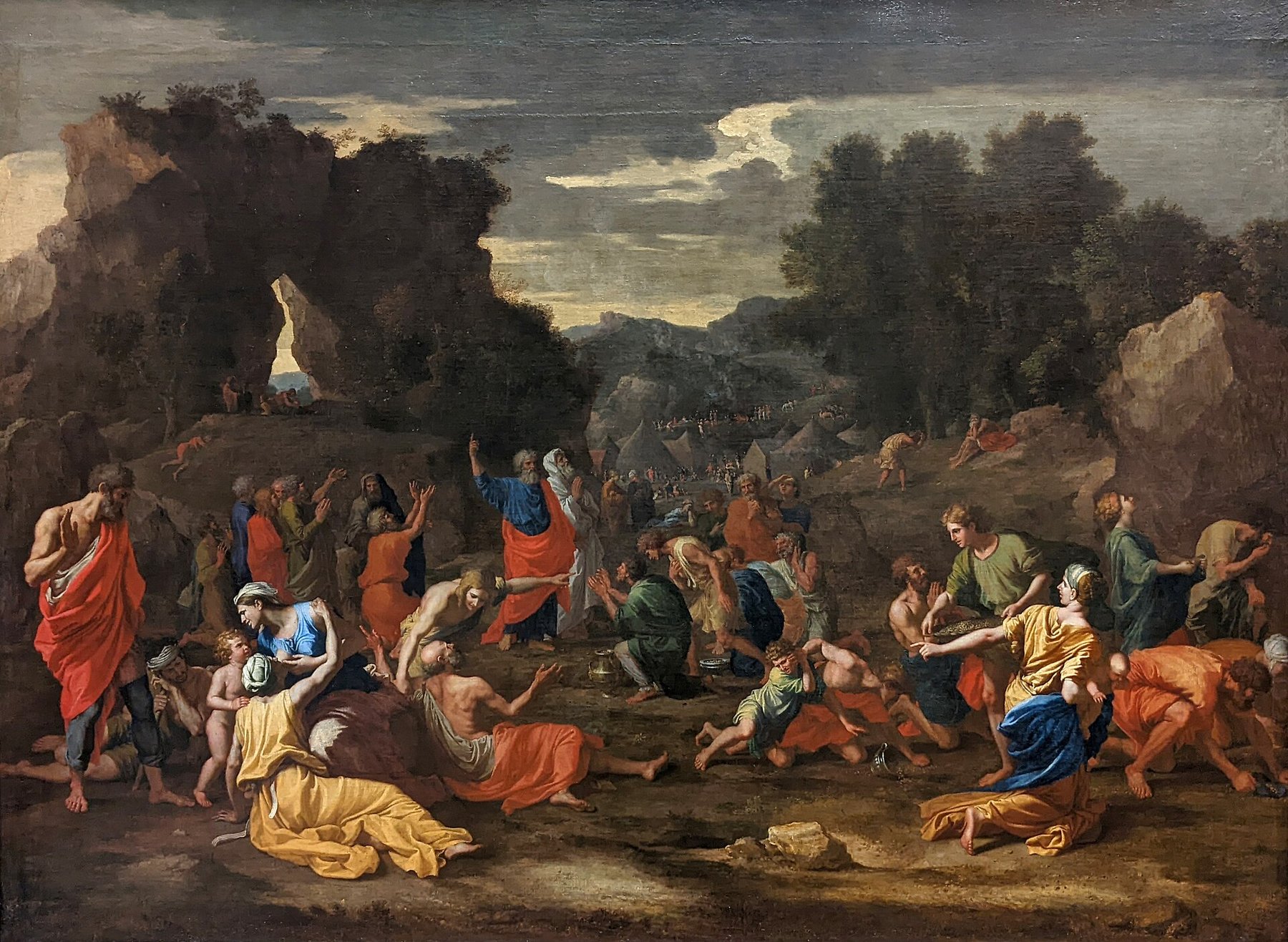
Nicolas Poussin
1637–39, Musée du Louvre, Paris
About this painting
The traditional prayers · The Rosary
Today's masterwork, each morning
One sacred painting a day, chosen by the liturgical calendar and captioned only from the museum's record: the feast, the colour of the day, and the Scripture the scene depicts.
One confirmation email first; nothing is sent until you click it. Every email has a one-click unsubscribe, and you can switch to Sundays and feasts only at any time.