Saint Elizabeth of Hungary
17 November · Memorial · White
In a hospital ward of red-curtained beds Elizabeth bends to hold a sick man who kneels and reaches up to her; across the street, under a Gothic canopy, she lies dead while a woman reads beside the bed and two angels lift her soul away in a white cloth. The Master of the Saint Elizabeth Panels sets her last years in the streets of a Netherlandish town, for an altarpiece in the great church at Dordrecht.
Rijksmuseum, Amsterdam, SK-A-3146
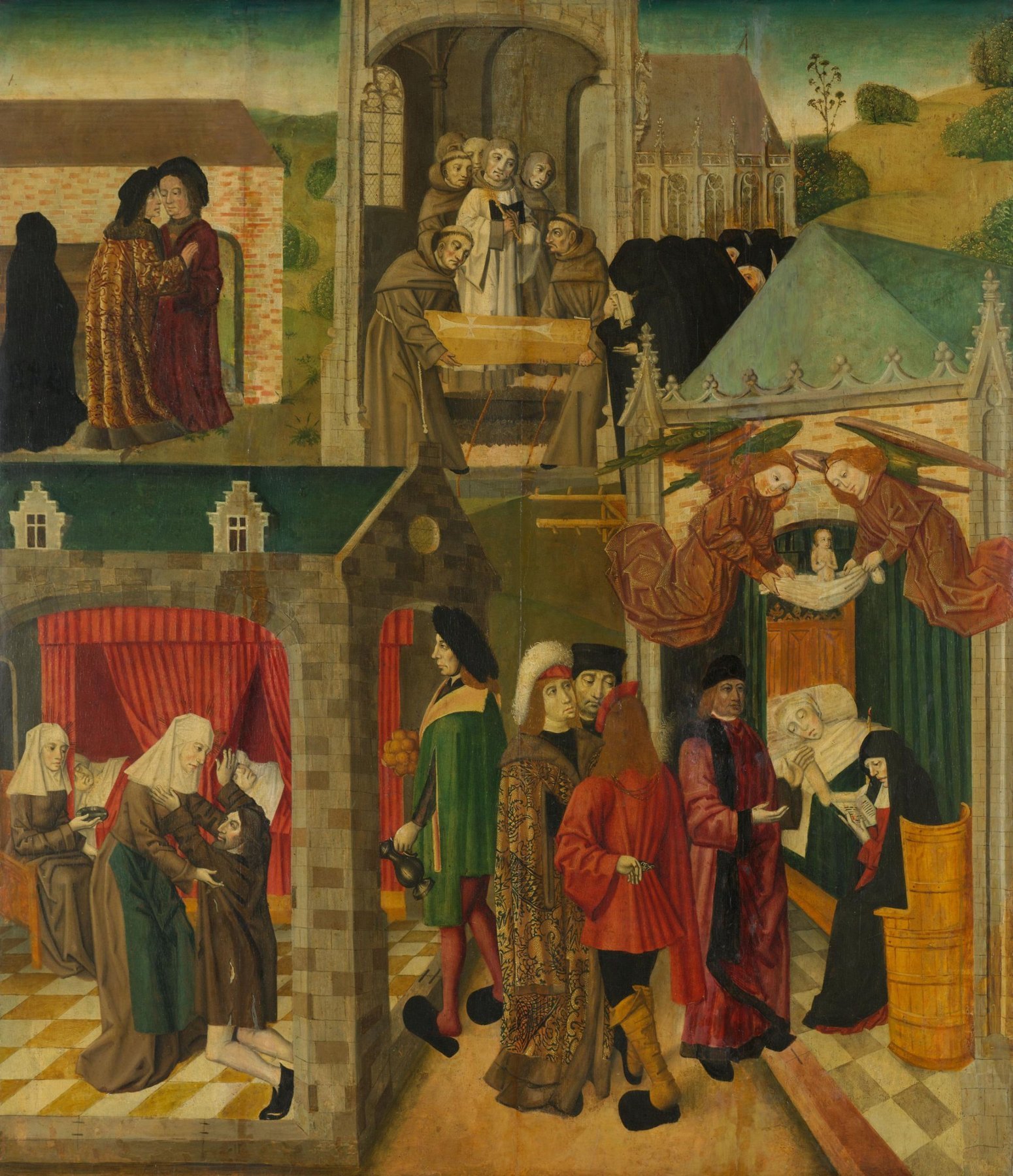
Master of the St Elizabeth Panels
c. 1490–c. 1495, oil on panel, Rijksmuseum, Amsterdam, SK-A-3146
The inner right wing of an altarpiece made for the Grote Kerk in Dordrecht.
The holding institution's record
Her life
She was born in Hungary, probably at Pressburg, in 1207, a daughter of King Andrew II, and brought up at the castle of the Wartburg in Thuringia. In 1221 she married Ludwig of Thuringia; they had a son, Hermann, and two daughters, Sophia and Gertrude. In the famine of 1226 she built a hospital of twenty-eight beds below the Wartburg. Ludwig died of the plague at Otranto on 11 September 1227, on his way to the crusade. Whether she was then driven from the Wartburg or left it freely, the sources do not agree.
In the summer of 1228 she built the Franciscan hospital at Marburg and served the sick in it herself, wearing the habit of the Third Order of Saint Francis, under a director, Conrad of Marburg, whom the Catholic Encyclopedia calls somewhat rough and very severe. She died at Marburg on 17 November 1231, at the age of twenty-four, and Gregory IX canonised her at Perugia at Pentecost in 1235. The best-known story about her is a legend: that the bread she was carrying to the poor, and trying to hide, was turned into roses. She was twenty-four. Every hospital ward is her house, and the bread is ours to carry now.
Michael Bihl, “St. Elizabeth of Hungary”, The Catholic Encyclopedia, vol. 5 (1909): newadvent.org
In Scripture
18My little children, let us not love in word nor in tongue, but in deed and in truth.
38Give: and it shall be given to you: good measure and pressed down and shaken together and running over shall they give into your bosom. For with the same measure that you shall mete withal, it shall be measured to you again.
1 John 3:18 · Luke 6:38, Douay-Rheims (Challoner).
In painting
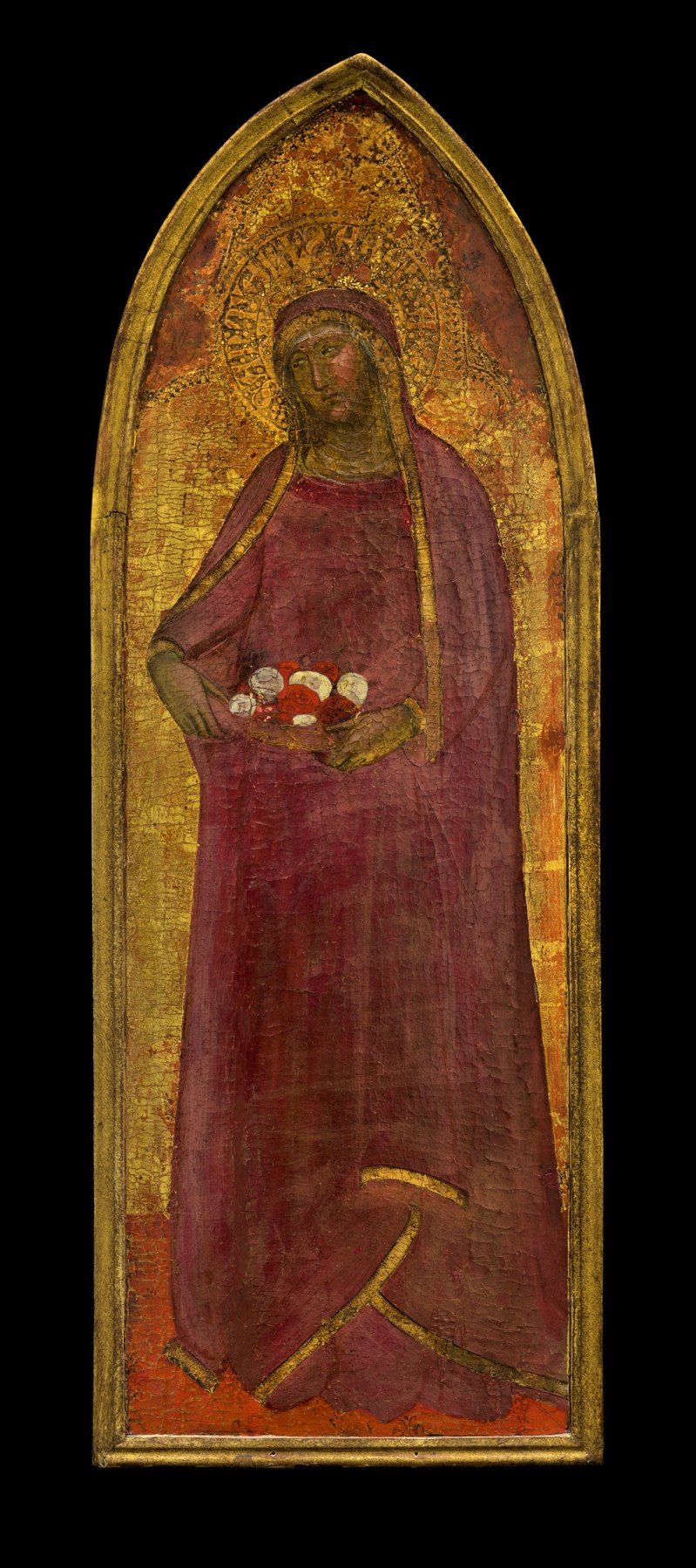
Andrea di Bonaiuto
mid-1360s, tempera and gold leaf on panel, The Museum of Fine Arts, Houston, 44.558
She holds the roses of her legend in her mantle.
The holding institution's record
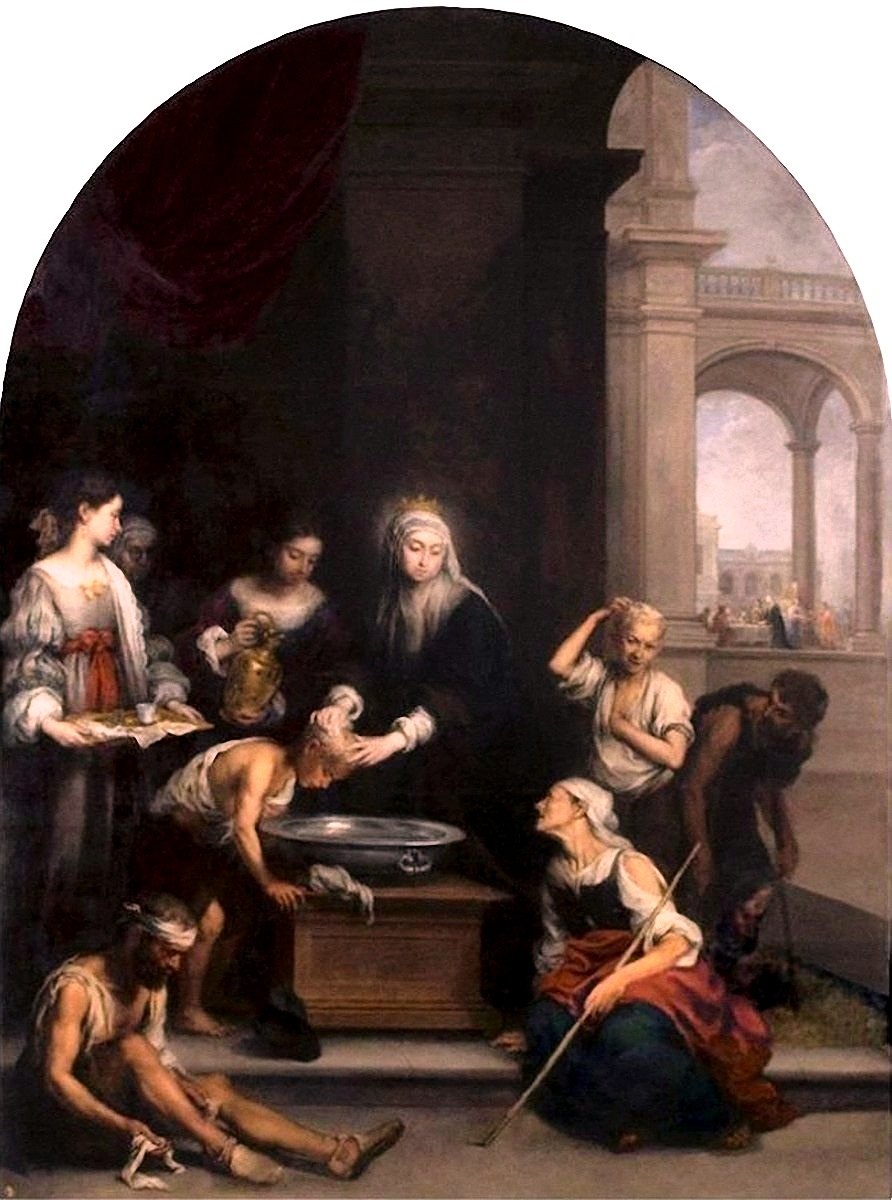
Bartolomé Esteban Murillo
1672, oil on canvas, Hospital de la Santa Caridad, Seville
The photograph's record

The day in the next three years
| 2026 | Tuesday 17 November |
|---|---|
| 2027 | Wednesday 17 November |
| 2028 | Friday 17 November |
Near this day
The saints of the year · The feasts · The Rosary
Written and checked by the Monstrance editors; sources cited. Scripture in the Douay-Rheims (Challoner). Every painting is in the public domain, and each caption follows the record of the institution that holds it.
Today's masterwork, each morning
One sacred painting a day, chosen by the liturgical calendar and captioned only from the museum's record: the feast, the colour of the day, and the Scripture the scene depicts.
One confirmation email first; nothing is sent until you click it. Every email has a one-click unsubscribe, and you can switch to Sundays and feasts only at any time.