

The Baptism of the Lord
The Sunday after the Epiphany · Feast · White
In 2029, when the Epiphany is kept in the United States on Sunday 7 January, the Baptism of the Lord is kept on Monday 8 January.
Christ stands at the edge of the stream with His hands joined, and Saint John the Baptist pours water over His head from a small bowl; the dove of the Holy Spirit hangs above them with its wings spread, three angels stand by the tree at the left, and behind, a man pulls his garment over his head to be baptized next. Piero della Francesca painted it, probably about 1437 to 1445, for the church of San Giovanni Battista in his hometown of Borgo Sansepolcro. The Epiphany had its origin in the Eastern Church, and the Catholic Encyclopedia judges that the Baptism was the event it predominantly commemorated. Clement of Alexandria wrote that the followers of Basilides celebrated the day of His Baptism, spending the night before in readings, and he implies that the Church at Alexandria did not. Saint Gregory Nazianzen, preaching on 6 and 7 January, told his hearers that the Birth of Christ and the leading of the Magi by a star had been celebrated, and that the commemoration of His Baptism would now take place. Saint Jerome held that the day was venerable for the baptism and the opening of the heavens, not for the Nativity, for then “He was hidden, and did not appear.” The West took the feast up and, as time went on, attached overwhelming importance to the Magi; yet in the Roman Office of 1909 the first responsory of the feast, of its octave and of the Sunday within the octave dealt with the Baptism, and the antiphon at Second Vespers kept three wonders together, the star, the wine at Cana, and “today in Jordan Christ willed to be baptized by John to save us.” The Church now keeps the Baptism of the Lord on the Sunday after the Epiphany, and Ordinary Time begins on the weekday after it.
Cyril Martindale, “Epiphany”, The Catholic Encyclopedia, vol. 5 (1909): newadvent.org
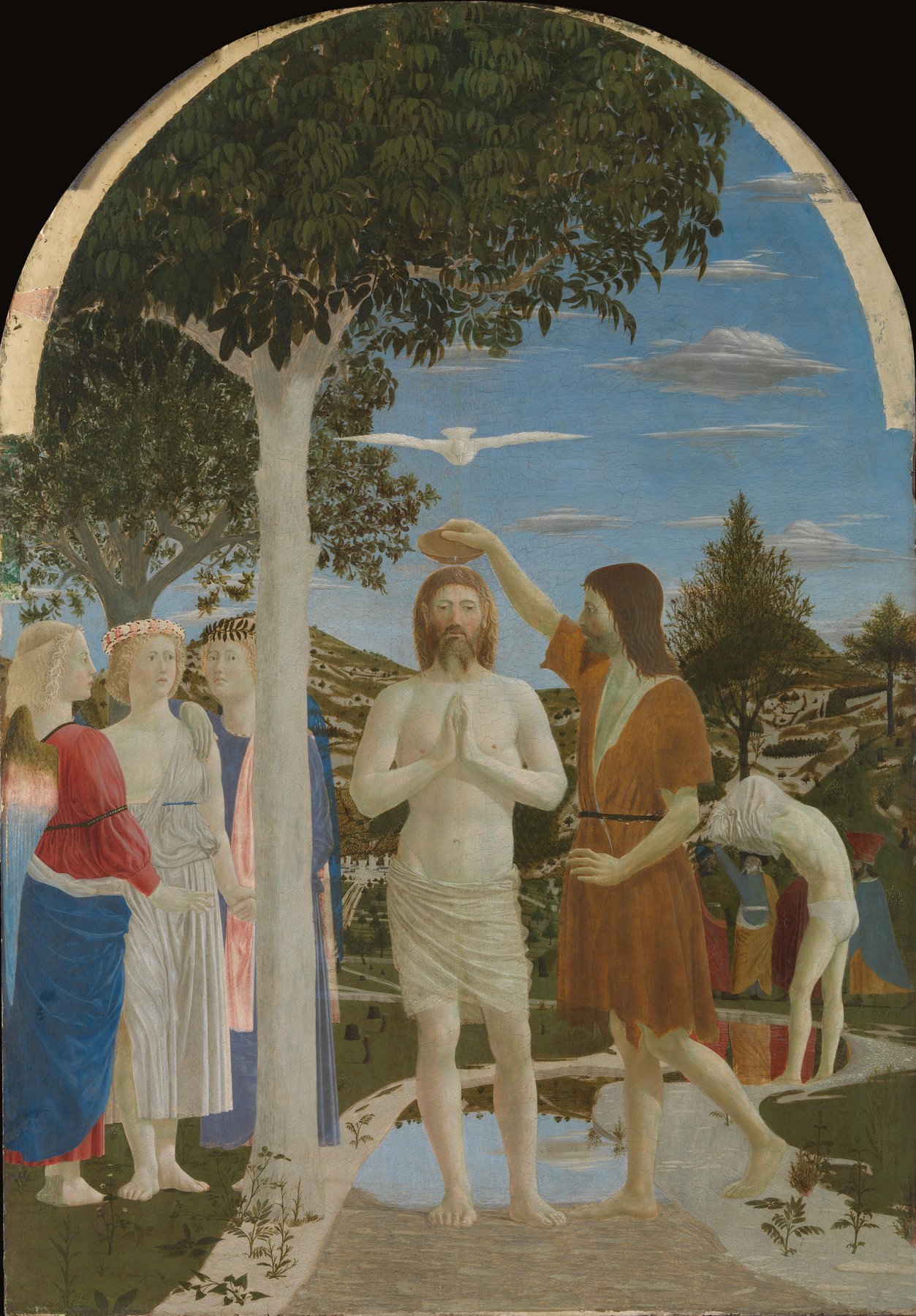
Piero della Francesca
c. 1437–1445, The National Gallery, London
About this painting
The Gospel of the feast
7And he preached, saying: There cometh after me one mightier than I, the latchet of whose shoes I am not worthy to stoop down and loose. 8I have baptized you with water: but he shall baptize you with the Holy Ghost. 9And it came to pass, in those days, Jesus came from Nazareth of Galilee and was baptized by John in Jordan. 10And forthwith coming up out of the water, he saw the heavens open and the Spirit as a dove descending and remaining on him. 11And there came a voice from heaven: Thou art my beloved Son; in thee I am well pleased.
Mark 1:7–11, Douay-Rheims (Challoner)
In painting
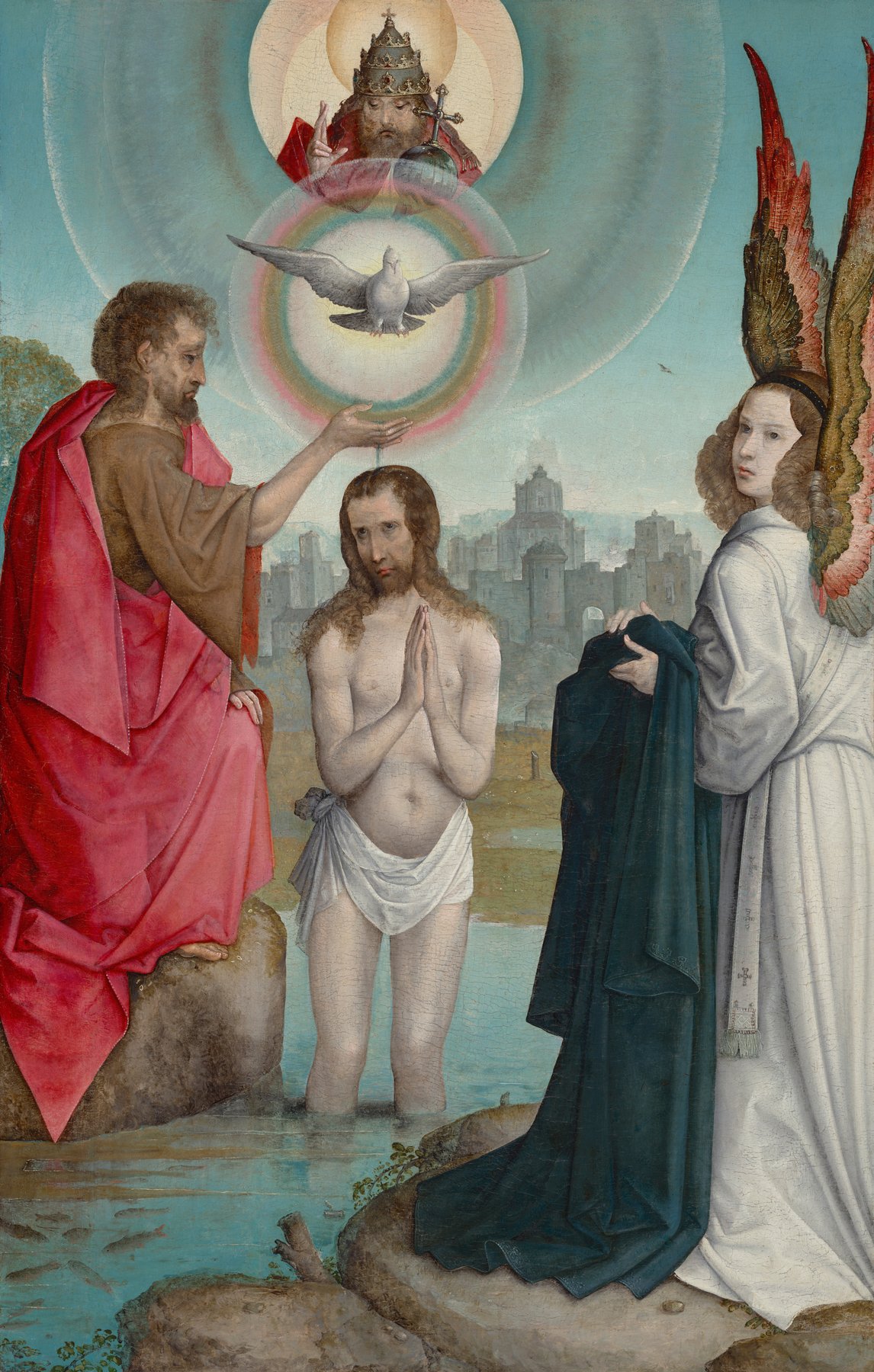
Juan de Flandes
c. 1508/1519, National Gallery of Art, Washington
About this painting
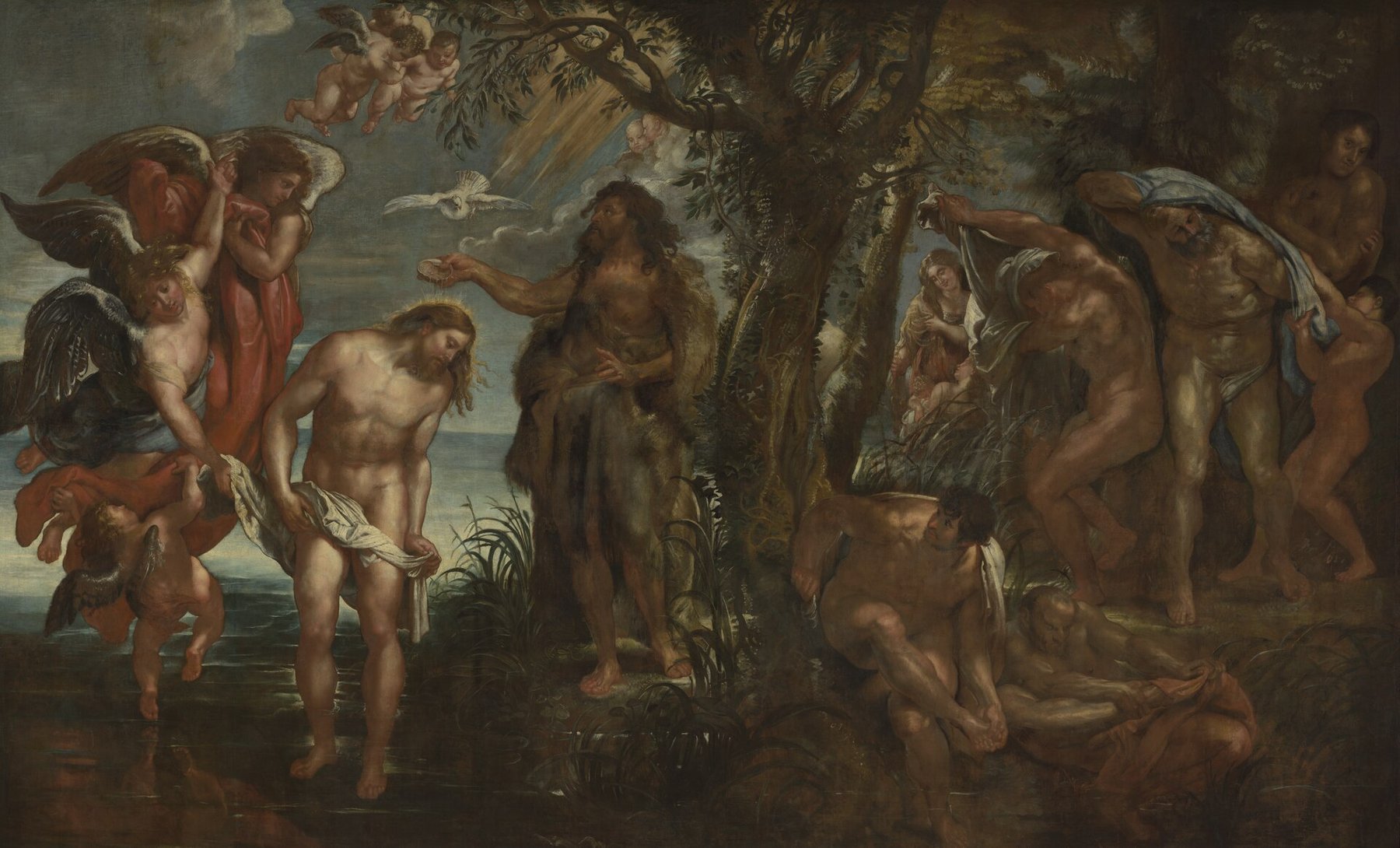
Peter Paul Rubens
1604–1605, KMSKA, Antwerp
About this painting
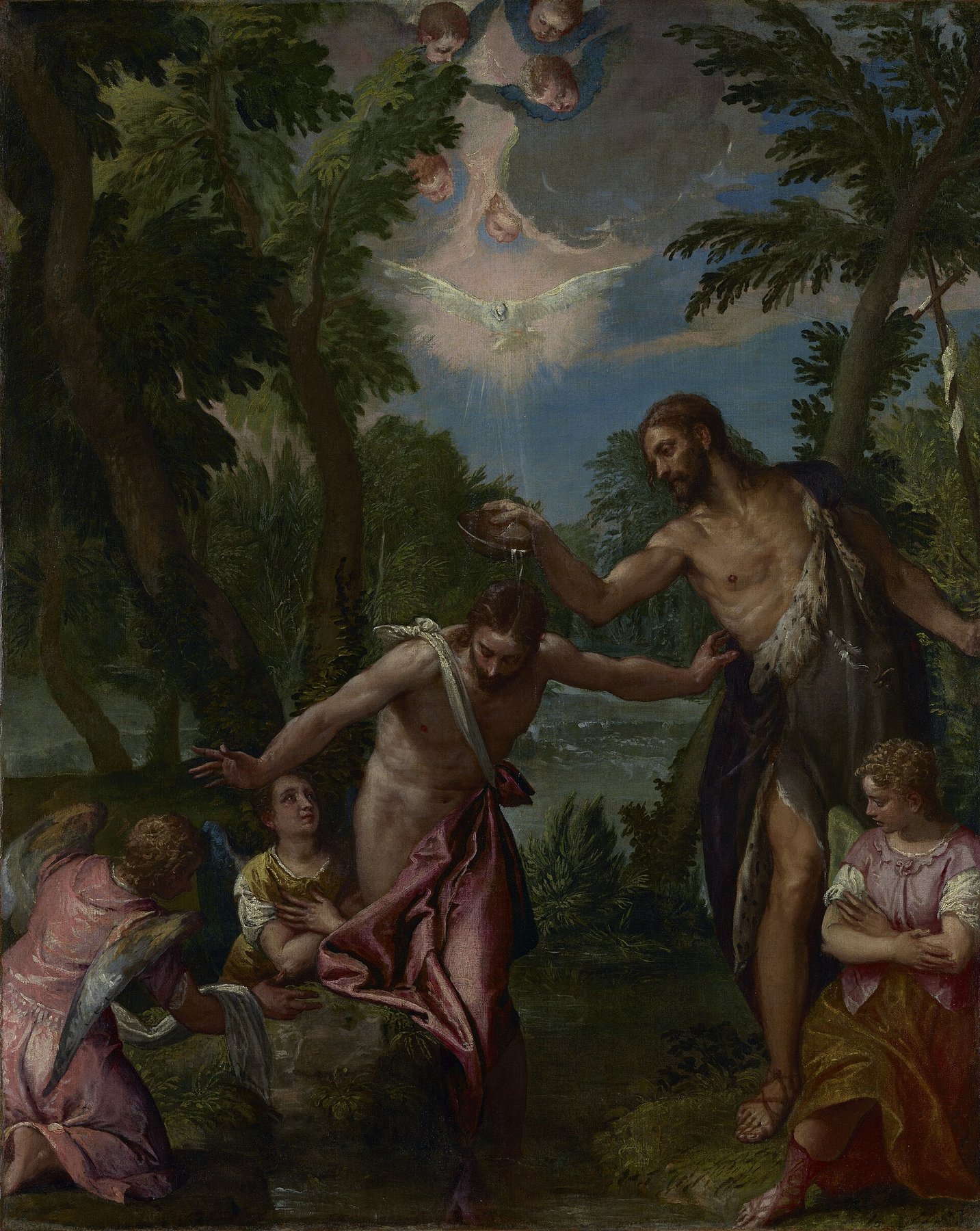
Paolo Veronese and workshop
about 1580–1588, J. Paul Getty Museum, Los Angeles
About this painting
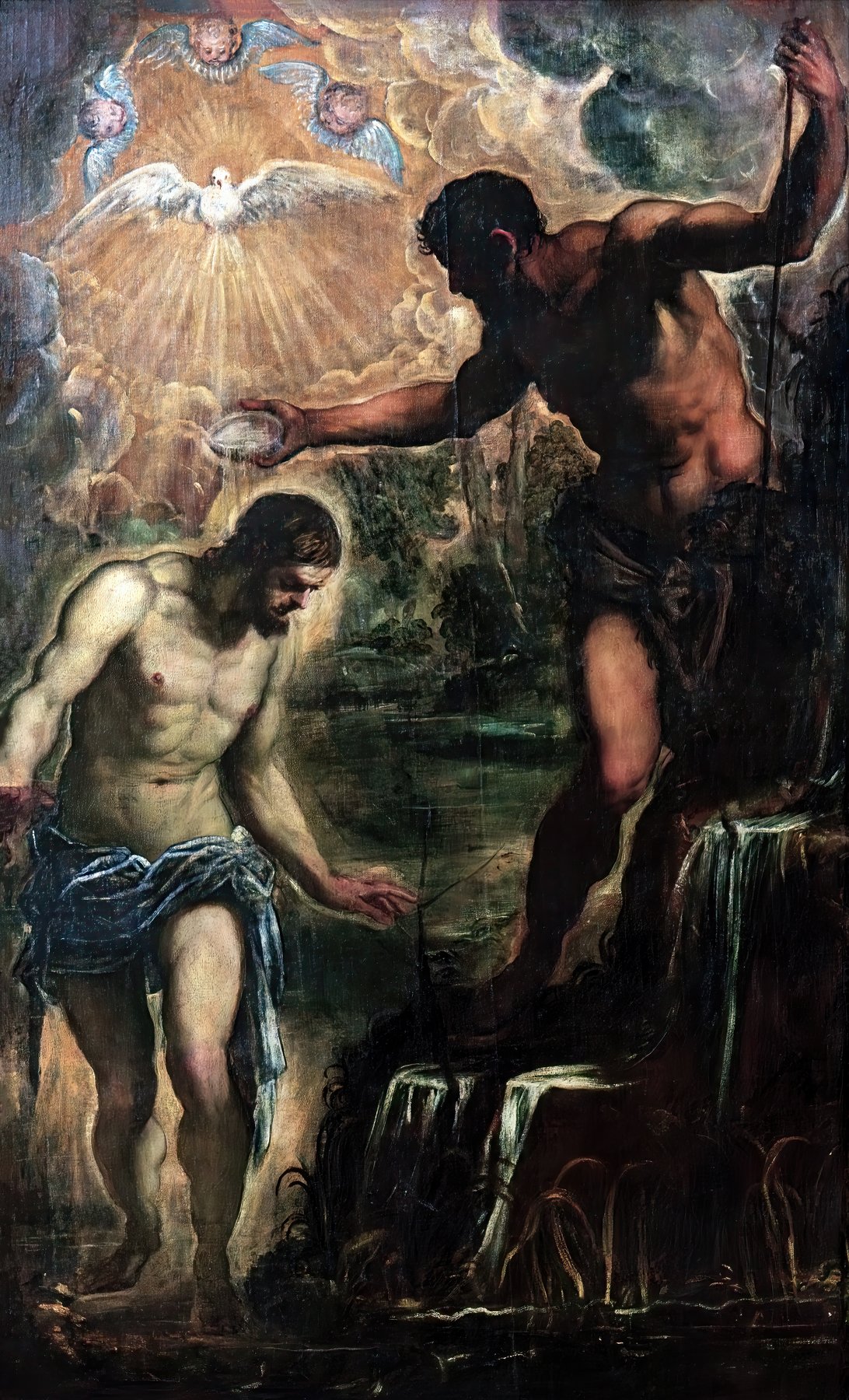
Tintoretto
1580–82, Church of San Silvestro, Venice
Photograph: Didier Descouens, CC BY-SA 4.0, cropped
About this painting
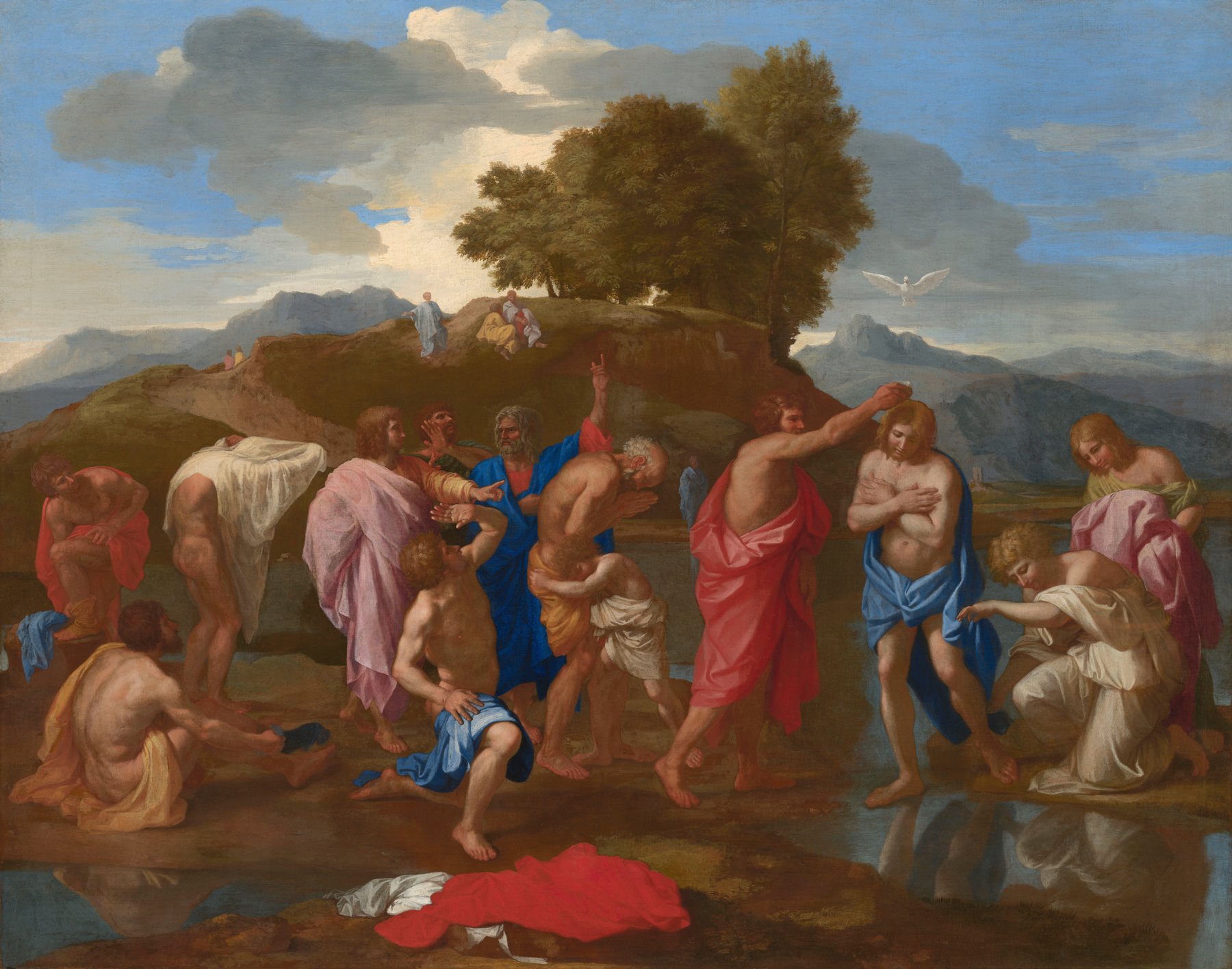
Nicolas Poussin
1641/1642, National Gallery of Art, Washington
About this painting
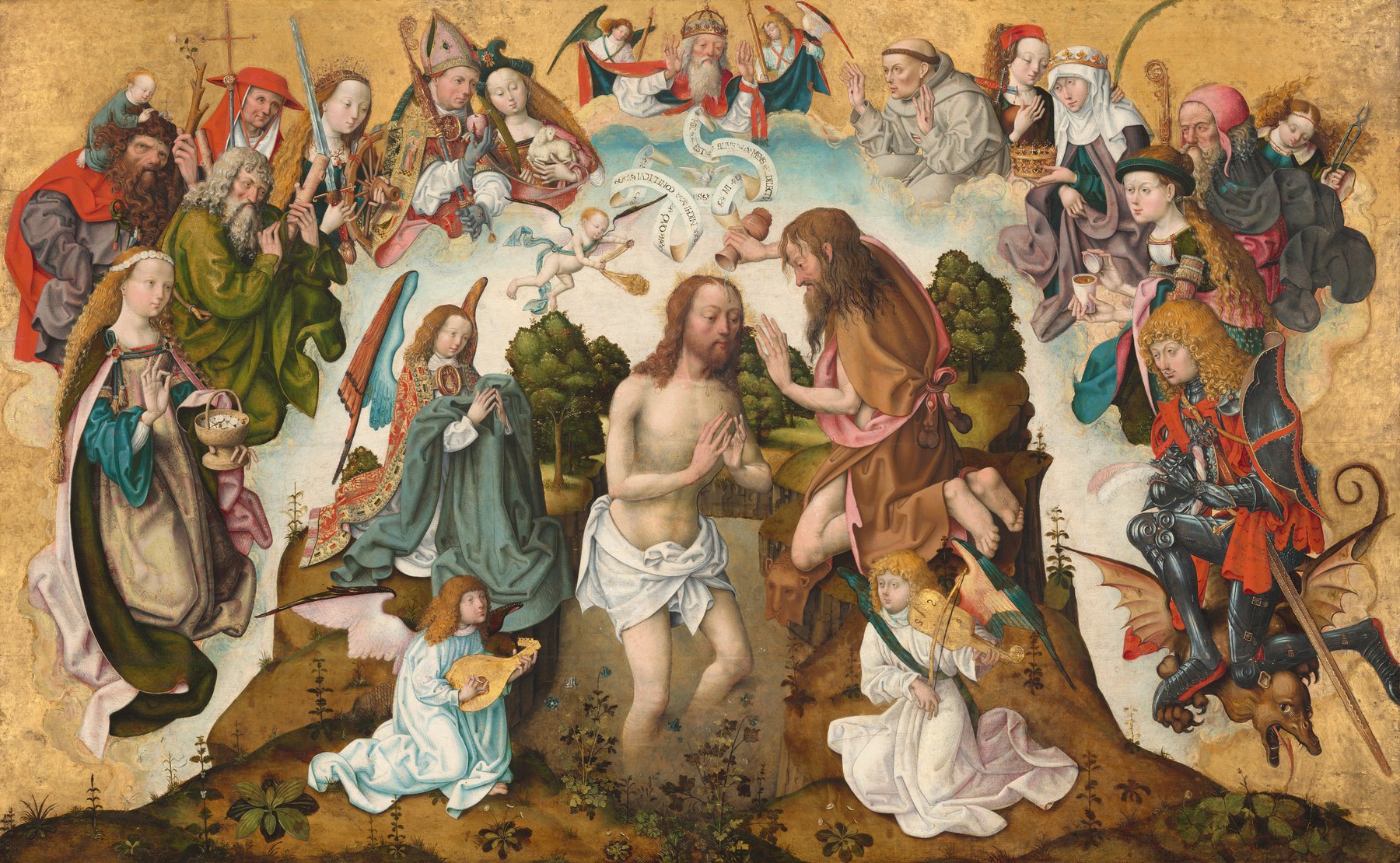
Master of the Saint Bartholomew Altar
c. 1485/1500, National Gallery of Art, Washington
About this painting
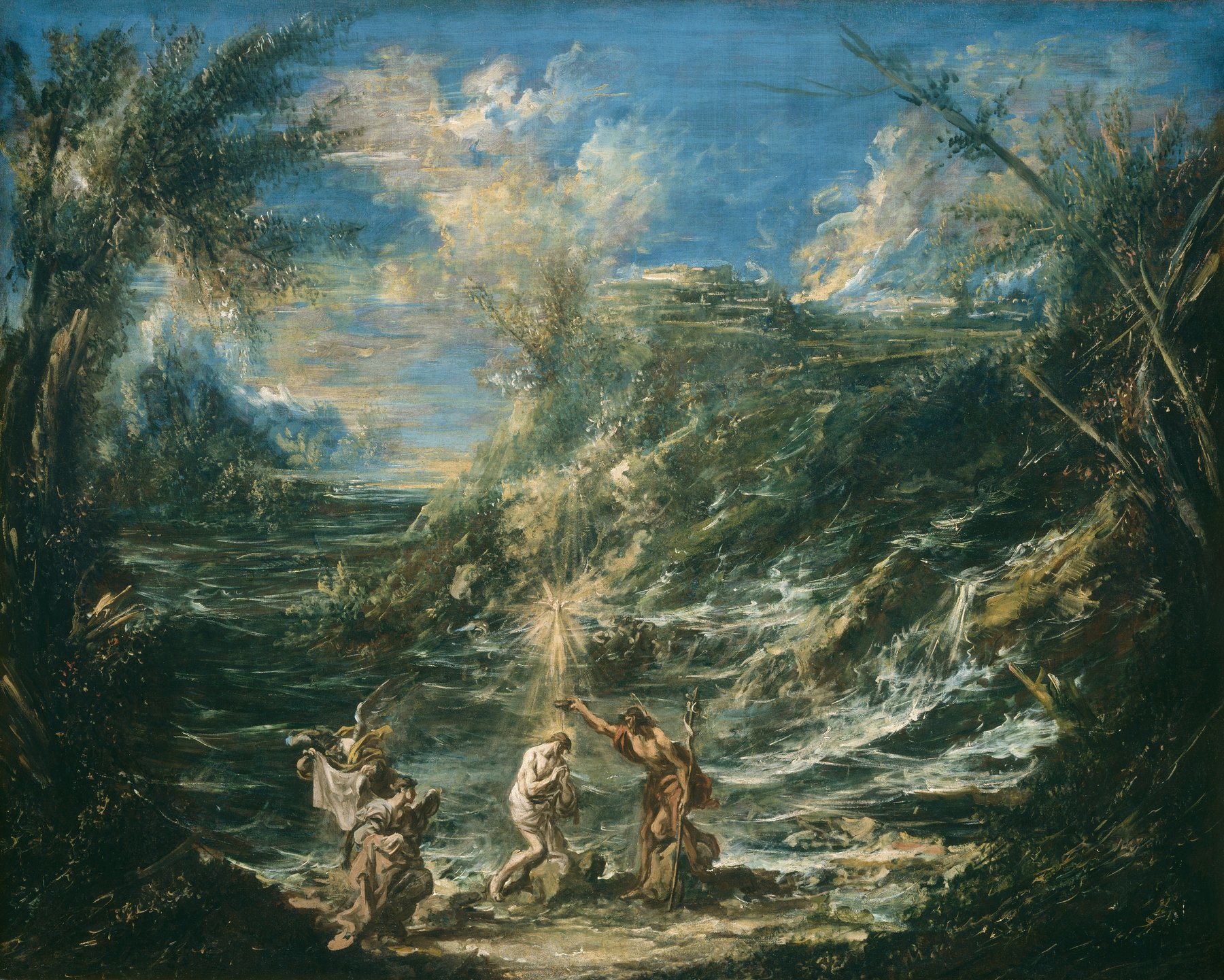
Alessandro Magnasco
c. 1740, National Gallery of Art, Washington
About this painting
The day in the next three years
| 2027 | Sunday 10 January (Gospel: Mark 1:7–11) |
|---|---|
| 2028 | Sunday 9 January (Gospel: Luke 3:15–16, 21–22) |
| 2029 | Monday 8 January, the day after the Epiphany is kept in the United States (Gospel: Matthew 3:13–17) |
The feasts of the year · The saints · The Rosary
Written and checked by the Monstrance editors; sources cited. Scripture in the Douay-Rheims (Challoner). Each caption follows the record of the institution that holds the work.
Today's masterwork, each morning
One sacred painting a day, chosen by the liturgical calendar and captioned only from the museum's record: the feast, the color of the day, and the Scripture the scene depicts.
One confirmation email first; nothing is sent until you click it. Every email has a one-click unsubscribe, and you can switch to Sundays and feasts only at any time.