The Confiteor
A traditional Catholic prayer
I confess to Almighty God, to blessed Mary ever-Virgin, to blessed Michael the Archangel, to blessed John the Baptist, to the holy Apostles Peter and Paul, and to all the Saints, that I have sinned exceedingly in thought, word, and deed, through my fault, through my fault, through my most grievous fault. Therefore I beseech blessed Mary ever-Virgin, blessed Michael the Archangel, blessed John the Baptist, the holy Apostles Peter and Paul, and all the Saints, to pray to the Lord our God for me.
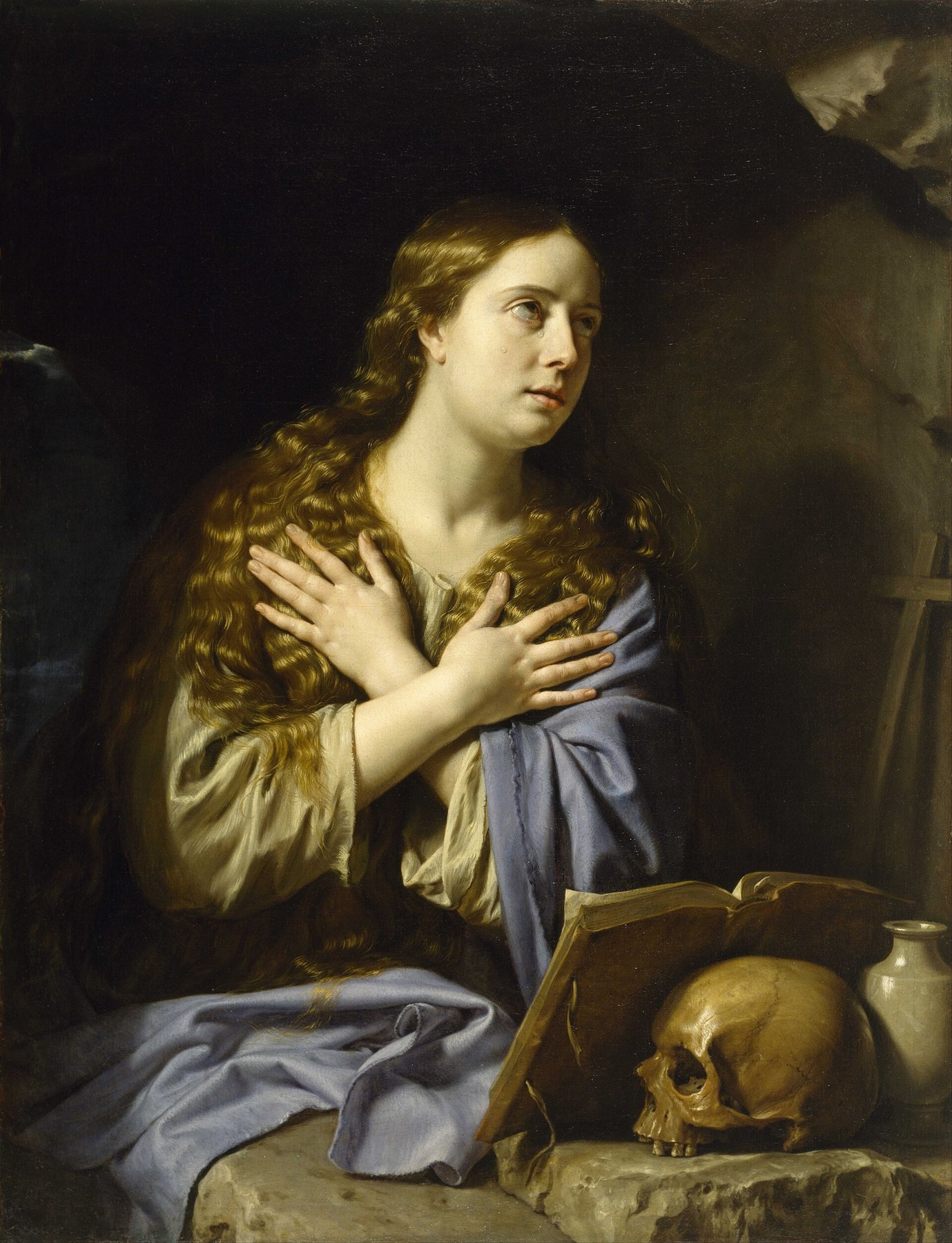
Philippe de Champaigne
1648, Museum of Fine Arts, Houston
About this painting
In Latin
Confiteor Deo omnipotenti, beatae Mariae semper Virgini, beato Michaeli Archangelo, beato Ioanni Baptistae, sanctis Apostolis Petro et Paulo, omnibus Sanctis, quia peccavi nimis cogitatione, verbo et opere: mea culpa, mea culpa, mea maxima culpa. Ideo precor beatam Mariam semper Virginem, beatum Michaelem Archangelum, beatum Ioannem Baptistam, sanctos Apostolos Petrum et Paulum, omnes Sanctos, orare pro me ad Dominum Deum nostrum.
Where it comes from
Saint Mary Magdalen sits in her cave with her hands crossed on her breast and her eyes lifted, a skull resting against the open book beside her and her jar of ointment at the edge of the rock, a small wooden cross leaning in the shadow behind. Western tradition took her for the woman who washed Christ's feet with her tears, and the Confiteor is that weeping given a grammar: through my fault. It does not confess alone; it calls by name on blessed Mary ever-Virgin and blessed John the Baptist, with Michael the Archangel and the Apostles Peter and Paul, so that one sinner owning up is never in the room by himself. It began as one of the private prayers the celebrant said in the sacristy before Mass, and it is in the Micrologus of Bernold of Constance (d. 1100) that it is first found as part of the Mass, the sacristy's whisper walked out to the altar. It is said again during Mass when the faithful receive Holy Communion, and in the Divine Office at Prime and Compline. Since the Missal of Pius V (1566–1572) one form has been used throughout the Roman Rite, with the exceptions of the Carthusian, Carmelite and Dominican Offices. She looks up, not down, and the prayer ends the same way, asking the saints to pray for us.
Adrian Fortescue, “Confiteor”, The Catholic Encyclopedia, vol. 4 (1908): newadvent.org
16Confess therefore your sins one to another: and pray one for another, that you may be saved. For the continual prayer of a just man availeth much.
13And the publican, standing afar off, would not so much as lift up his eyes towards heaven; but struck his breast, saying: O God, be merciful to me a sinner.
James 5:16 · Luke 18:13, Douay-Rheims (Challoner)
More in painting
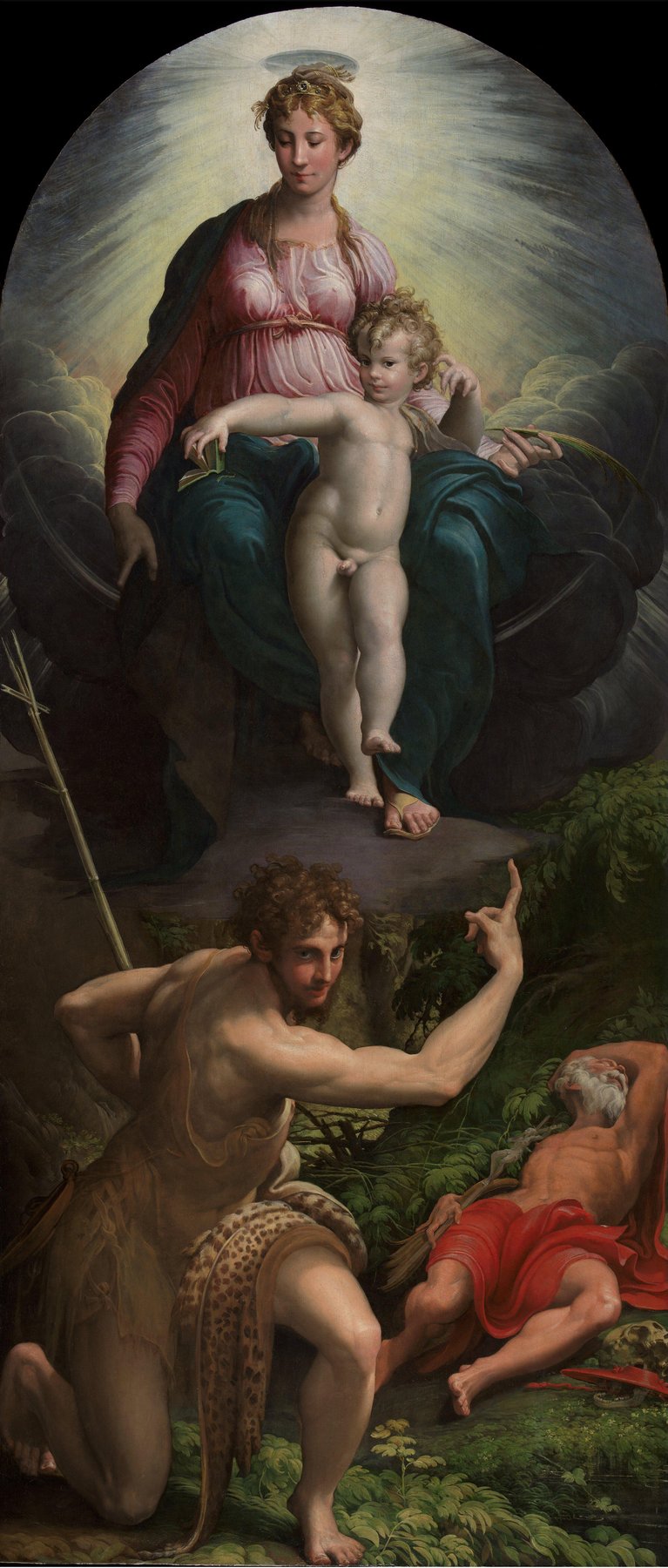
Parmigianino
1526–7, The National Gallery, London
About this painting
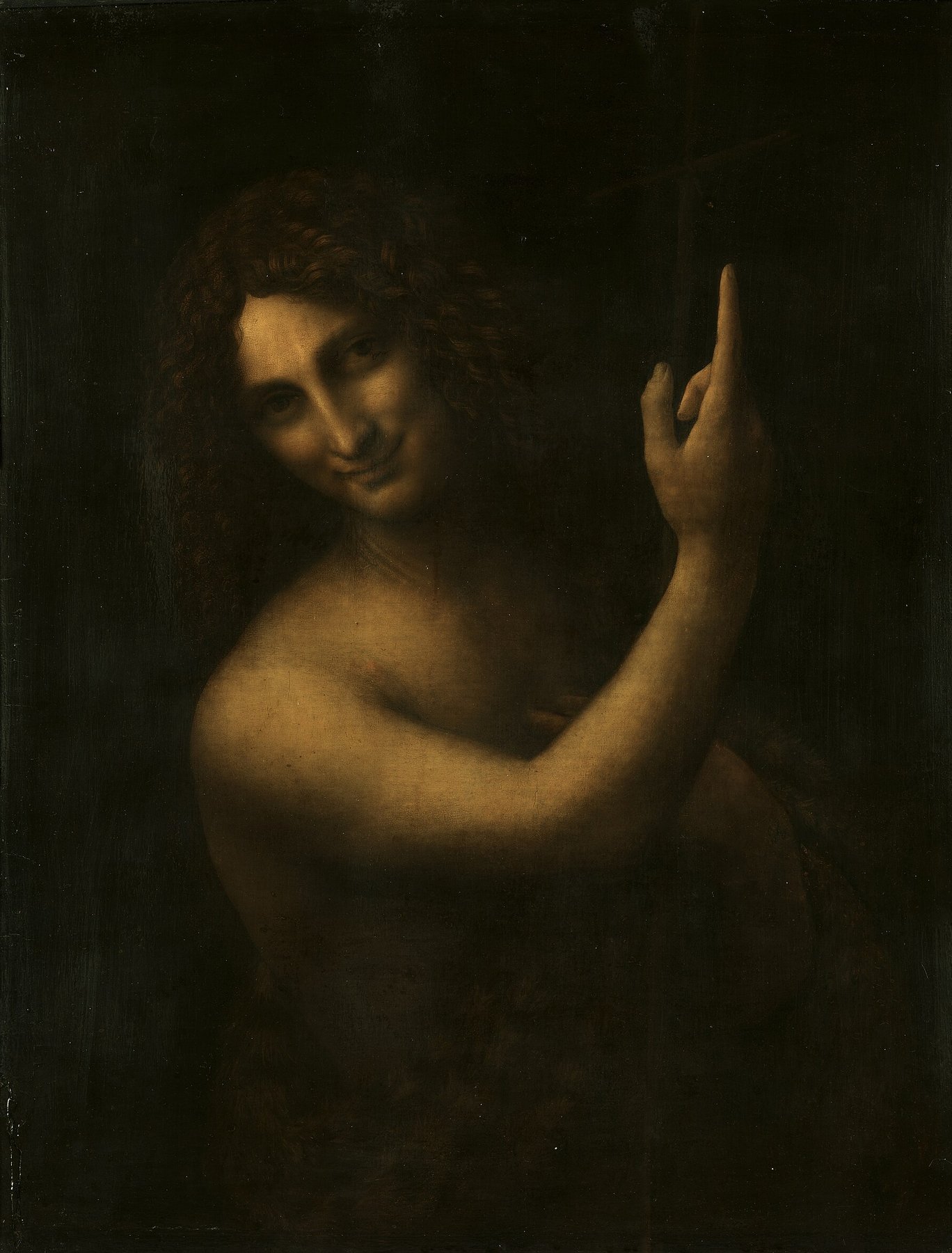
Leonardo da Vinci
c. 1513–16, Musée du Louvre, Paris
About this painting
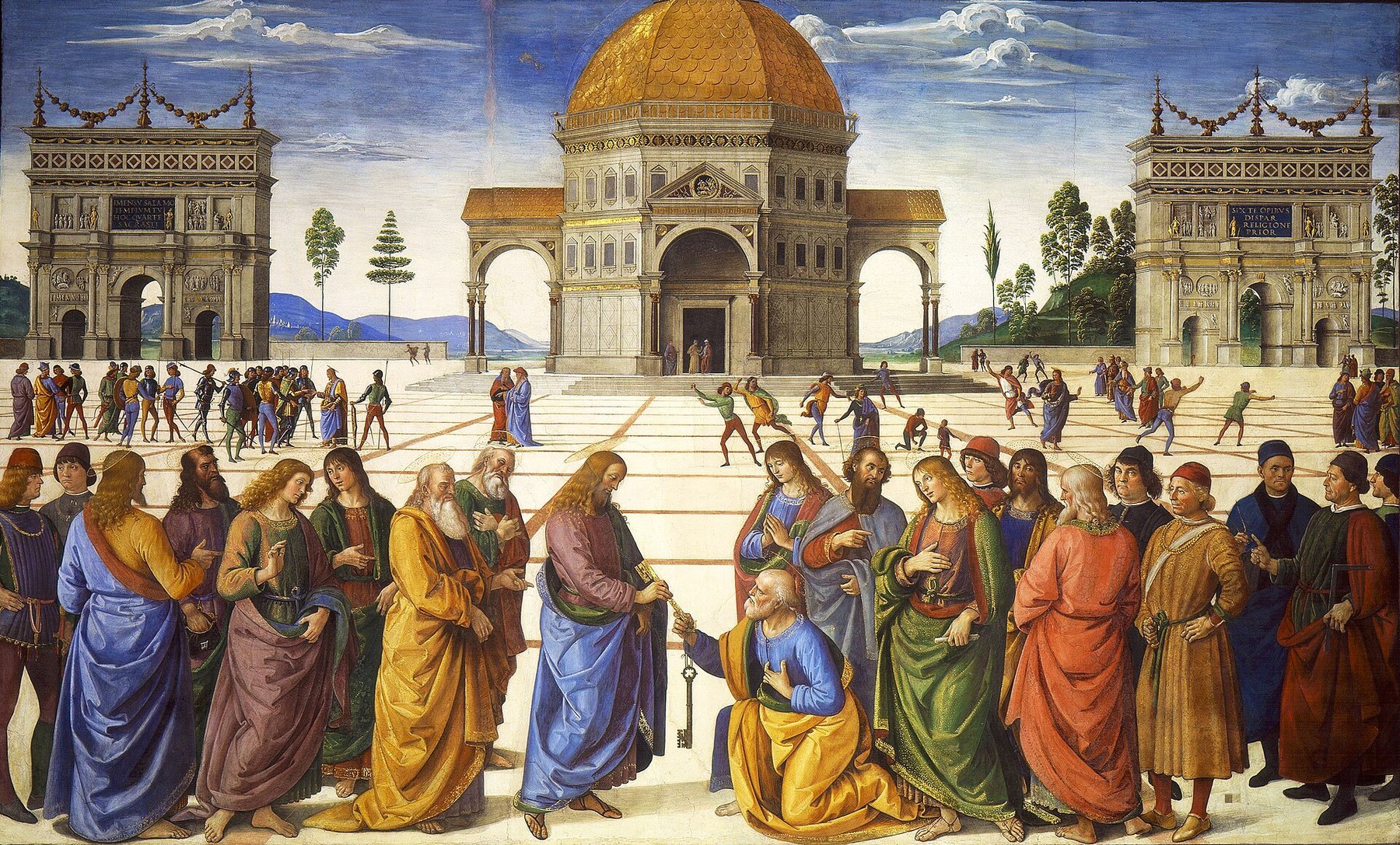
Perugino
1481–82, Sistine Chapel, Vatican Museums
About this painting
The traditional prayers · The Rosary
Today's masterwork, each morning
One sacred painting a day, chosen by the liturgical calendar and captioned only from the museum's record: the feast, the colour of the day, and the Scripture the scene depicts.
One confirmation email first; nothing is sent until you click it. Every email has a one-click unsubscribe, and you can switch to Sundays and feasts only at any time.