Eternal Rest
A traditional Catholic prayer
Eternal rest grant unto them, O Lord,
and let perpetual light shine upon them.
May they rest in peace. Amen.
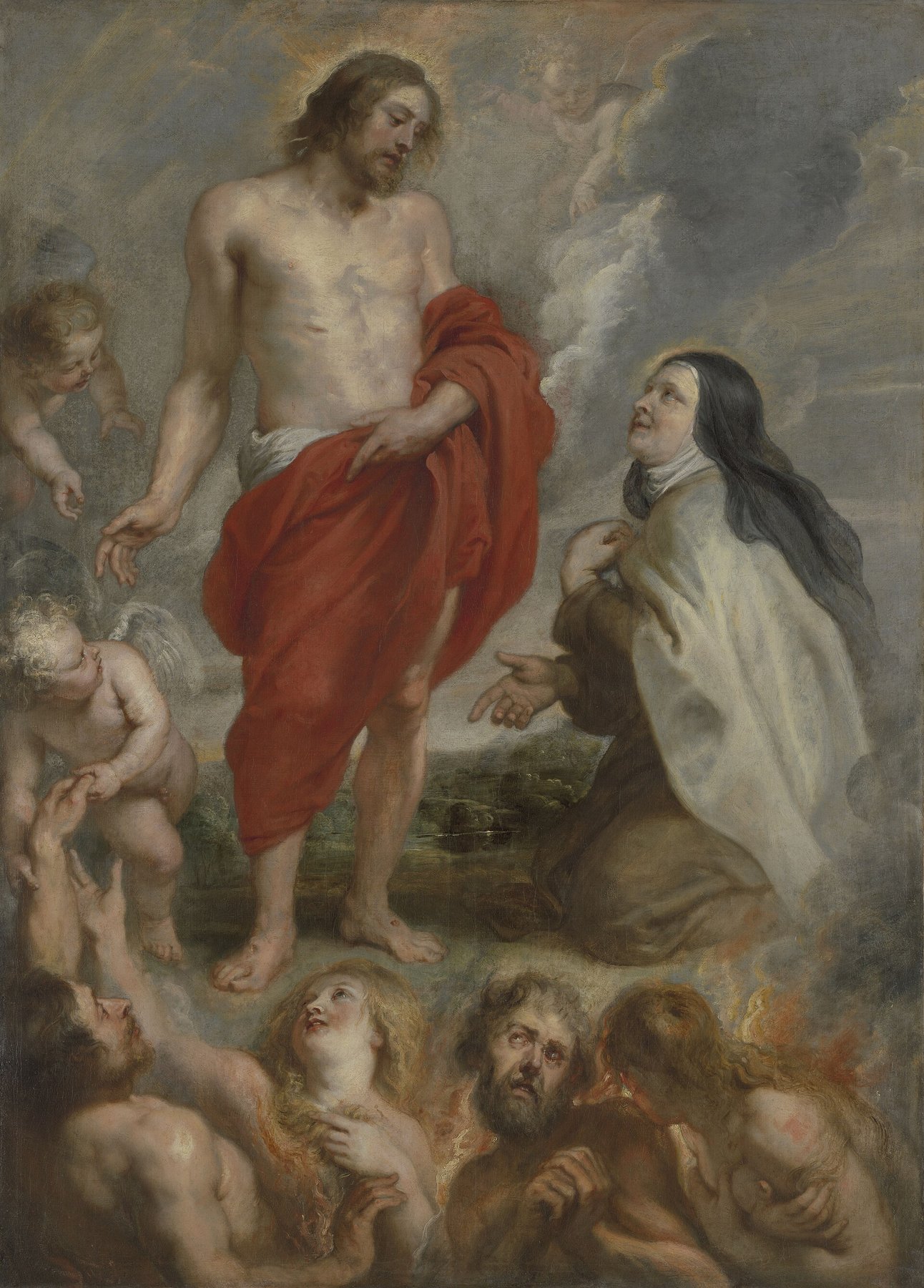
Peter Paul Rubens
c. 1630–1635, KMSKA, Antwerp
About this painting
In Latin
Requiem aeternam dona eis, Domine,
et lux perpetua luceat eis.
Requiescant in pace. Amen.
Where it comes from
Saint Teresa of Ávila kneels on a cloud in her Carmelite habit and looks up at the risen Christ, one hand on her breast and the other open, and He lets His own hand fall open toward the fire below them, where the souls in purgatory stand to the waist in flame and a child angel is already drawing one of them up by the hand. Rubens painted her pleading for Bernardino de Mendoza. Fire to the waist, and rest is what they are promised. The prayer’s words are those of the Introit of the Mass for the dead, from whose first word Requiem Masses take their name, and that Introit may be traced to the Fourth Book of Esdras: Expectate pastorem vestrum, requiem aeternitatis dabit vobis. When the Introit was adopted is not well known; but from the first century prayers were offered that the dead might have eternal rest. The prayer is that angel’s hand, held out each time we say a name.
Pietro Piacenza, “Masses of Requiem”, The Catholic Encyclopedia, vol. 12 (1911): newadvent.org
46It is therefore a holy and wholesome thought to pray for the dead, that they may be loosed from sins.
2 Machabees 12:46, Douay-Rheims (Challoner)
More in painting
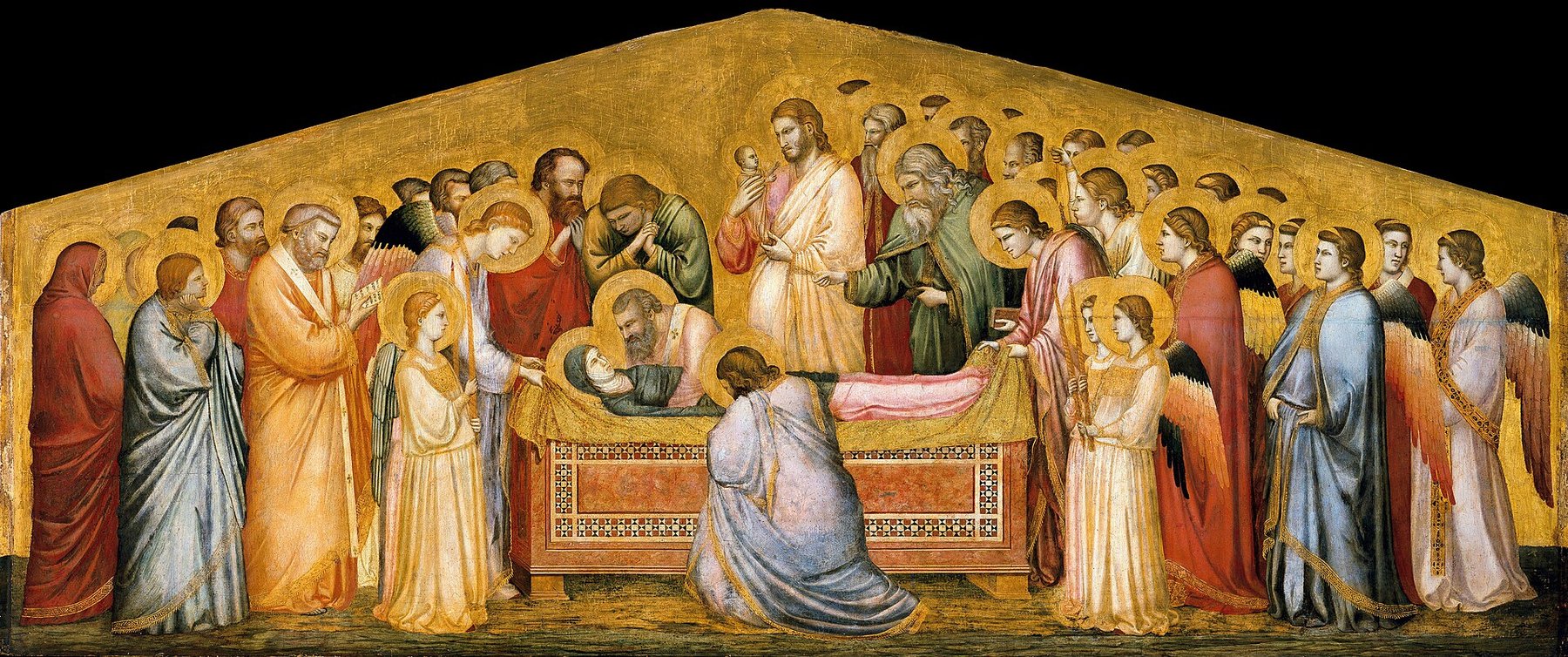
Giotto
c. 1310, Gemäldegalerie, Berlin
About this painting
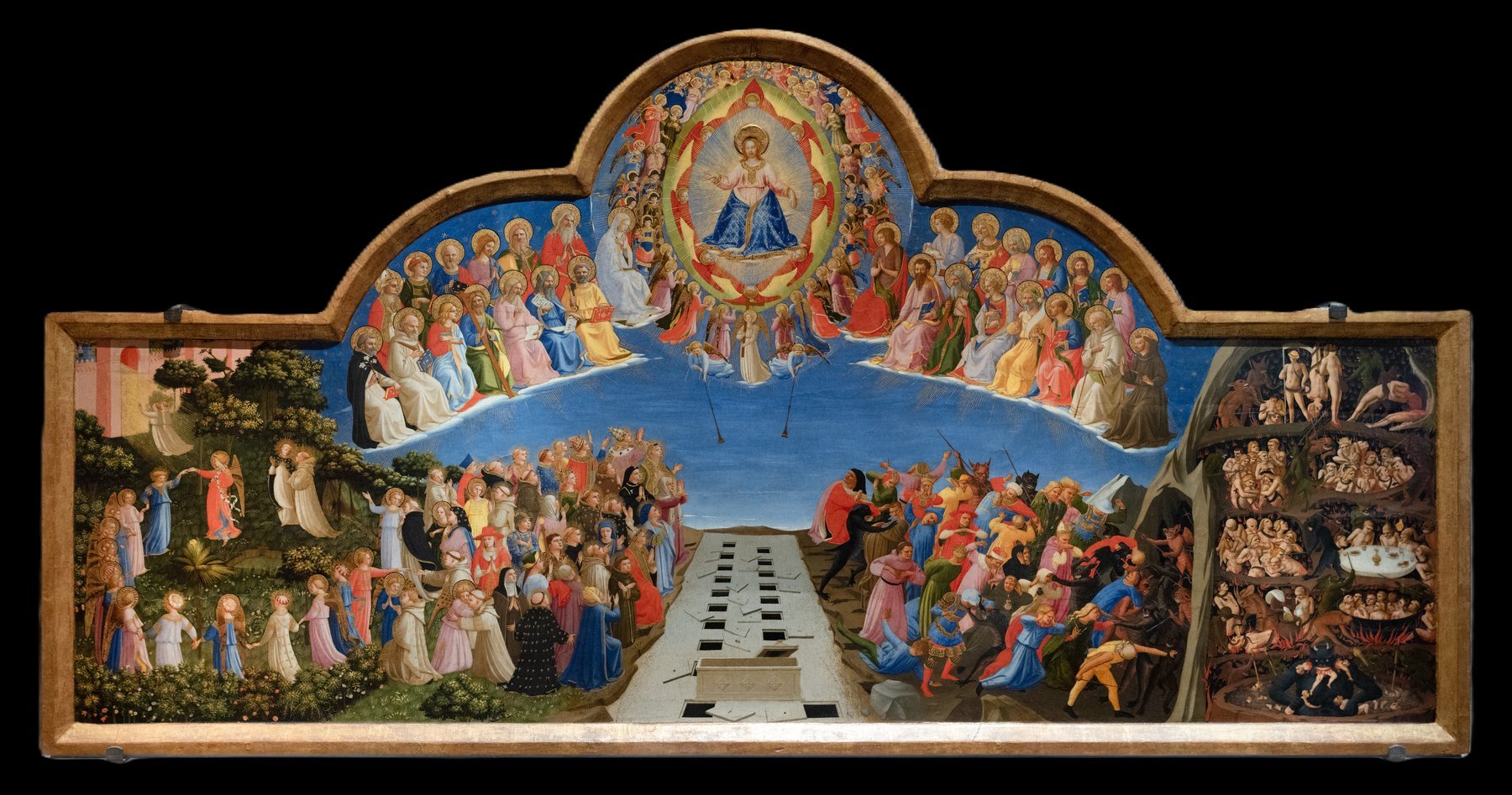
Fra Angelico
c. 1431, Museo di San Marco, Florence
About this painting
The traditional prayers · The Rosary
Today's masterwork, each morning
One sacred painting a day, chosen by the liturgical calendar and captioned only from the museum's record: the feast, the colour of the day, and the Scripture the scene depicts.
One confirmation email first; nothing is sent until you click it. Every email has a one-click unsubscribe, and you can switch to Sundays and feasts only at any time.