The Nativity of the Lord
25 December · Solemnity · White
The light in the painting comes from the Child. Everything else — the Mother's face, the angels, the shepherds at the door — is lit by Him. Rome kept 25 December as the day of Christ's birth before the year 354: the Philocalian calendar of that year records under the eighth day before the Kalends of January, natus Christus in Betleem Judeae. Gregory Nazianzen brought the feast to Constantinople in 379 or 380, and St John Chrysostom preached it at Antioch in 386. The Church says three Masses on this day, at midnight, at dawn and in the daylight, a custom the old sacramentaries already know: the first at the manger-chapel of St Mary Major, the second at St Anastasia, the third at St Peter's. The light in the painting is the first Mass.
Cyril Martindale, “Christmas”, The Catholic Encyclopedia, vol. 3 (1908): newadvent.org
The Gospel of the feast
1And it came to pass that in those days there went out a decree from Caesar Augustus that the whole world should be enrolled. 2This enrolling was first made by Cyrinus, the governor of Syria. 3And all went to be enrolled, every one into his own city. 4And Joseph also went up from Galilee, out of the city of Nazareth, into Judea, to the city of David, which is called Bethlehem: because he was of the house and family of David. 5To be enrolled with Mary his espoused wife, who was with child. 6And it came to pass that when they were there, her days were accomplished that she should be delivered. 7And she brought forth her first born son and wrapped him up in swaddling clothes and laid him in a manger: because there was no room for them in the inn. 8And there were in the same country shepherds watching and keeping the night watches over their flock. 9And behold an angel of the Lord stood by them and the brightness of God shone round about them: and they feared with a great fear. 10And the angel said to them: Fear not; for, behold, I bring you good tidings of great joy that shall be to all the people: 11For, this day is born to you a Saviour, who is Christ the Lord, in the city of David. 12And this shall be a sign unto you. You shall find the infant wrapped in swaddling clothes and laid in a manger. 13And suddenly there was with the angel a multitude of the heavenly army, praising God and saying: 14Glory to God in the highest: and on earth peace to men of good will.
Luke 2:1–14, Douay-Rheims (Challoner)
In painting
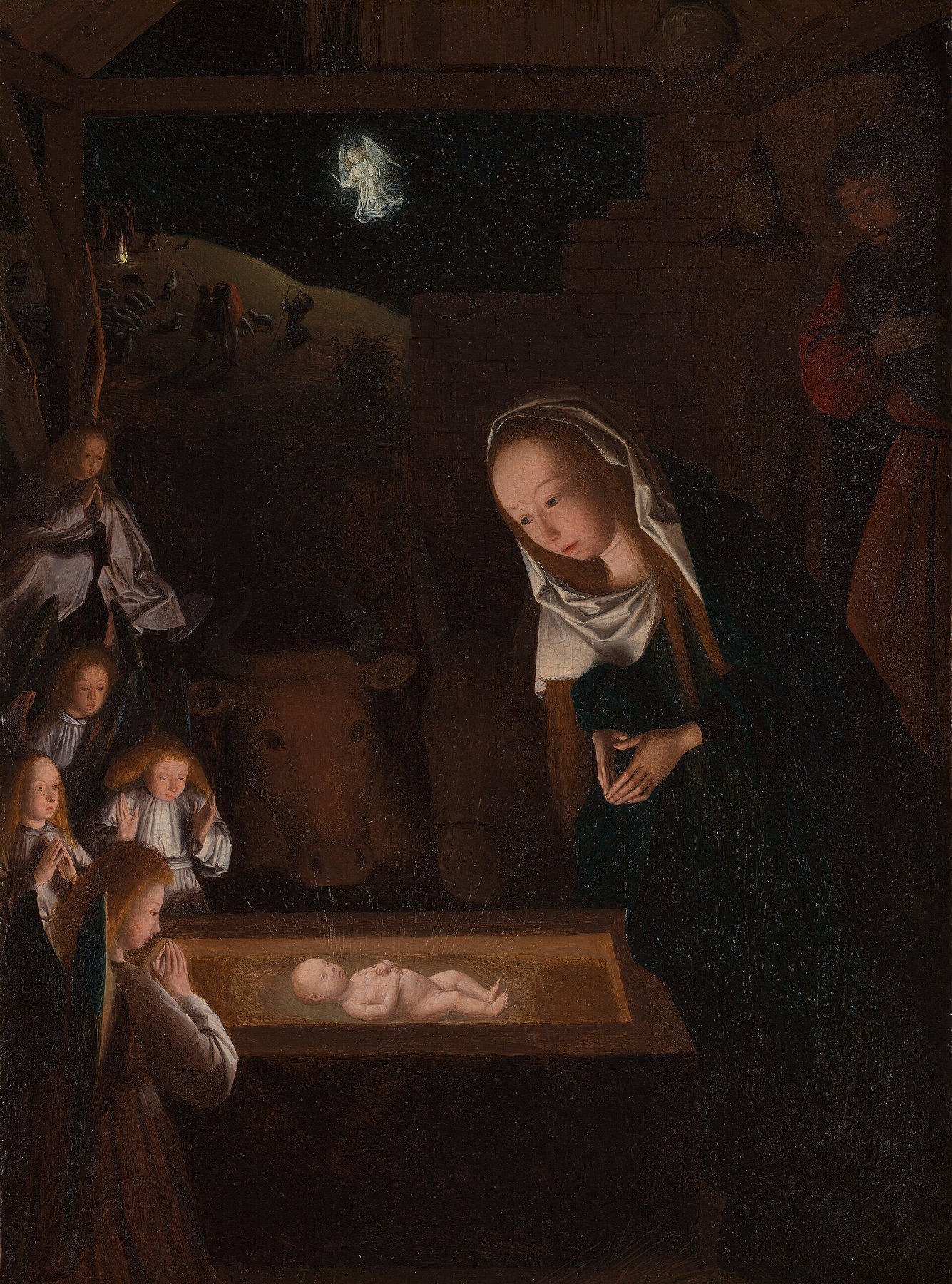
Geertgen tot Sint Jans
Possibly about 1490, The National Gallery, London
About this painting
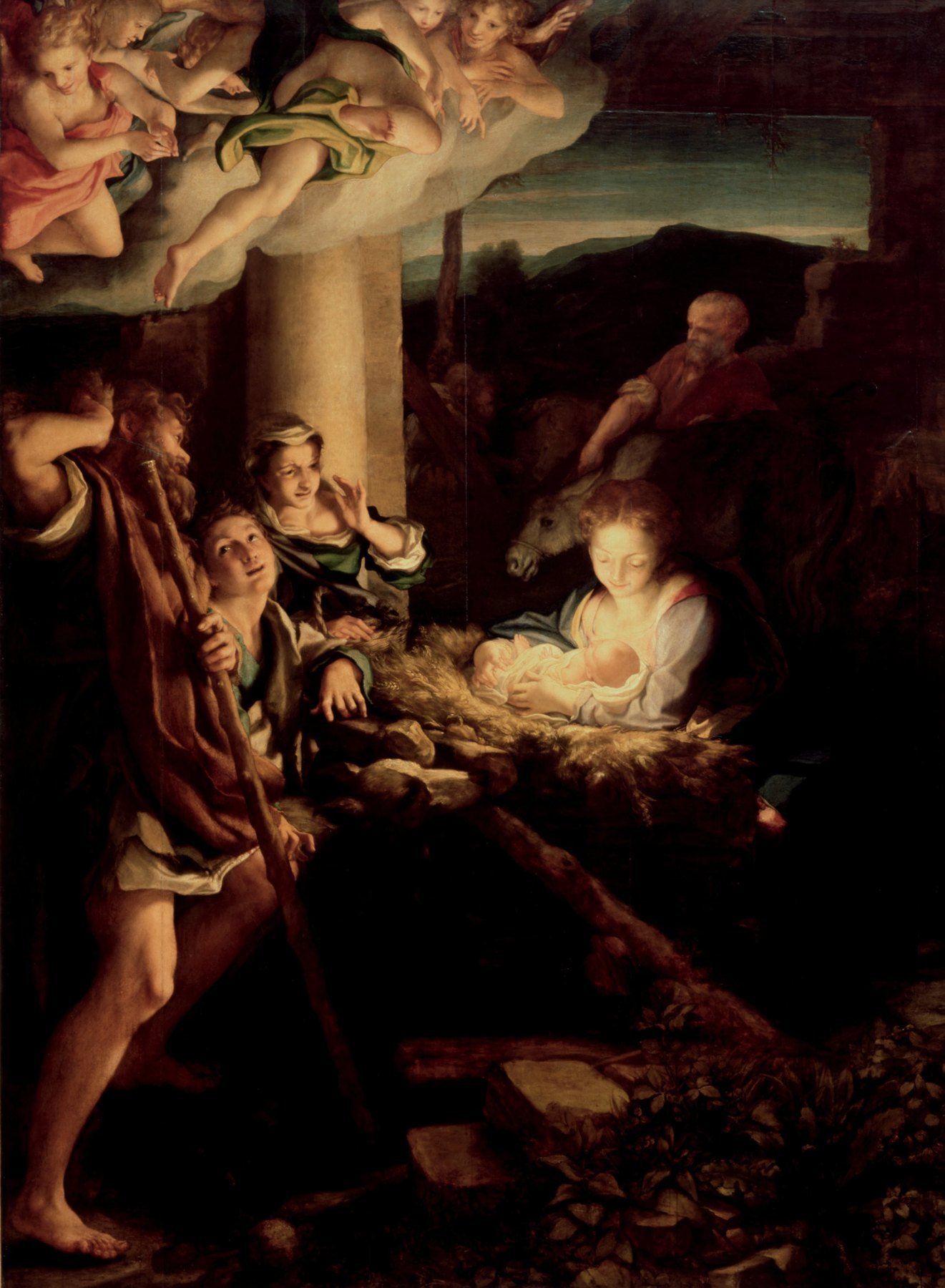
Correggio
c. 1525–1530, Gemäldegalerie Alte Meister, Dresden
About this painting
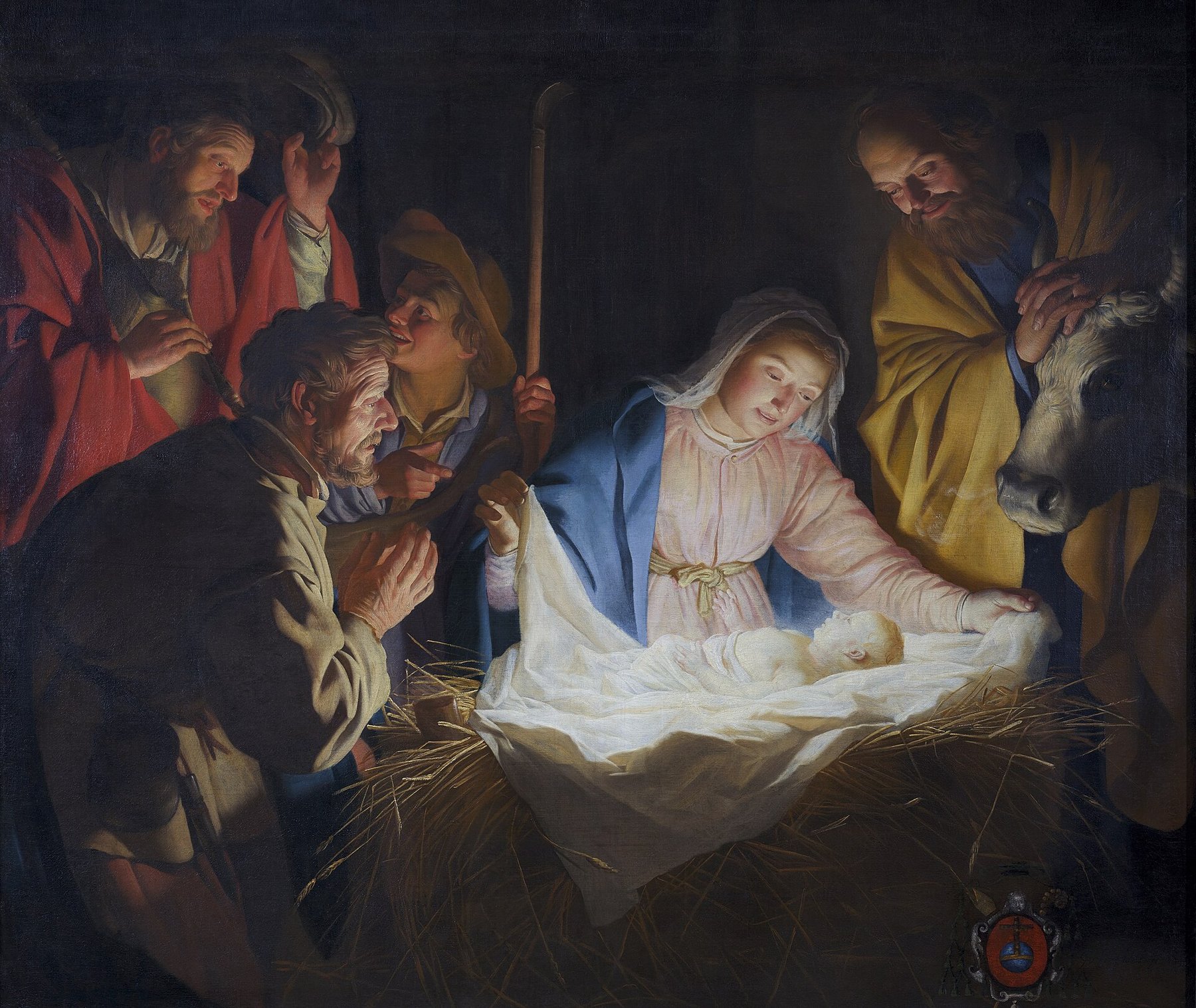
Gerard van Honthorst
1622, Wallraf-Richartz-Museum, Cologne
About this painting
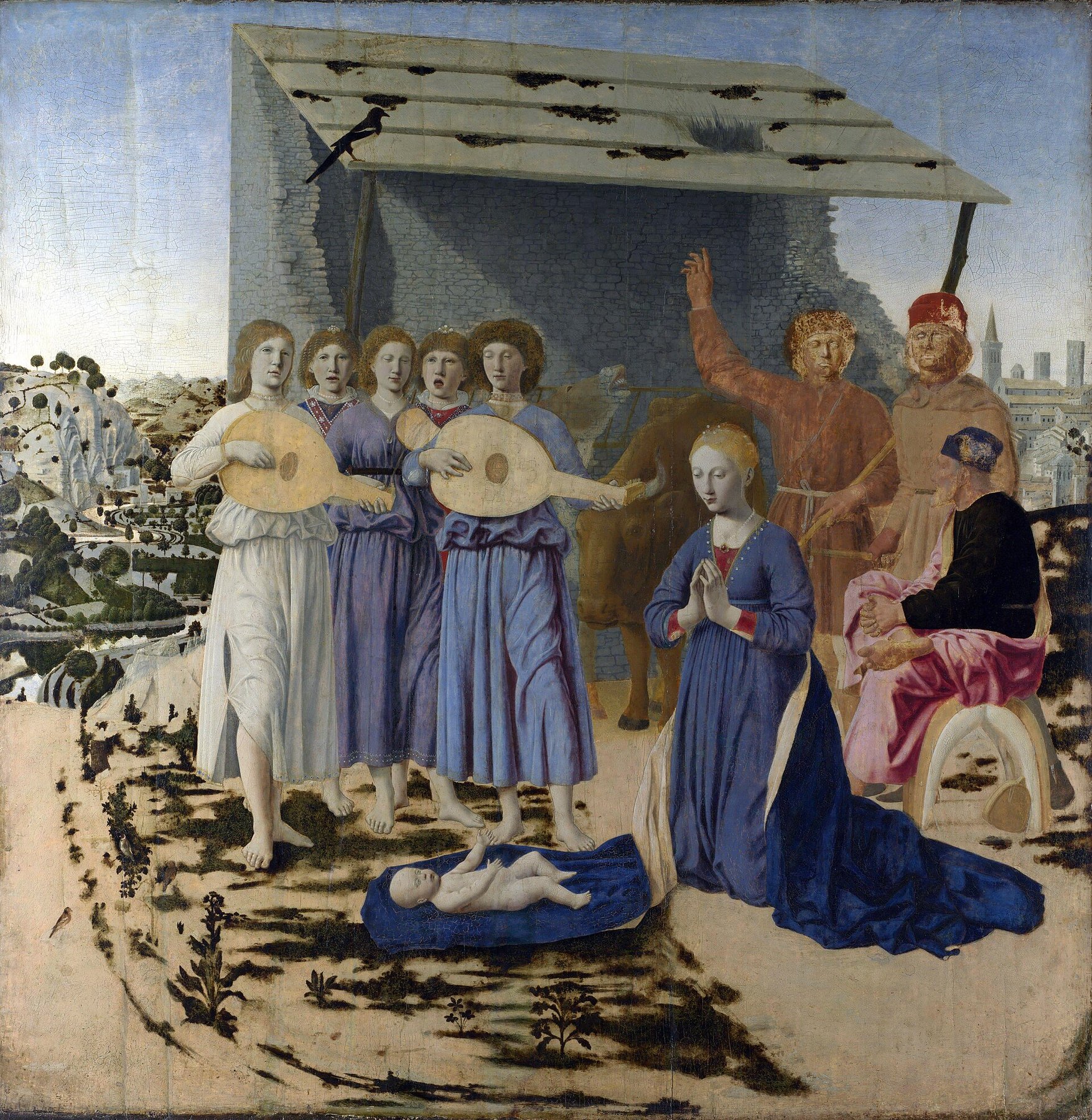
Piero della Francesca
early 1480s, The National Gallery, London
About this painting
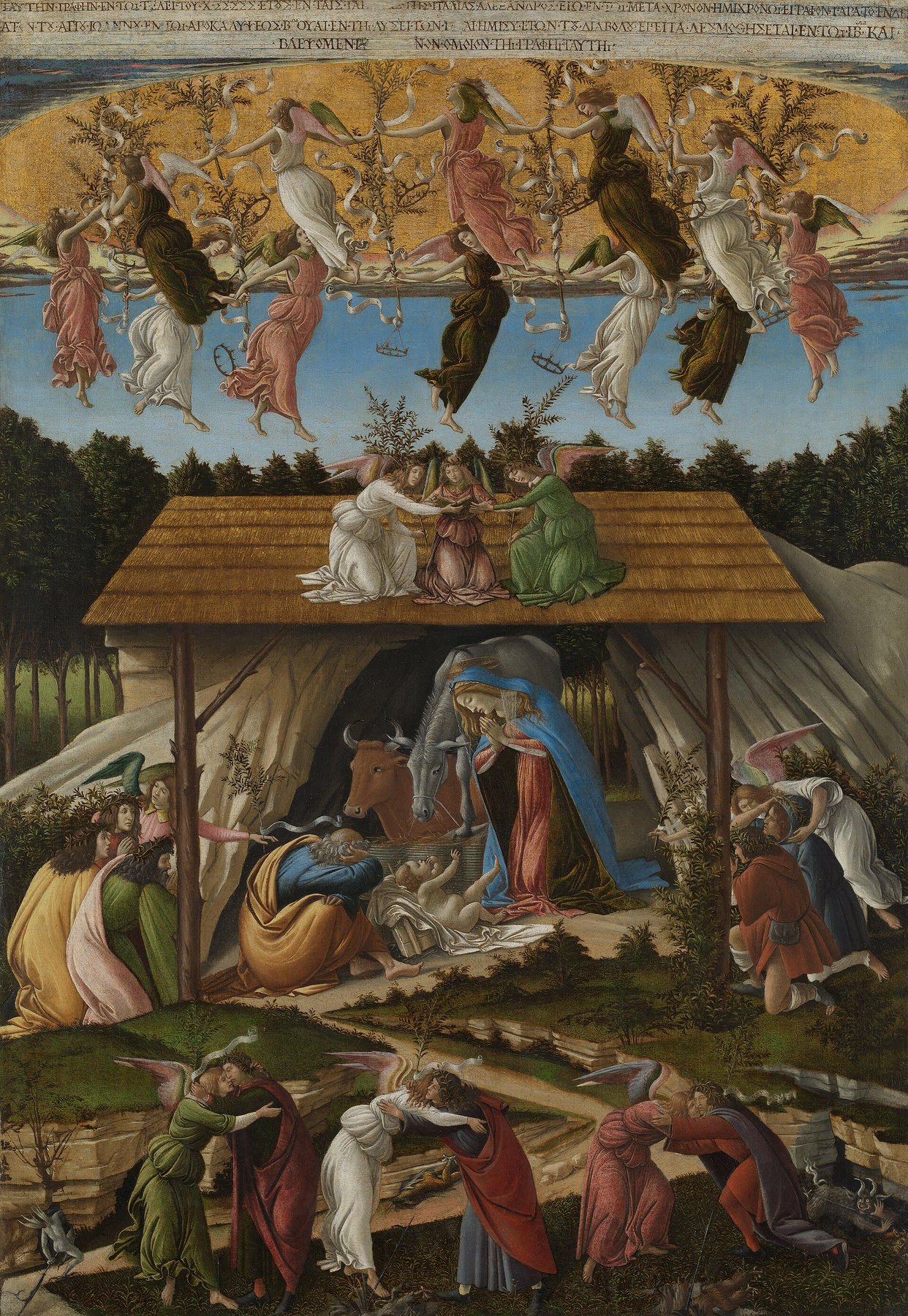
Sandro Botticelli
c. 1500–1501, The National Gallery, London
About this painting
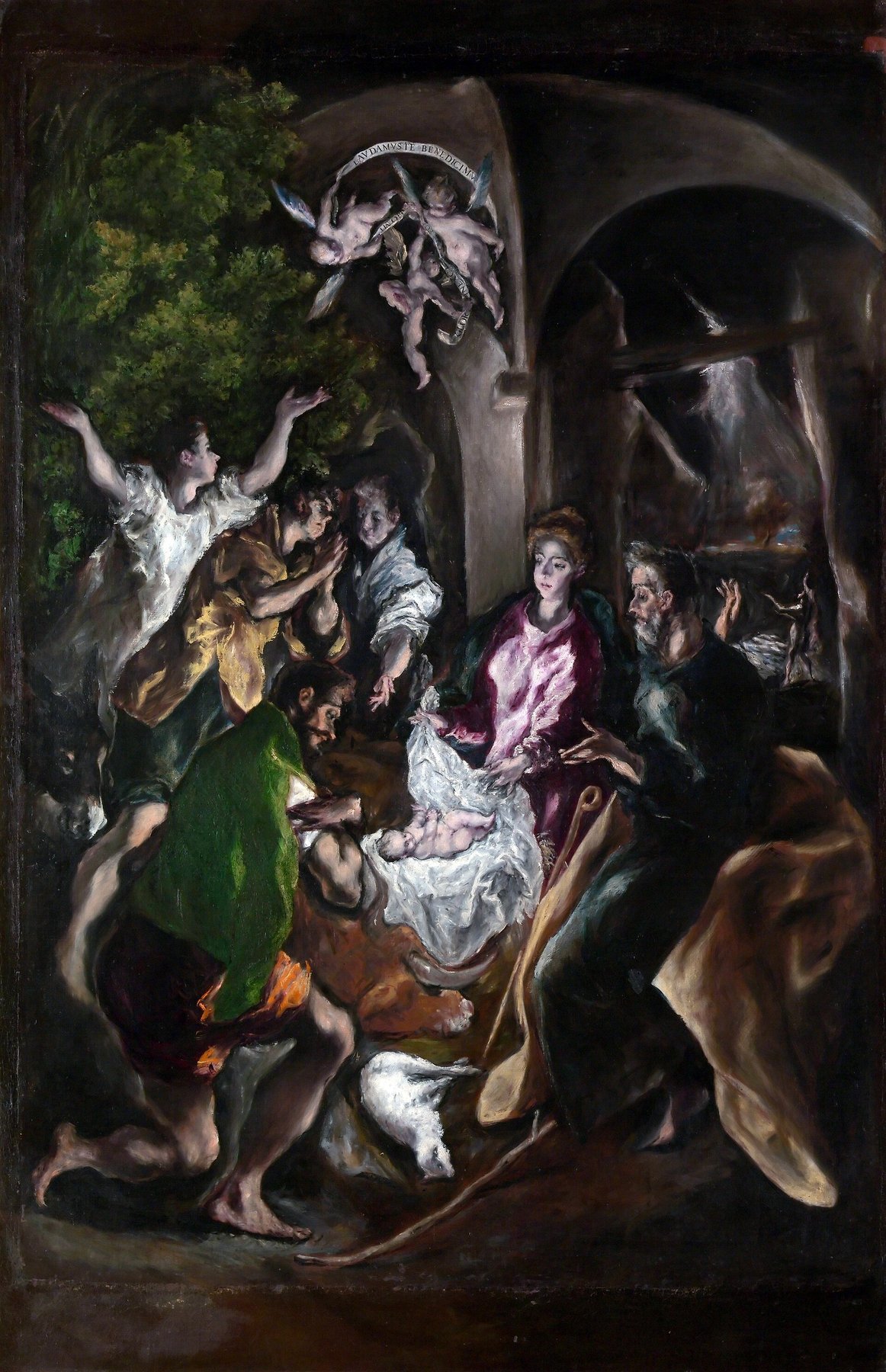
El Greco
c. 1605–1610, The Metropolitan Museum of Art, New York
About this painting
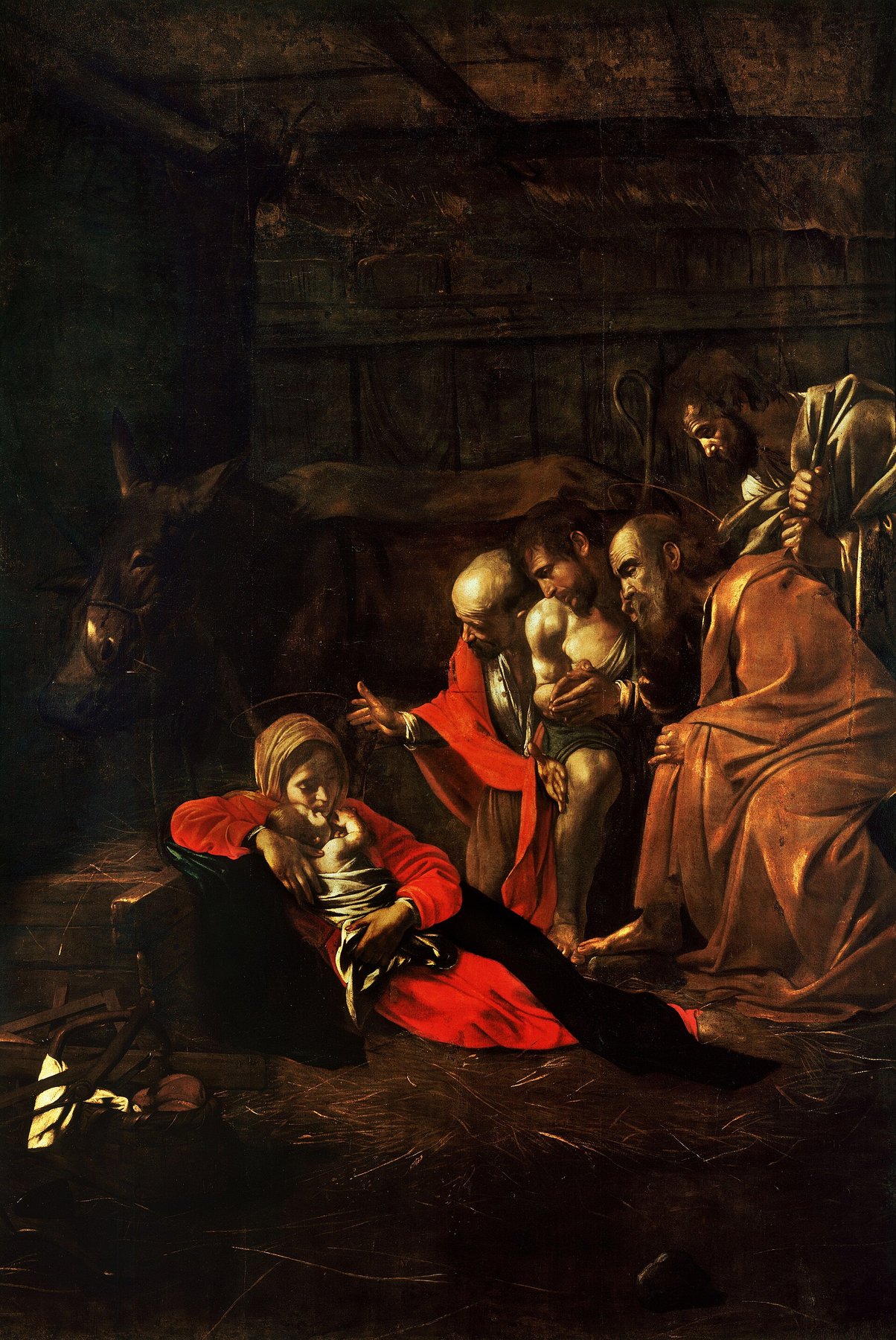
Caravaggio
1609, Museo Regionale, Messina
About this painting
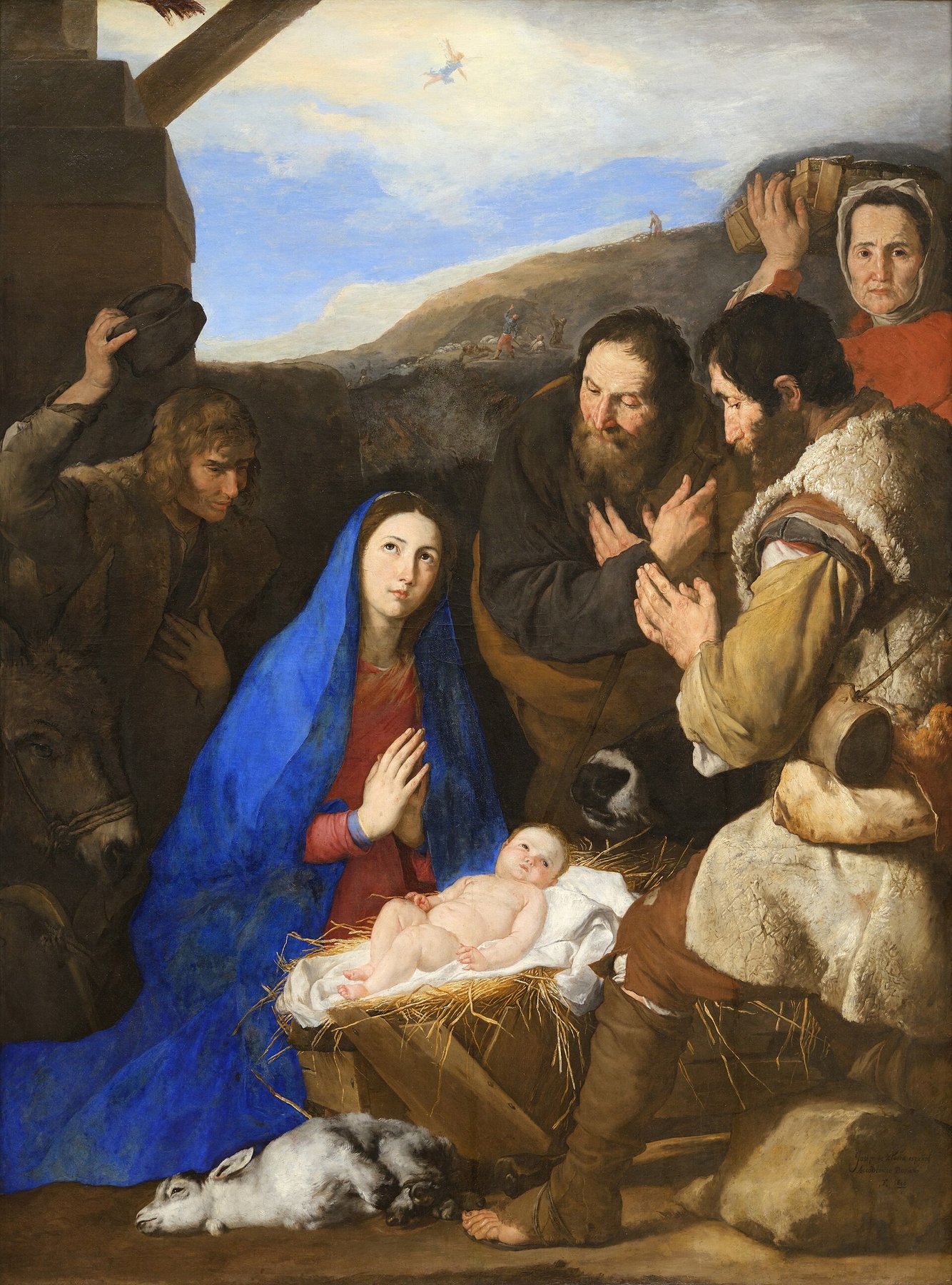
Jusepe de Ribera
1650, Musée du Louvre, Paris
About this painting
The feasts of the year · The Rosary
Today's masterwork, each morning
One sacred painting a day, chosen by the liturgical calendar and captioned only from the museum's record: the feast, the colour of the day, and the Scripture the scene depicts.
One confirmation email first; nothing is sent until you click it. Every email has a one-click unsubscribe, and you can switch to Sundays and feasts only at any time.