Saint Catherine of Alexandria
25 November · Optional Memorial · Red
The wheel built to break her lies broken, and Saint Catherine leans on it as on the arm of a chair, a sword in her hands and a palm along the floor. She looks straight out. The Museo Thyssen-Bornemisza found that Caravaggio first painted the wheel whole and then painted the break over it.
Museo Nacional Thyssen-Bornemisza, Madrid, 81 (1934.37)
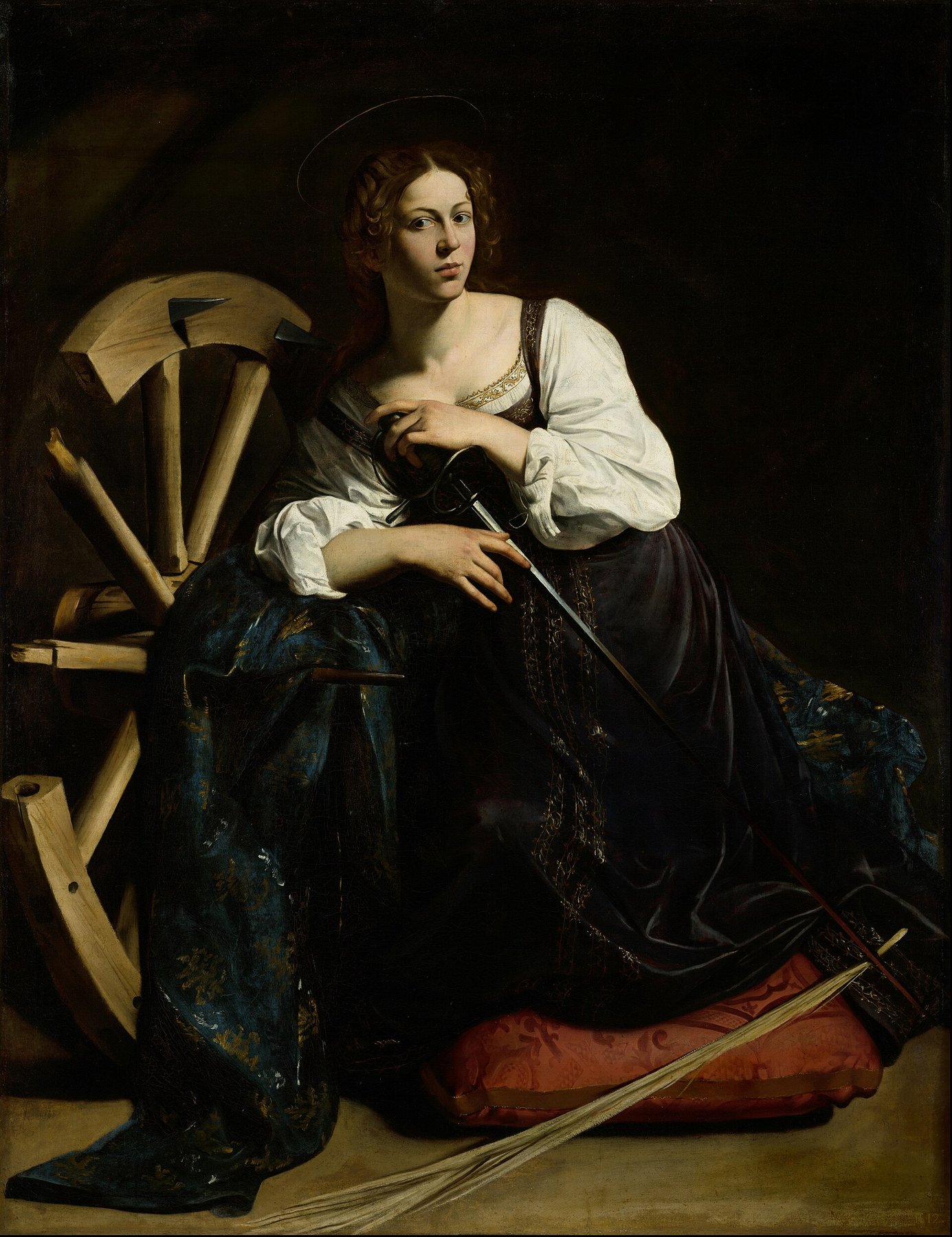
Caravaggio
c. 1598, Museo Nacional Thyssen-Bornemisza, Madrid
About this painting
Her life
Her story is told in Acts that have not come down in their first form, and the oldest pilgrims to Sinai never mention her; the Catholic Encyclopedia gives it as her legend tells it. Catherine was of noble birth and learned in the sciences, and when the emperor Maximinus persecuted the Christians of Alexandria she went to him and protested. He summoned numerous scholars to argue her down. He condemned her to be broken on a spiked wheel, and at her touch it was destroyed; then he had her beheaded, and angels carried her body to Mount Sinai, where a church and monastery were later built in her honour.
Few saints were more loved. Theologians, preachers and philosophers asked her prayers, and so did young women and students, wheelwrights and mechanics; she was counted with Saint Margaret and Saint Barbara among the fourteen Holy Helpers, and it was said she was one of the voices of Joan of Arc. Her feast is kept on 25 November in the Latin Church and the Eastern Churches alike. The wheel is a chair now. Every student who keeps the faith and keeps thinking sits in her company.
Léon Clugnet, “St. Catherine of Alexandria”, The Catholic Encyclopedia, vol. 3 (1908): newadvent.org
In Scripture
27But the foolish things of the world hath God chosen, that he may confound the wise: and the weak things of the world hath God chosen, that he may confound the strong.
1 Corinthians 1:27, Douay-Rheims (Challoner).
In painting
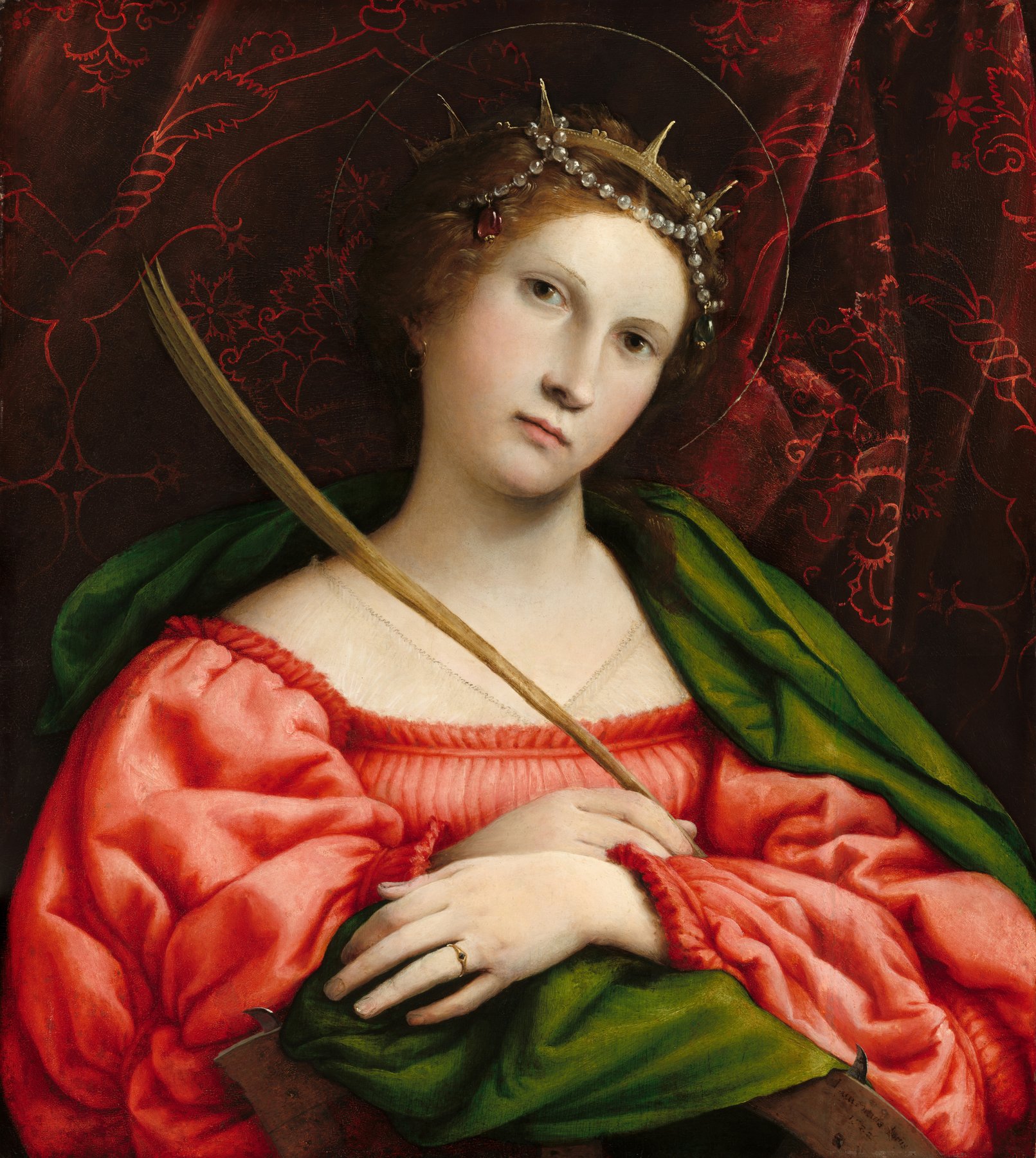
Lorenzo Lotto
1522, National Gallery of Art, Washington
About this painting
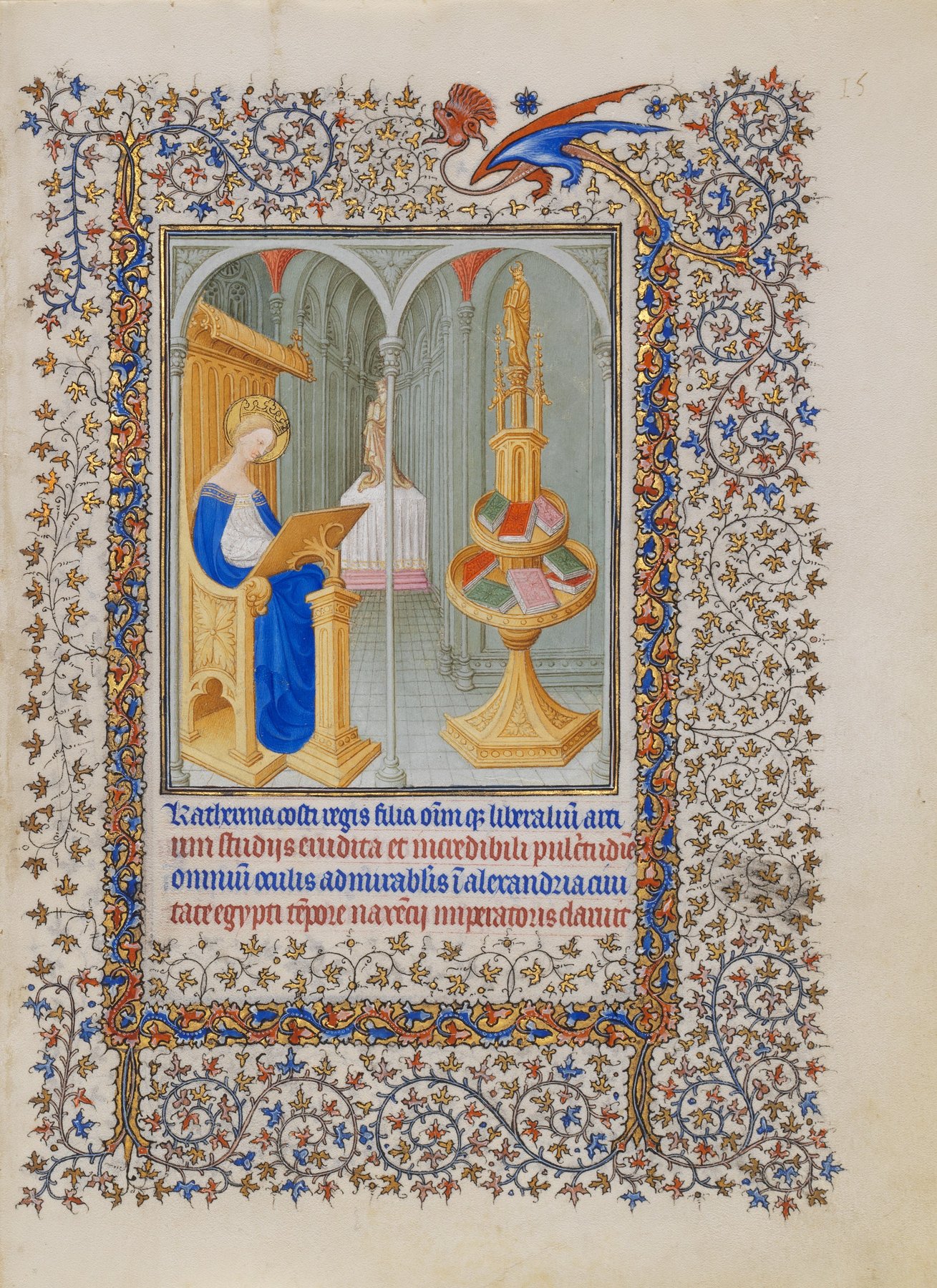
The Limbourg Brothers
1405–1408/9, The Metropolitan Museum of Art, The Cloisters
About this painting
The day in the next three years
| 2026 | Wednesday 25 November |
|---|---|
| 2027 | Thursday 25 November |
| 2028 | Saturday 25 November |
Near this day
The saints of the year · The feasts · The Rosary
Written and checked by the Monstrance editors; sources cited. Scripture in the Douay-Rheims (Challoner). Every painting is in the public domain, and each caption follows the record of the institution that holds it.
Today's masterwork, each morning
One sacred painting a day, chosen by the liturgical calendar and captioned only from the museum's record: the feast, the colour of the day, and the Scripture the scene depicts.
One confirmation email first; nothing is sent until you click it. Every email has a one-click unsubscribe, and you can switch to Sundays and feasts only at any time.